The entry-level GPU market has long been a battlefield for aggressive price wars, where every single frame per second is fought for with desperation. Yet, the debut of the Radeon RX 9050 has raised an uncomfortable question within the industry: is a hardware refresh even necessary? Rather than delivering the anticipated leap in performance, the new arrival has posted results that call AMD's entire strategy for this segment into question. A closer look reveals that any perceived technological advancement is largely illusory, having been sacrificed on the altar of economic compromise.
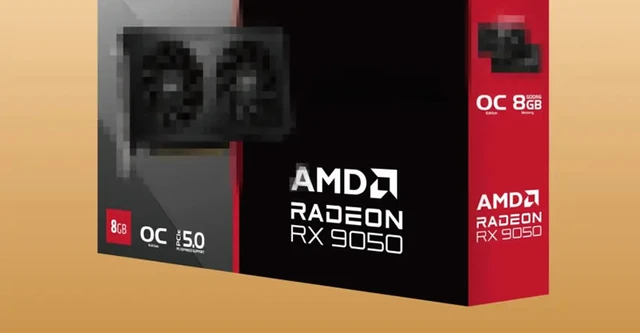
The market debut of the Radeon RX 9050 was marked by an unsettling level of secrecy. Manufacturer restrictions extended beyond mere product demonstrations to the packaging itself, creating an atmosphere of ambiguity around the device. Consequently, a comprehensive analysis became possible only through independent testing via unofficial supply channels, as official access to samples remained strictly limited.
The benchmark results provided a sobering reality check. In 1080p (Full HD) scenarios, the graphics card delivers an average of 49 frames per second, while performance drops to 33 FPS when stepping up to 1440p. For modern gaming, these figures are modest at best, but the real concern emerges during comparative analysis.
A side-by-side evaluation with its predecessors and competitors reveals a troubling trend: the Radeon RX 7600, released back in 2023, outperforms the newcomer by 22% in Full HD. A similar pattern emerges in the face-off with the Nvidia GeForce RTX 5050, which also proves to be 20% faster. Even at higher resolutions, where the gap narrows, the RX 9050 fails to secure a leading position, falling behind even the aging RX 7600.
From a value proposition standpoint, the product's positioning feels unjustified. A recommended retail price of $280 transforms the device into a questionable asset. In terms of market value, purchasing this model would only be rational if the price dropped below $200. In its current price segment, the Radeon RX 9050 offers no tangible advantages to offset its meager computational power.
Compounding these issues is a baffling regional distribution strategy. The retail 8GB VRAM version is available only in Latin American, Japanese, and Asia-Pacific markets, while even major hubs like South Korea and Australia have been excluded from the list. This isolation effectively strips many professional reviewers of the ability to legally test the product.
The 4GB variant warrants particular scrutiny. This version is not intended for retail sale at all, existing solely as an OEM component for CyberPowerPC pre-built systems sold through Best Buy. In today's landscape, 4GB of video memory is critically insufficient for the vast majority of current titles, rendering this version practically useless for any custom PC build.
Ultimately, consumers are left weighing more pragmatic alternatives. The rational choice is either to seek proven hardware on the secondary market or to pivot toward the Intel Arc B580. For those seeking a genuine leap in performance, the only viable path is to save for the Radeon RX 9060 XT, which delivers the level of power that the entry-level model so desperately lacks.
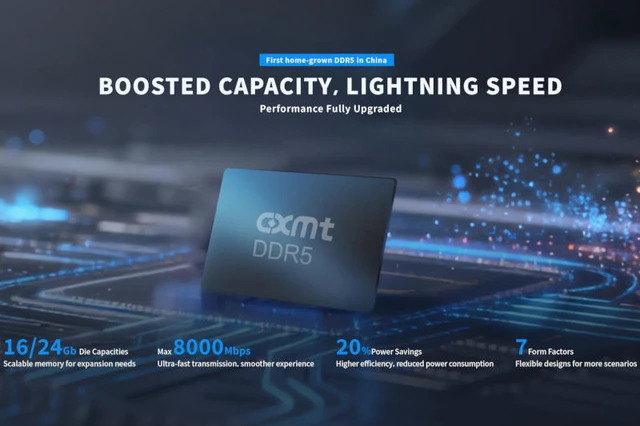 The Price of Acceleration: CXMT’s Rapid Push into Memory