The contemporary gaming CPU market has evolved into a high-stakes contest centered on cache efficiency and thermal envelopes. The release of the Ryzen 7 7700X3D was intended to serve as a bridge between entry-level offerings and the uncompromising powerhouses of the AM5 platform. Yet, a deep dive into the technical specifications reveals a product struggling with an identity crisis. Ultimately, we are left with a processor whose value proposition is eroded by the marginal price difference separating it from its superior predecessor.
The arrival of the Ryzen 7 7700X3D feels like AMD's bid to lower the barrier to entry for gamers seeking the advantages of 3D V-Cache. Essentially a modified version of the flagship 7800X3D built on the Zen 4 architecture, the chip was conceived as a way to deliver a "flagship" gaming experience at a more accessible price point. In practice, however, this strategy has collided with the cold, hard mathematics of performance.
On paper, the new arrival features eight cores and sixteen threads. However, the lower price tag comes at the cost of clock speeds: the base frequency sits at 4000 MHz, with a boost clock reaching 4550 MHz. For comparison, the higher-tier 7800X3D operates 200–500 MHz faster. That said, the cache remains impressive at 104 MB—a critical factor for latency-sensitive gaming titles.
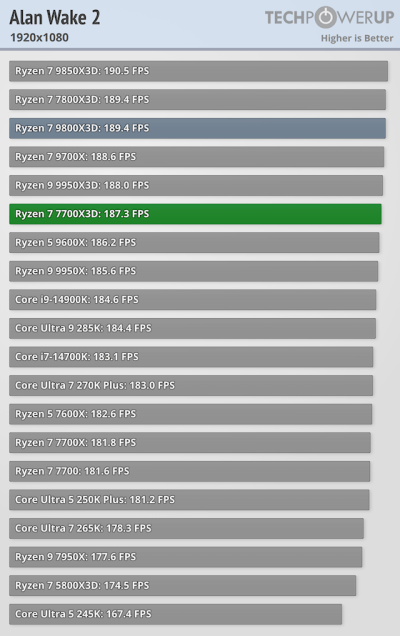
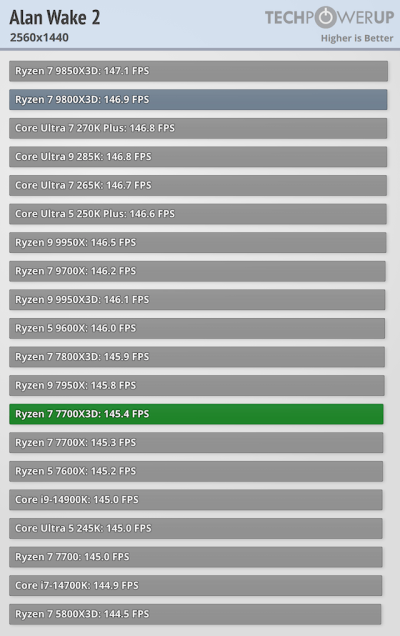
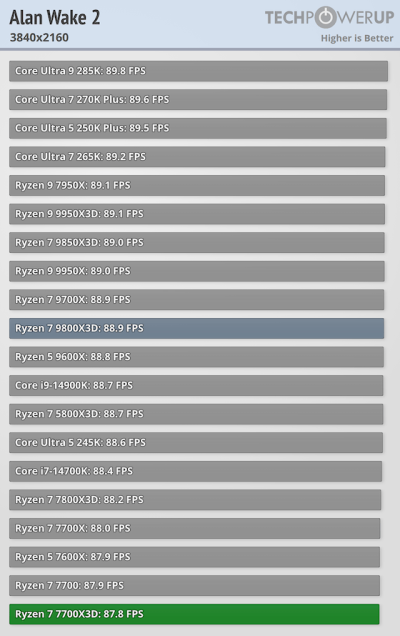
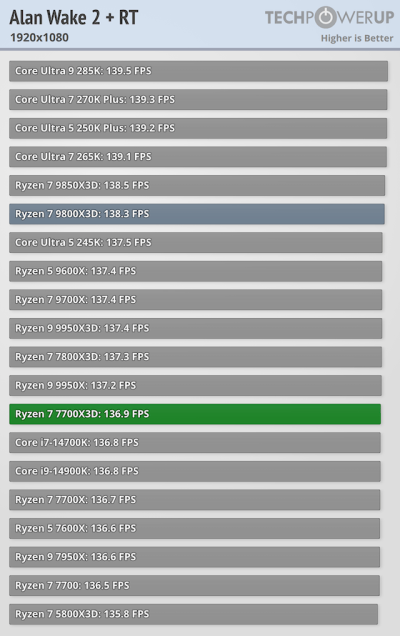
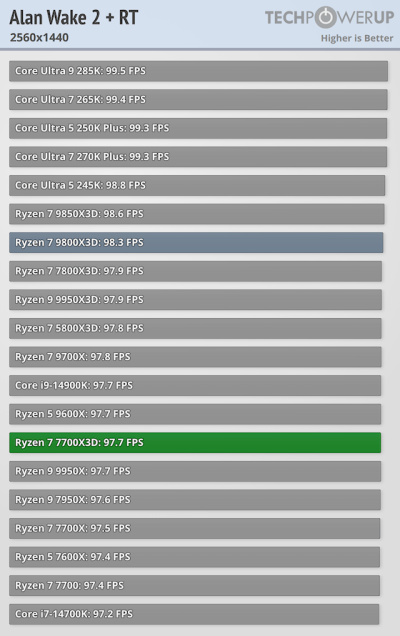
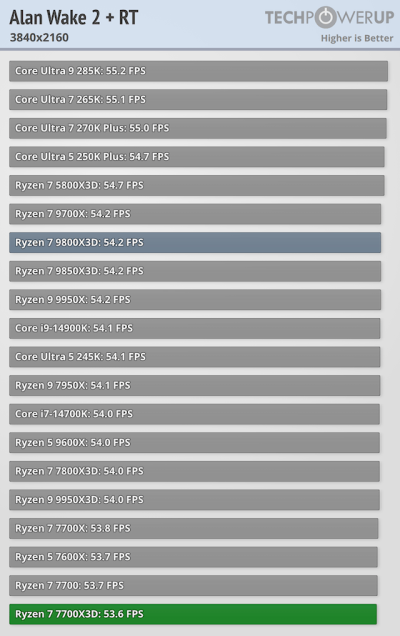
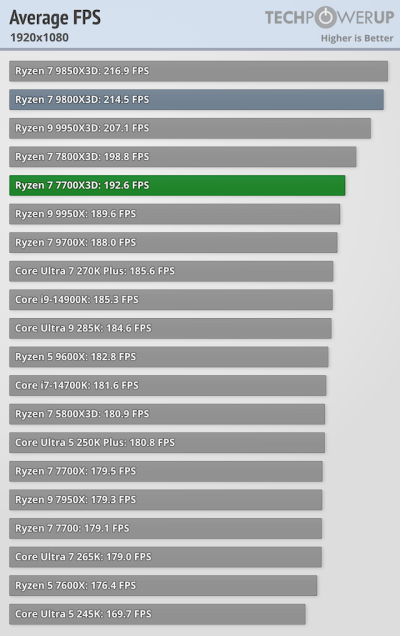
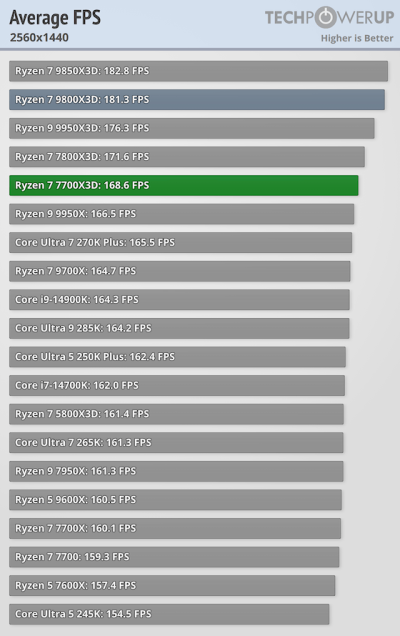
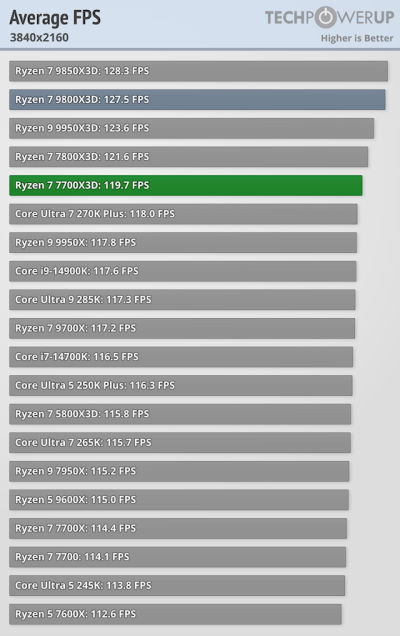
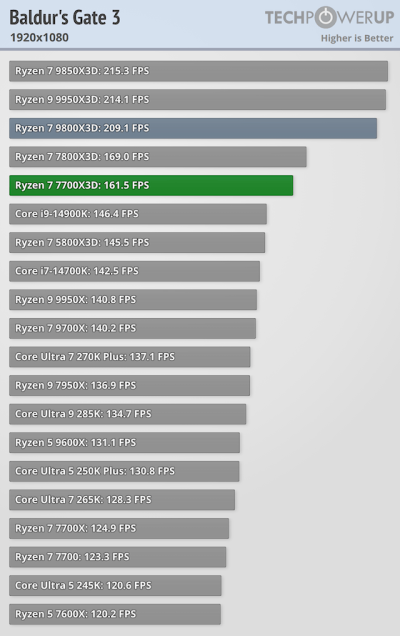
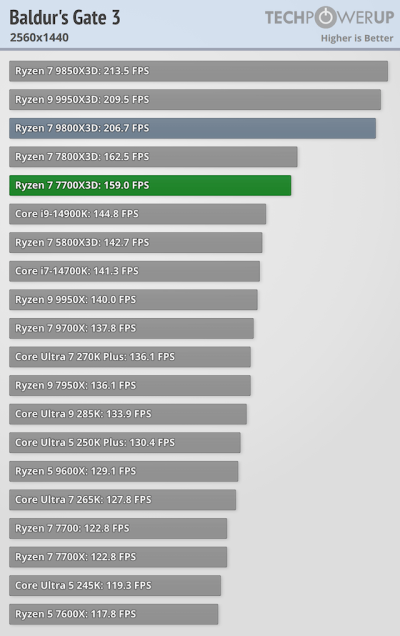
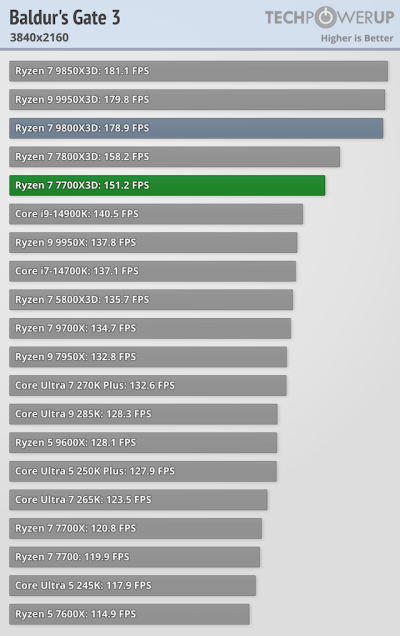
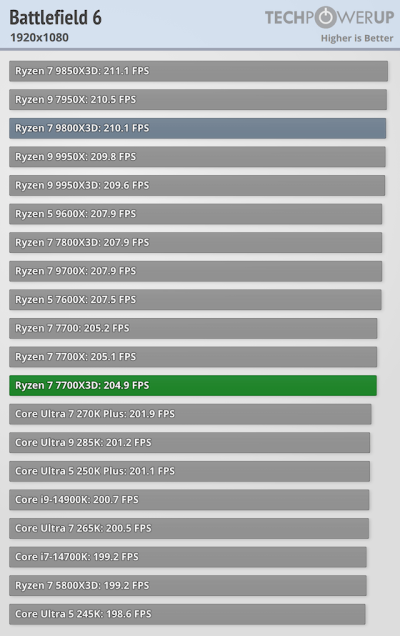
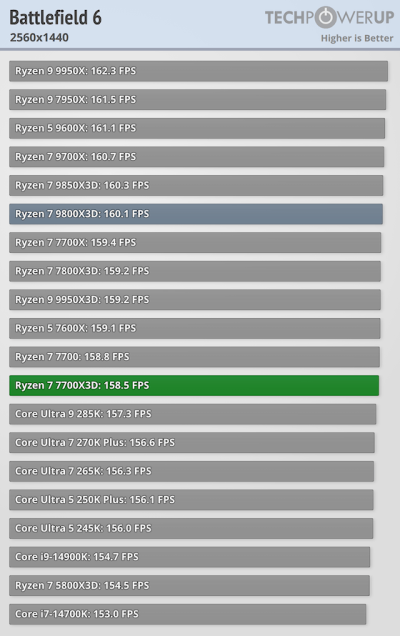
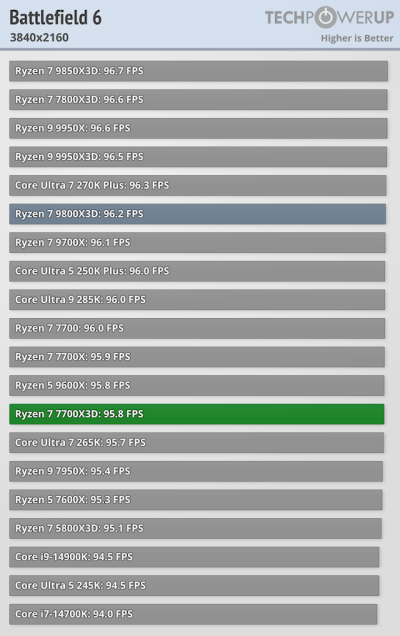
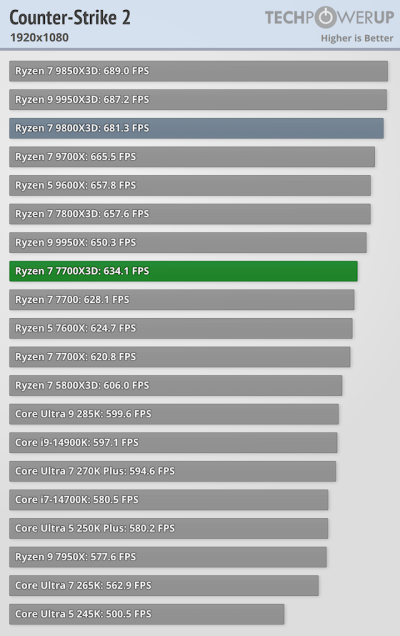
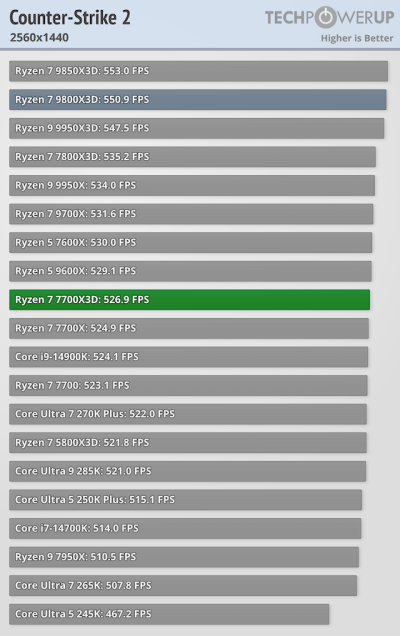
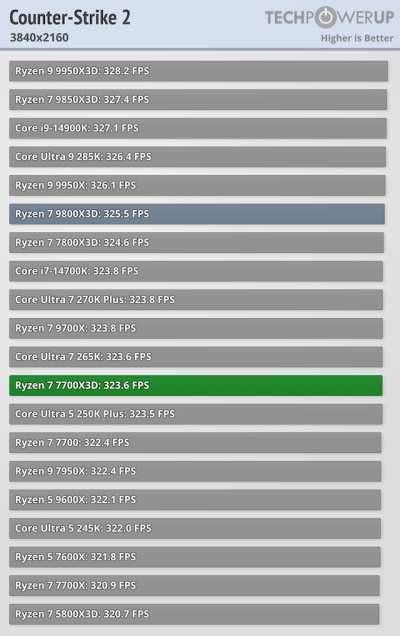
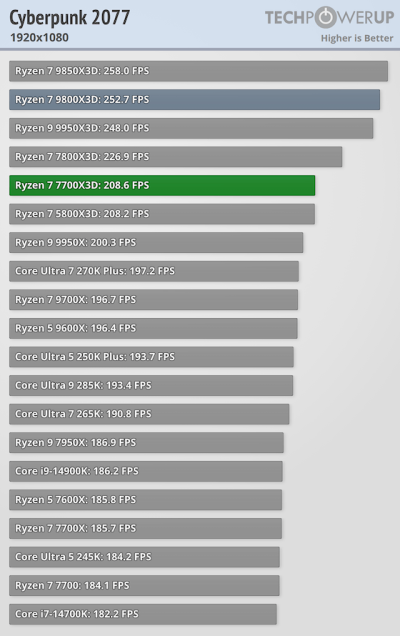
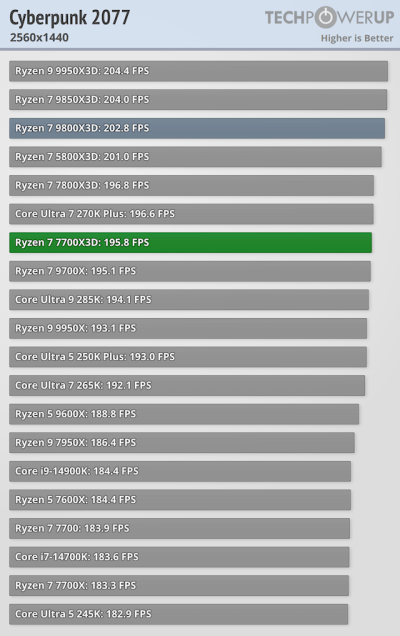
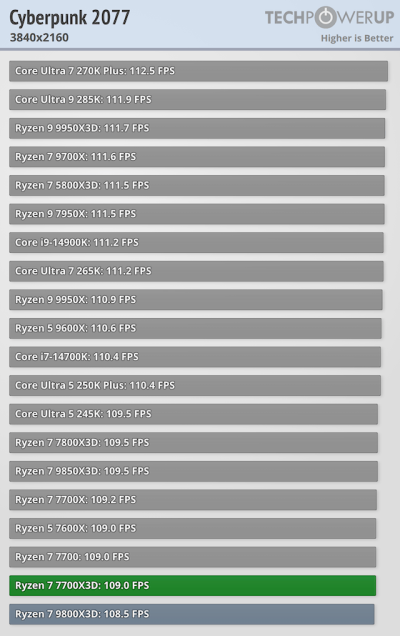
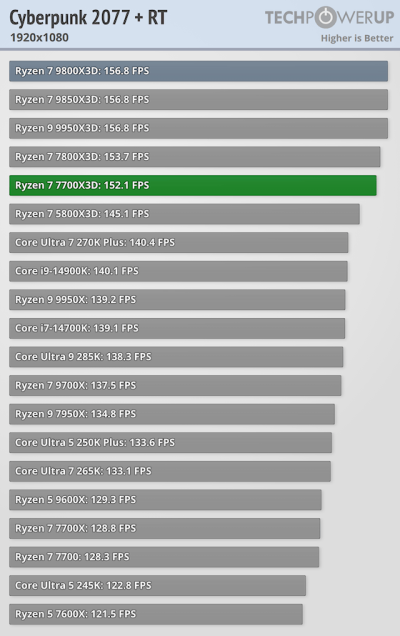
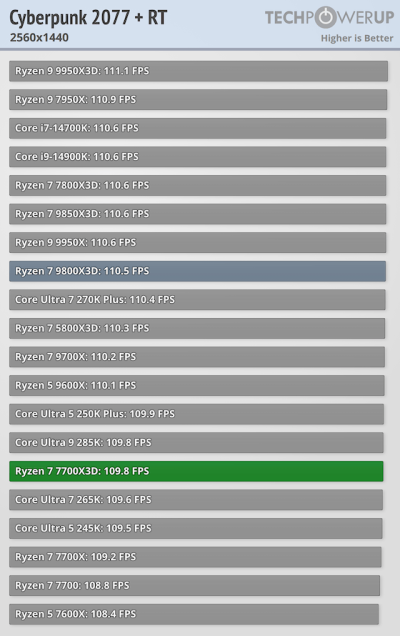
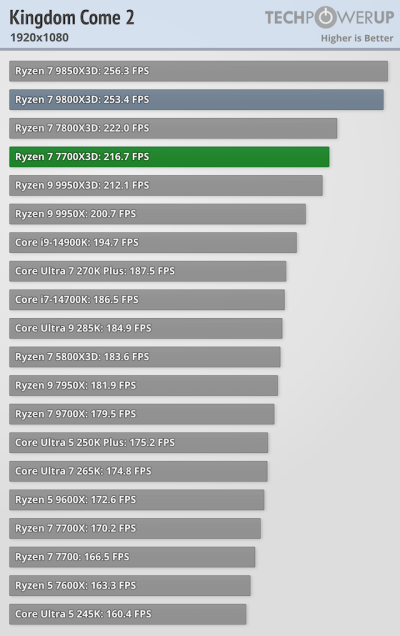
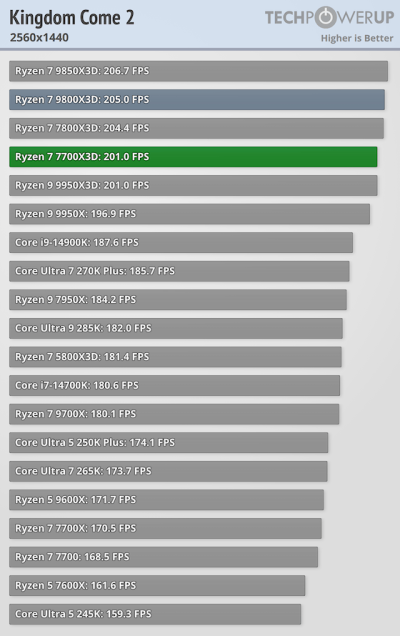
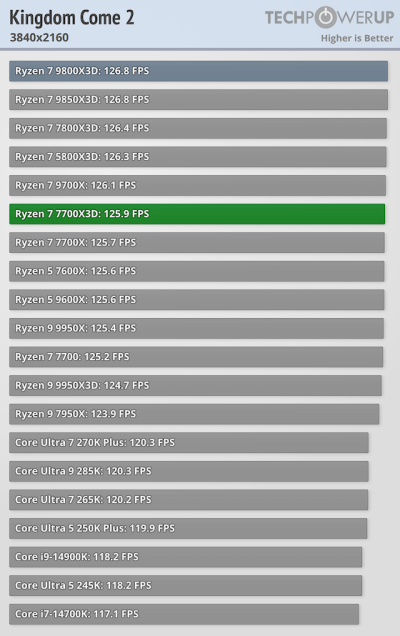
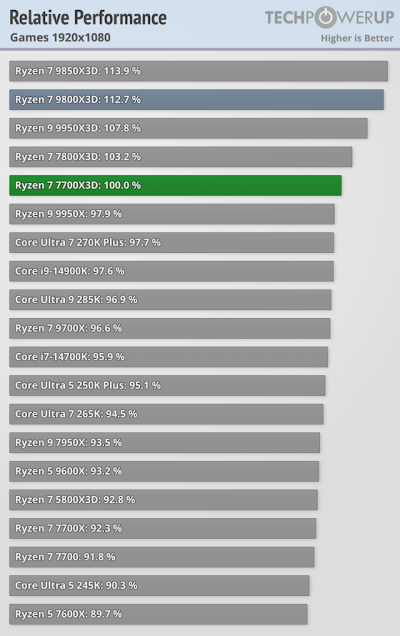
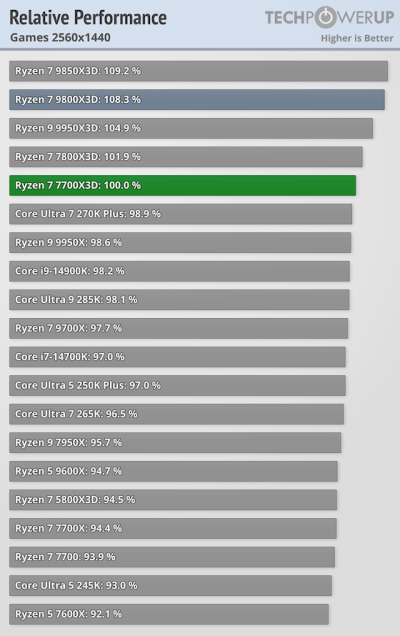
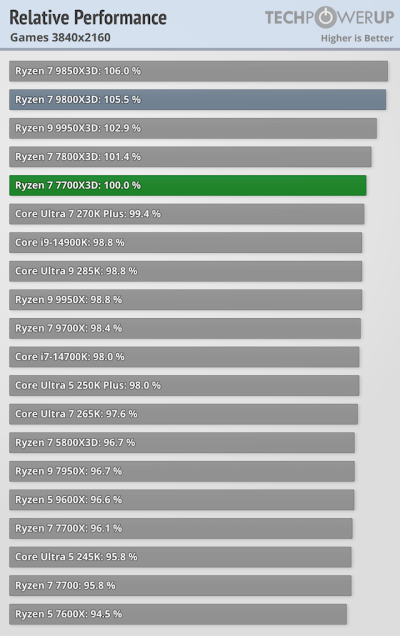
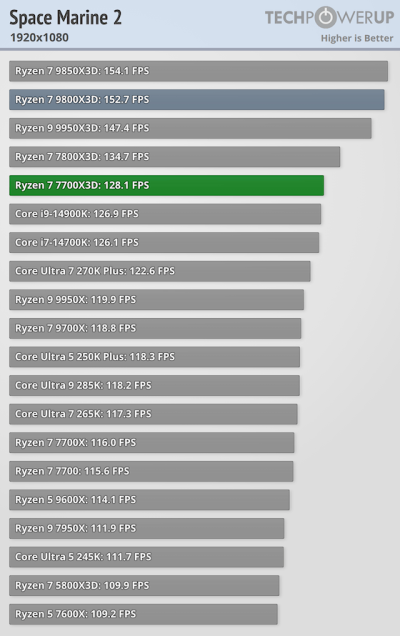
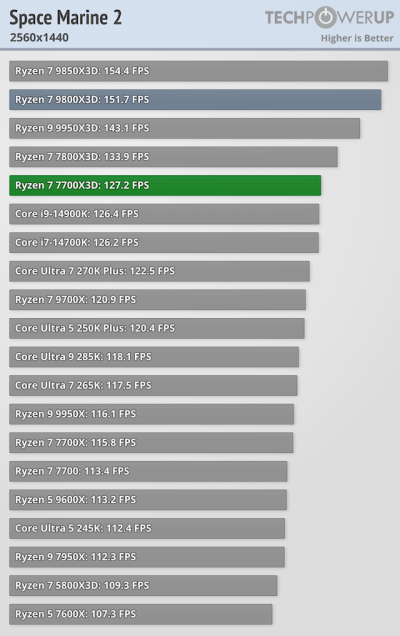
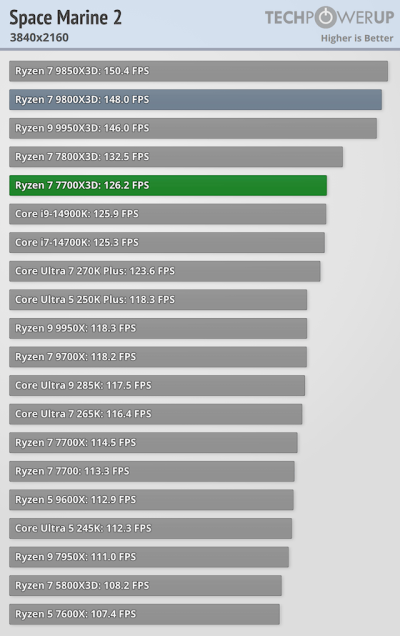
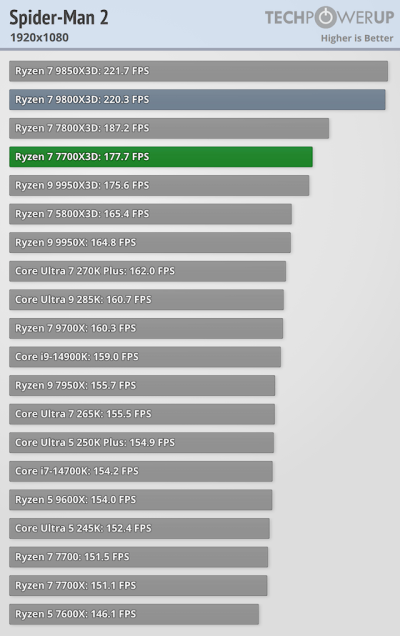
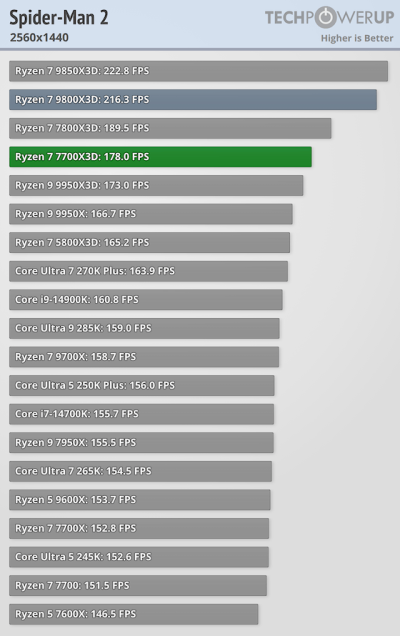
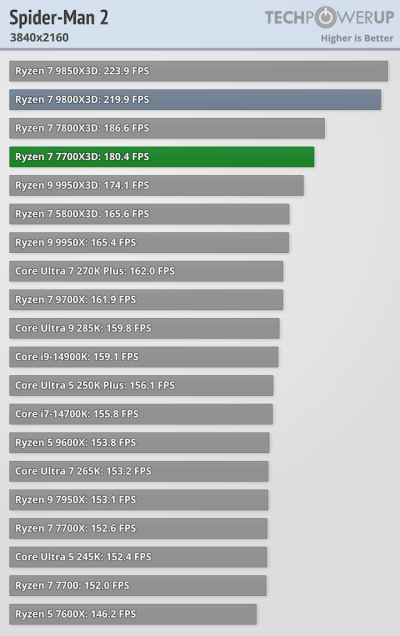
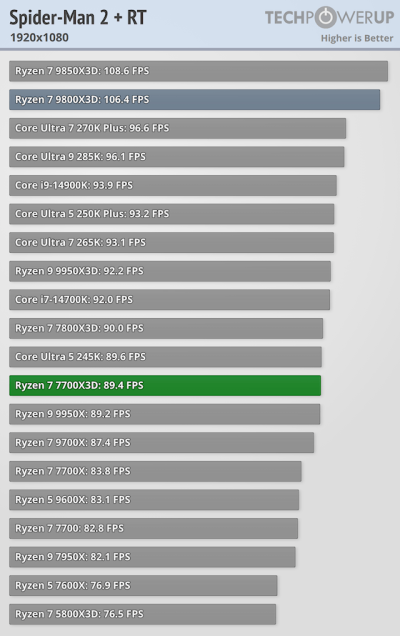
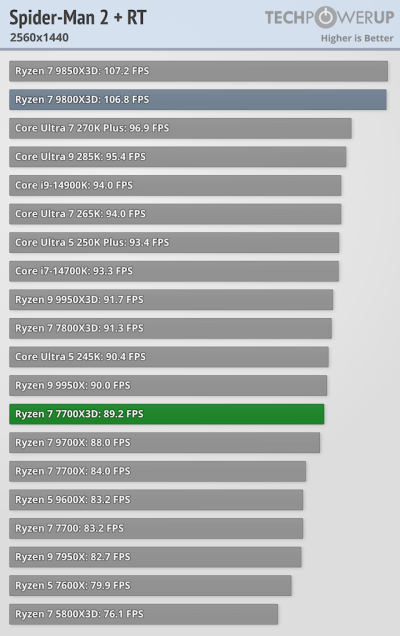
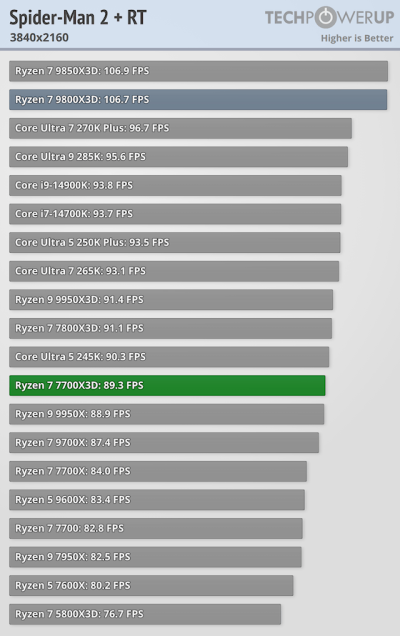
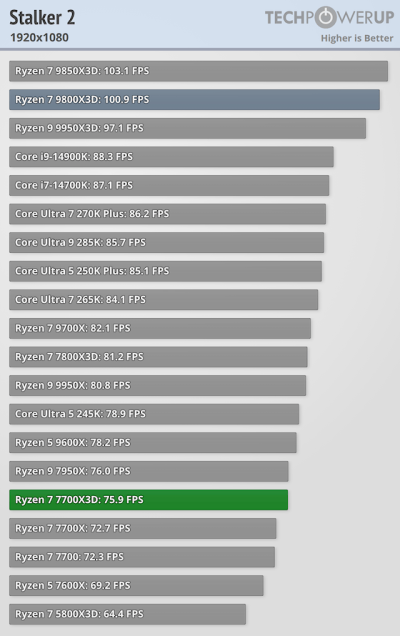
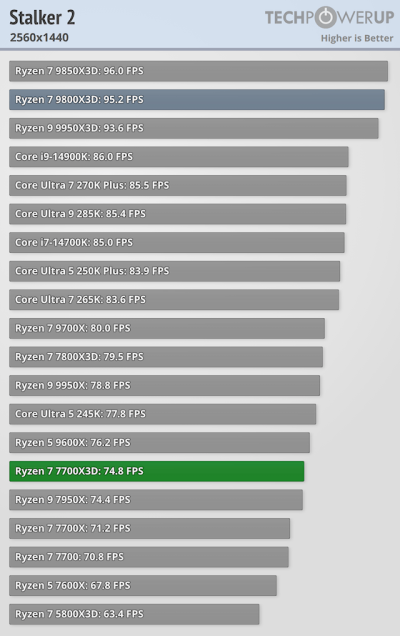
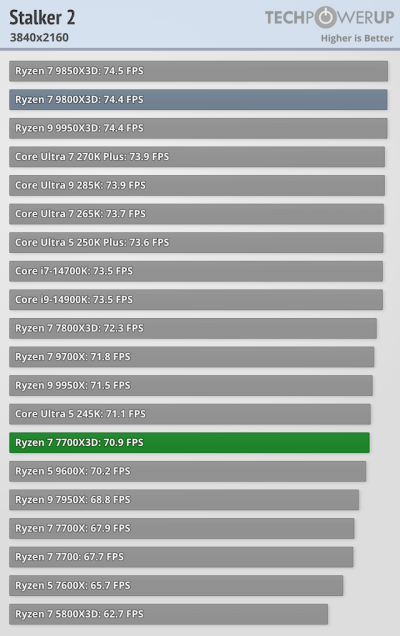
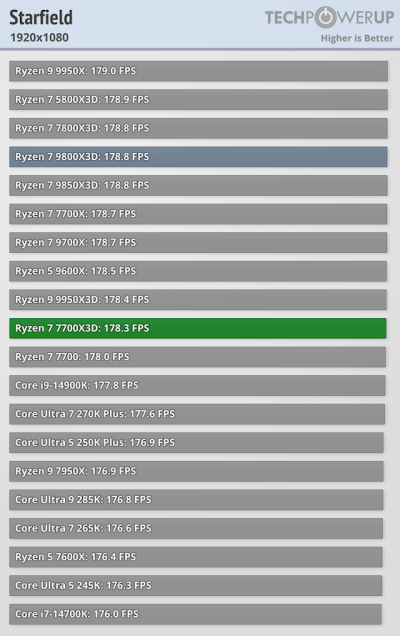
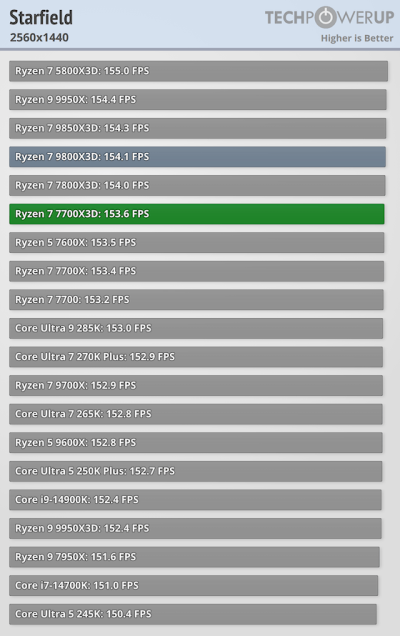
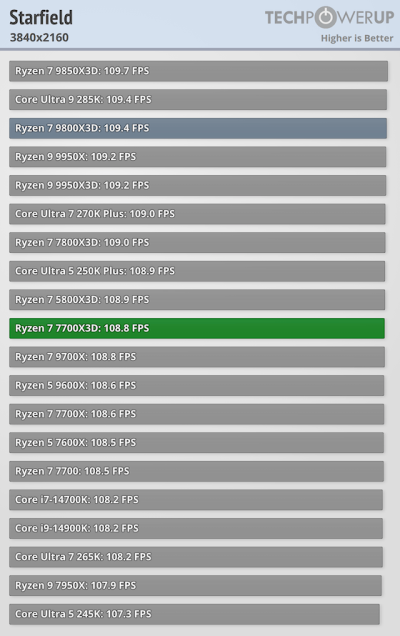
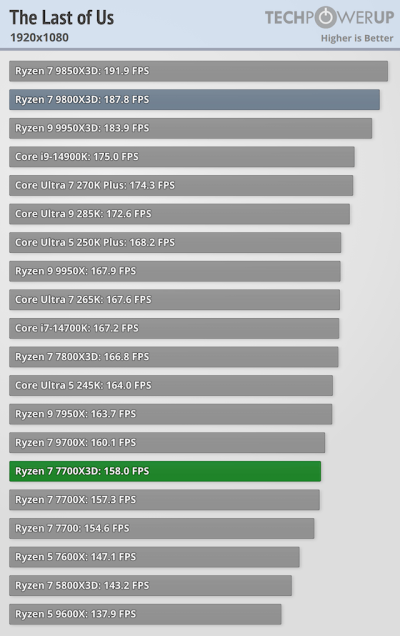
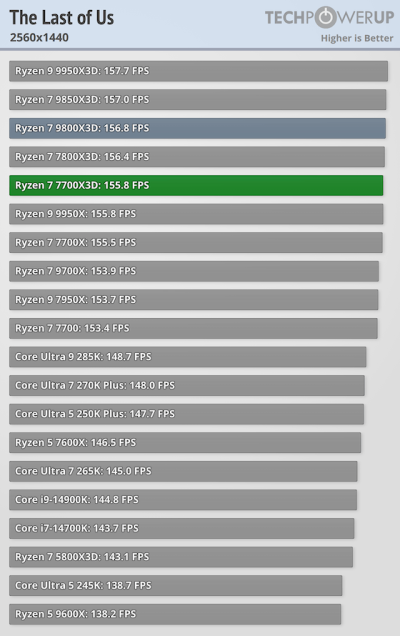
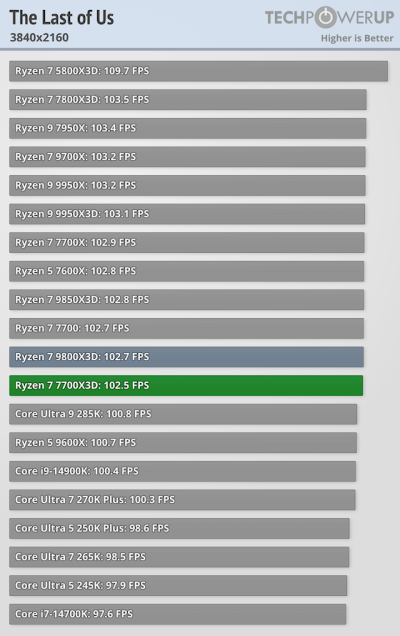
Real-world performance analysis reveals that the Ryzen 7 7700X3D occupies a precarious middle ground. On average, it trails its higher-tier sibling by 5–7%, while only marginally outpacing the most affordable X3D offering in the lineup—the six-core Ryzen 5 7600X3D. With a gaming performance gap of only about 2%, the advantage of having eight cores remains almost imperceptible in most scenarios.
The story is similar when looking at synthetic benchmarks and productivity workloads. The chip is roughly 5.7% faster than the standard Ryzen 7 7600X and comfortably beats the legendary AM4-based Ryzen 7 5800X3D. However, when compared to newer generations like the Ryzen 7 9800X3D, the performance gap becomes critical, reaching nearly 29%.
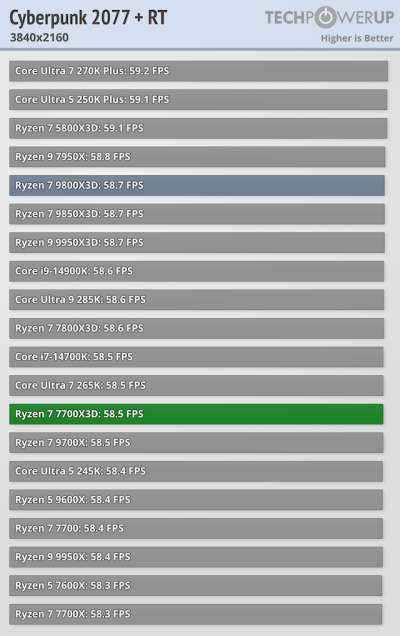
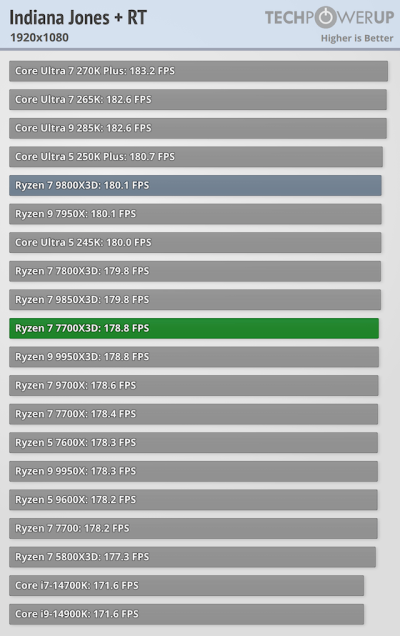
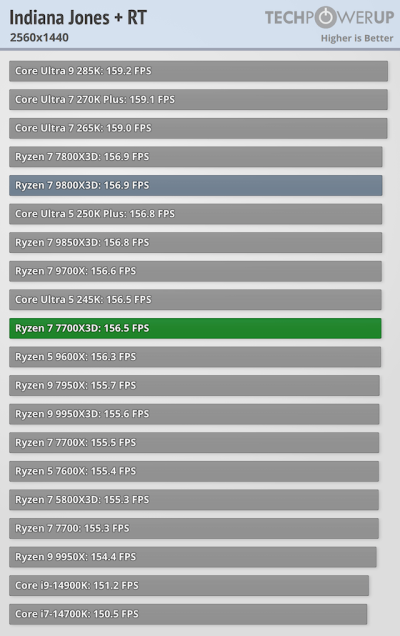
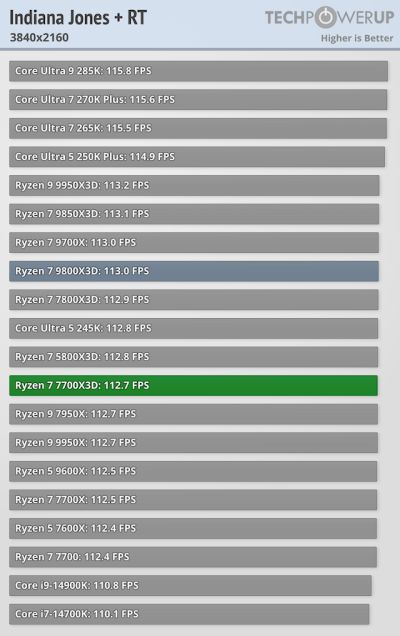
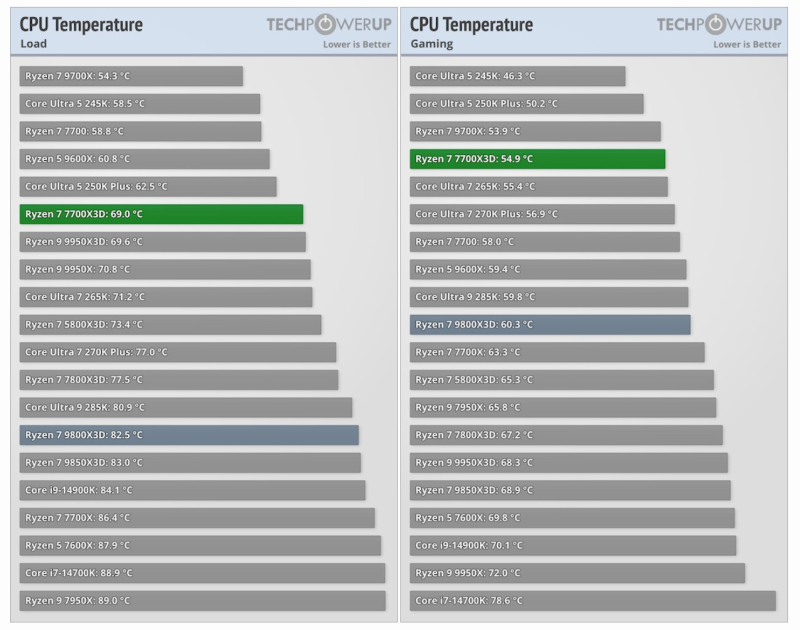
The device's thermal profile is particularly noteworthy. The entire 7000X3D series operates under a stricter temperature limit of 89°C, compared to the standard 95°C. This is dictated by the physics of 3D V-Cache technology: the additional memory layer sits directly atop the cores, acting as a thermal insulator that hinders heat dissipation and makes the die more susceptible to overheating.
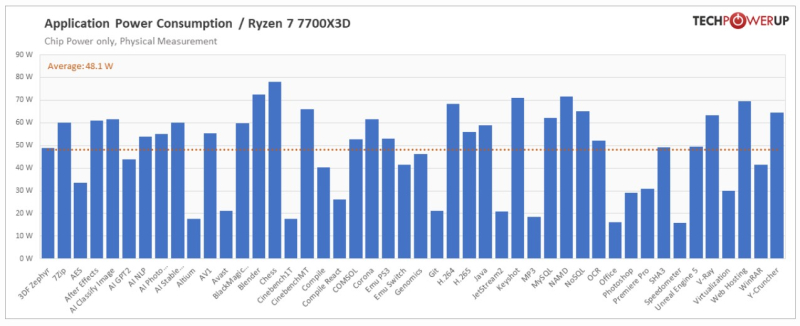
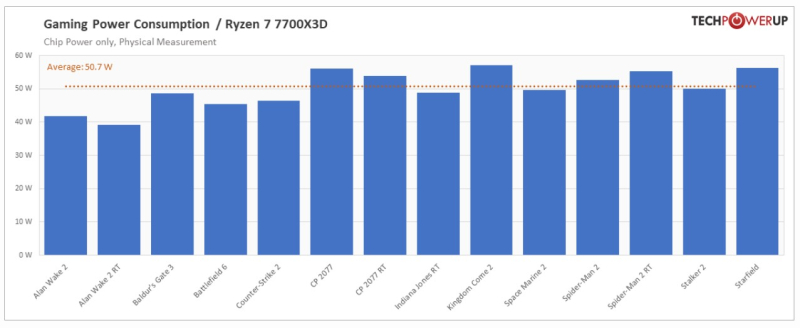
Nevertheless, thanks to reduced clock speeds and modest power consumption, the Ryzen 7 7700X3D demonstrates impressive efficiency. Under heavy loads, such as Blender rendering, the processor peaks at just 69°C, while gaming temperatures rarely exceed 55°C. Power draw also remains low: approximately 50W during gaming and up to 80W under peak loads.
Despite the sound engineering, the value proposition of the Ryzen 7 7700X3D is questionable. Priced at $329, it is only $20 cheaper than the Ryzen 7 7800X3D. This marginal price difference (roughly 6%) does not justify the loss in performance or the lack of manual overclocking capabilities available to standard X-series models.
In the current market landscape, this processor feels more like a technical curiosity than a compelling consumer offering. It would be a genuine hit for budget gaming if the price dropped below the $300 mark. As it stands, opting for the higher-tier model is the only logical choice for users seeking maximum efficiency from the AM5 platform.
 The Horizon of China's Technological Sovereignty in Lithography