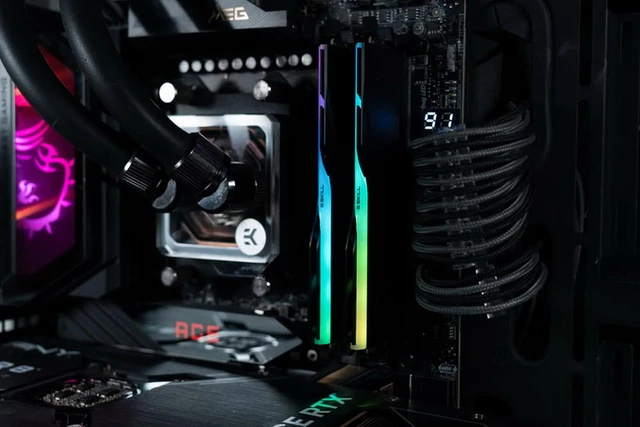
In the computer hardware industry, the line between technical specifications and marketing promises is often perilously thin. The G.Skill case serves as a stark illustration of the consequences that arise when transparency is sidelined in the description of memory module capabilities. A multi-million dollar class-action lawsuit has emerged as the byproduct of a systemic disconnect between the manufacturer and the end user. At the heart of the dispute lies a fundamental question: what exactly constitutes the "native" operating speed of DRAM modules?
The controversy surrounding G.Skill memory modules has exposed a long-standing industry friction: the disconnect between JEDEC standards and marketing specifications. Most users are accustomed to seeing impressive frequency figures on packaging, yet in practice, these metrics are rarely achievable "out of the box." Activating them requires enabling overclocking profiles, such as Intel XMP or AMD EXPO, which effectively push the memory beyond its baseline specifications.
Plaintiffs alleged that G.Skill deliberately misled consumers by presenting the maximum speeds of DDR4 and DDR5 modules as guaranteed specifications available without BIOS intervention. Furthermore, the company largely ignored warnings regarding the risks associated with overclocking. In reality, forcing higher frequencies can lead to system instability, memory errors, or even physical hardware damage—risks that consumers should be notified of upfront.
The fallout hit the brand's most popular lineups—Trident Z and Ripjaws. Specifically, the dispute concerned DDR4 modules exceeding 2133 MT/s and DDR5 modules operating faster than 4800 MT/s. The vast timeframe of the claims—spanning from January 2018 to January 2026—underscores how deeply this practice was embedded in the company's marketing strategy.
Despite initial attempts by G.Skill to defend the accuracy of its labeling, the conflict culminated in a $2.4 million settlement. This sum will be distributed among affected users, with individual payouts ranging from $19.68 to $24.60, depending on the quantity and specifications of the kits purchased.
However, financial restitution is only part of the resolution. G.Skill has committed to a complete overhaul of its customer communication strategy. Moving forward, packaging, online catalogs, and promotional materials must feature clear, unambiguous disclosures: the advertised high speeds are attainable only through the use of XMP or EXPO technologies.
This precedent serves as a critical signal to the entire hardware market. The era of "stealth" overclocking masquerading as standard capability is drawing to a close, giving way to technical transparency where the user knows exactly what they are paying for and the risks they assume when configuring their system.
 The Price of Acceleration: CXMT’s Rapid Push into Memory