The contemporary consumer electronics landscape is increasingly becoming a battlefield for aggressive patent litigation. At the heart of the latest clash are Apple, Google, and Samsung, all of whom are facing legal challenges brought forward by BoomCloud 360. The dispute centers on foundational spatial audio technologies—the very features that define the user experience across high-end hardware. The outcome of these proceedings could result in severe import restrictions and sales bans on flagship products within the U.S. market.
The personal audio industry is undergoing a profound transformation, as the shift from traditional stereo to immersive formats has become the defining trend of recent years. Yet, technological progress is often trailed by legal warfare. BoomCloud 360, a California-based audio engineering firm, has launched a probe via the U.S. International Trade Commission (USITC), accusing three of the world's largest tech titans of infringing upon its intellectual property.
The crux of BoomCloud 360's claims centers on three pivotal patents detailing sophisticated signal processing mechanisms. Specifically, the dispute concerns methods of gain adjustment used to isolate spatial and non-spatial components within an audio stream. This is a critical process that allows a system to clearly delineate primary vocals or dialogue from the surrounding sonic landscape, thereby creating a convincing sense of presence.
Furthermore, the patent disputes encompass mechanisms for compensating inter-channel asymmetry and methods for processing crosstalk with spectral distortion correction. In the realms of audiophilia and professional sound engineering, such manipulations are essential to ensure that audio intended for the left ear does not introduce parasitic artifacts when reaching the right, and vice versa. It is precisely these algorithms that enable modern headphones and smartphones to simulate three-dimensional space with high fidelity.
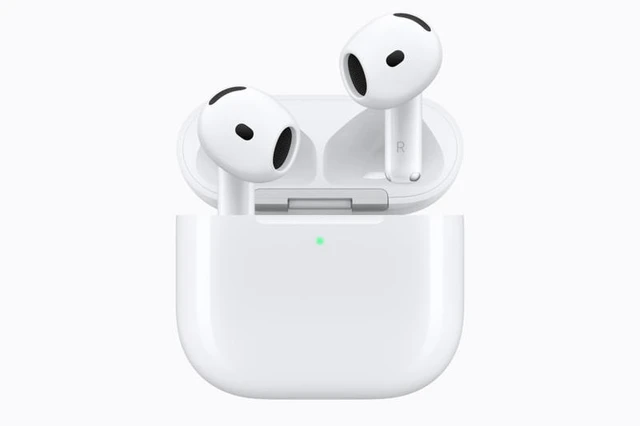
The stakes in this litigation are immense. BoomCloud 360 is not merely seeking monetary damages; it is petitioning the USITC for a comprehensive ban on the import and sale of devices utilizing the contested technologies. This puts flagship hardware in the crosshairs: from the latest AirPods 5 and Galaxy Z Fold series foldables to television panels and smart speakers. For giants like Apple and Samsung, such a blockade would result in staggering losses across one of the world's largest markets.
However, the initiation of a USITC investigation does not constitute a final ruling. The adjudication of such cases typically spans months or even years. In response, Apple, Google, and Samsung have already launched a counter-offensive, filing reciprocal lawsuits in U.S. federal courts. The conflict has now shifted toward challenging the validity of the patents themselves—a standard defensive maneuver for corporations of this magnitude.
 Analog Aesthetics in Digital Execution