The pursuit of peak mobile performance is entering an era of profound segmentation. Qualcomm continues to push the boundaries of silicon engineering, pivoting toward next-generation fabrication processes and integrating bespoke architectural solutions. Yet, this technological leap is mirrored by an increasingly convoluted naming convention, evolving into a veritable labyrinth for the end user. The latest generation of Snapdragon 8 chipsets promises unprecedented performance peaks, effectively stratifying the flagship market into distinct tiers of "premium" status.
The contemporary mobile processor landscape has evolved beyond linear progression. Rather than relying on a singular, uncompromising flagship, industry leaders are now engineering entire chip families where the distinctions between versions may be negligible in daily use, yet pivotal in synthetic benchmarks. Qualcomm is leaning heavily into this trend, diversifying the Snapdragon 8 lineup into multiple iterations—a strategy that inevitably complicates nomenclature but allows the company to saturate every niche of the premium segment.
At the heart of the upcoming refresh is the Snapdragon 8 Elite Gen 6 Pro (internal index SM8975). This SoC is poised to become the gold standard for performance, driven by a transition to a 2nm fabrication process, which promises a massive leap in energy efficiency and transistor density. The system is built around an aggressive 2+3+3 Oryon core configuration, leveraging Qualcomm's custom cores to push clock speeds to record-breaking levels.
Significant engineering focus has been directed toward the A850 GPU subsystem. In the Pro variant, the GPU gains unprecedented memory headroom—up to 16GB—effectively blurring the line between mobile gaming and the console experience. The integration of the latest LPDDR6 standard alongside LPDDR5X ensures the massive bandwidth required to run resource-intensive local neural networks and complex graphical scenes.
However, this "elite" status will be tiered. Alongside the Pro version, Qualcomm is preparing the Snapdragon 8 Elite Gen 6 and the more conservative Snapdragon 8 Gen 6. Despite retaining the same 2+3+3 core architecture, the latter will feature scaled-back graphics and be limited to LPDDR5X memory support. With a GPU memory ceiling of 12GB, this chip is positioned for "accessible" flagships, where peak raw power is not the sole priority.
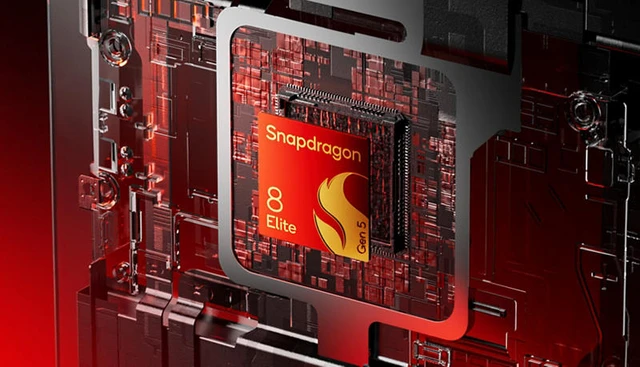
Beyond these new developments, the company plans to extend the lifecycle of the previous generation. We expect an updated Snapdragon 8 Elite Gen 5 (index SM8850Q), as well as the introduction of the SM8845 Pro. The latter may be branded commercially as either the Snapdragon 8 Gen 6 or the Snapdragon 8 Gen 5 Pro, further underscoring Qualcomm's commitment to a fluid, albeit convoluted, product positioning strategy.
The release cadence remains consistent with industry norms. The first devices powered by the top-tier Snapdragon 8 Elite Gen 6 Pro are expected to hit the market between October and December. This update cycle will shape the landscape of next year's flagship smartphones, where the primary differentiator will no longer be the mere presence of a "top-end" chip, but the specific suffix in its nomenclature, determining the level of memory access and core frequencies.
 The Phenomenon of the Foldable iPhone Ultra