In the high-stakes arena of professional esports, the battle is fought in milliseconds; often, the razor-thin margin between victory and defeat comes down to a single frame. Today's relentless demand for instantaneous visual response is pushing manufacturers to probe the very physical limits of panel technology. LG Display has achieved a paradigm shift with the unveiling of an OLED panel boasting an unprecedented refresh rate—a solution engineered to finally eliminate the gap between a player's action and its manifestation on screen.
In the world of competitive gaming, there is an unspoken industry benchmark: the monitor diagonal should be approximately 24 inches. This size is dictated by human visual physiology—such a screen area allows a player to encompass the entire frame within their field of vision without moving their head or losing focus on the periphery. It is within this specific form factor that LG Display has integrated its latest breakthrough: a 24.5-inch OLED panel that redefines the technical boundaries of "fluidity."
The crowning achievement is a refresh rate of 720 Hz. Coupled with a near-instantaneous response time of 0.02 ms, this virtually eliminates motion blur—a persistent issue even for the fastest IPS matrices. Despite this leap in speed, the resolution remains the esports classic: Full HD (1920 × 1080 pixels). This choice is strategic; it reduces the load on the GPU, enabling it to push the maximum possible FPS, which is critical for unlocking the panel's full potential.
Achieving these metrics required LG's engineers to overhaul the entire production cycle. This was not merely a matter of swapping components, but a holistic approach combining the design of the panel's internal structure with deep optimization of the control system. Synchronizing such a high refresh rate demands immense bandwidth and precision timing control to prevent artifacts and ensure image stability.
The first commercial realization of this technology is the Asus ROG Swift OLED PG259QWS Ace. The device has already been designated as the official standard for one of the year's premier events—the PGL CS2 Major Singapore 2026. In the context of Counter-Strike 2, where aiming precision and reaction speed dictate the outcome of a round, such a panel becomes a legitimate "accelerator" for human perception.
Beyond raw performance, the monitor addresses a critical psychological and ergonomic dimension. The device features an integrated position sensor that accurately tracks the screen's height, tilt, and swivel angle. For a professional player accustomed to a specific viewing angle, even a marginal deviation in monitor placement at a new tournament can be a source of discomfort. Now, these installation parameters can be digitized and instantly replicated on any other system, ensuring absolute identity of the workspace.

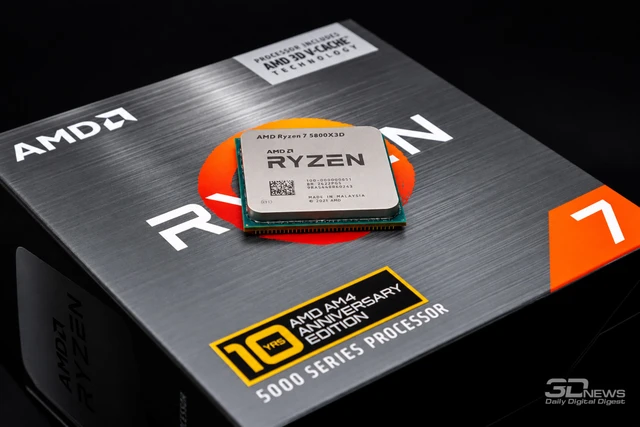 The Second Life of a Legend: Ryzen 7 5800X3D