The history of the semiconductor industry is often defined by high-stakes gambles that reshape the market landscape for decades to come. Two decades ago, AMD’s acquisition of ATI served as one such watershed moment, unifying CPU and GPU expertise under a single corporate umbrella. This move was far more than a mere expansion of the product portfolio; it laid the strategic foundation for the convergence of general-purpose computing and visual processing. Today, the dividends of this union are evident in AMD's dominance across the gaming console market and the engineering of next-generation, high-performance hybrid silicon.
On July 24, 2006, New York witnessed an event poised to redefine the landscape of computer hardware: AMD and ATI publicly announced their merger. The deal, valued at a staggering $5.4 billion in a combination of cash and stock, appeared to be an ambitious attempt to form a united front against industry titans. However, the path toward full integration would prove to be long and incremental.
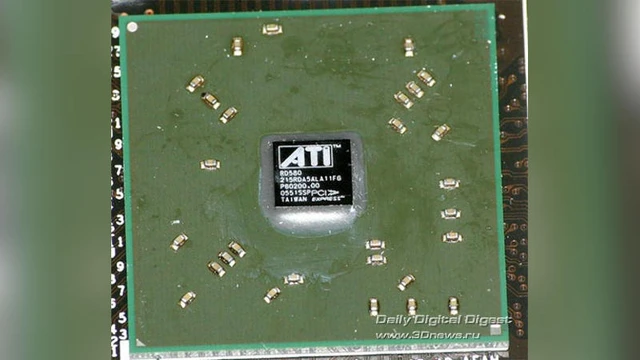
The acquisition was marked by the gradual erosion of the ATI brand from the public eye. The symbolic turning point arrived with the R600 GPU; conceived during the ATI era, it hit the market rebranded as the AMD Radeon HD 2900. For several years, the industry witnessed a curious transitional phase where legacy logos lingered on packaging, and ATI markings remained etched beneath the heatsinks of chips produced well into 2010.
While the battle against Nvidia in the discrete GPU segment remained fierce, the true strategic dividends of the merger materialized later. In 2011, the world saw the debut of AMD Fusion—the realization of the APU (Accelerated Processing Unit) concept. By fusing CPU cores and Radeon graphics onto a single die, AMD provided a technological answer to the market's demand for compactness and efficiency.
This architectural philosophy has evolved into today’s high-performance solutions, such as the Ryzen AI Max (featured in projects like Strix Halo and Gorgon Halo). In these systems, integrated graphics based on RDNA 3.5—boasting 40 compute units—are capable of rivaling discrete solutions like the GeForce RTX 4060 or 4070, a feat made possible through the use of high-bandwidth unified memory with user-configurable options.
It was this bet on hybrid silicon that allowed AMD to secure a virtual monopoly in the high-end gaming console market, where resource integration is critical. While Intel attempts to counter this challenge with Panther Lake and B390 graphics, and Nvidia pivots toward its own Arm-based processors, AMD maintains its edge through a synergy between CPU and GPU honed over decades.
Intriguingly, history could have taken a radically different path. Prior to the ATI merger, rumors swirled about a potential union between AMD and Nvidia. However, the deal collapsed due to clashing egos: Jensen Huang took a hardline stance, insisting on the CEO position of the merged entity. Ultimately, this corporate friction dictated the trajectory of the industry for the next two decades, steering AMD toward its alliance with the Canadian innovators at ATI.
 The Triumph of 3nm Chip Manufacturing