The global AI race has evolved into a sophisticated geopolitical chess match, where algorithms serve as instruments of strategic leverage. While Washington endeavors to draw a "digital curtain" around China, the reality on the ground proves far more porous than regulators would prefer. Investigations reveal that American tech titans continue to funnel cutting-edge technology to their primary rivals via offshore loopholes. This paradox exposes a profound tension between the imperatives of national security and the insatiable drive for corporate profit.
The contemporary AI landscape is defined by a peculiar coexistence of overt hostility and covert pragmatism. Despite the aggressive rhetoric emanating from the White House and the proliferation of official blacklists, leading American laboratories—most notably OpenAI and Google—continue to maintain strategic business ties with Chinese tech giants. According to the Financial Times, Singaporean subsidiaries of Alibaba, Baidu, and Tencent have maintained access to cutting-edge models, despite these entities being openly accused by the U.S. of collaborating closely with the PRC's military-industrial complex.
The mechanism for bypassing these restrictions has proven surprisingly simple. Washington has adopted a surgical approach to sanctions, prohibiting the export of only the most advanced iterations of specific models, such as OpenAI's GPT-5.6 or Anthropic's Mythos and Fable. However, this selectivity has carved out a perfect regulatory "gray zone." By leveraging their Singaporean offices, Chinese corporations gain API access to previous versions or alternative products from the same vendors. While these models may not represent the absolute bleeding edge of the technology, they remain sufficiently powerful to ensure that Chinese services remain competitive on the global stage.
The reactions of the companies themselves to these revelations underscore a desperate desire to maintain strategic wiggle room. OpenAI limited its response to a statement regarding the "suspension" of access for users linked to Alibaba—a term that, in corporate parlance, rarely signifies a definitive or irrevocable rupture. Google, meanwhile, points to a usage policy that merely "implies" a prohibition on utilizing services outside specific regions, such as Hong Kong and Singapore. Such linguistic ambiguity allows these firms to maintain formal legal compliance while effectively preserving their Asian revenue streams.
This situation exposes a fundamental paradox in American state policy. On one hand, the Department of Justice and the FTC are pursuing aggressive antitrust investigations against Google and OpenAI, fearing their total hegemony over the domestic market. On the other hand, these same "monopolists" have coalesced within the Frontier Model Forum—an industry body coordinating efforts to stifle Chinese competitors. In essence, the "bad monopoly" at home transforms into a "good cartel" on the international stage when the objective shifts to external expansion and the protection of technological sovereignty.
Of particular concern to U.S. policymakers is not so much direct API access as it is the process of "model distillation." This technique involves training leaner, more resource-efficient neural networks using the outputs and logical inferences of massive proprietary models. Effectively, Chinese developers are utilizing American LLMs as gold-standard instructors for their own systems. The success of DeepSeek serves as a prime example: by employing these methods, they have developed models that are not only highly efficient but significantly cheaper than their premium American counterparts. This introduces a new threat—the economic erosion of Western services, which are rapidly losing their pricing advantage.
The current sanctions regime in the AI sector bears a striking resemblance to the history of semiconductor restrictions: bans exist de jure, but workarounds function as long as the commercial incentive outweighs the political risk. As long as export controls remain fragmented and corporations find ways to legitimize shipments through third-party nations, the technological divide between the U.S. and China will continue to shrink. In this survival game, victory will not go to the party best at imposing prohibitions, but to the one most capable of adapting foreign breakthroughs to its own strategic ends.

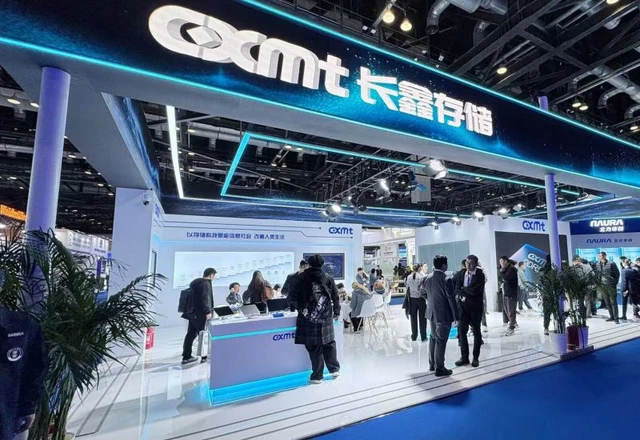 CXMT Lawsuit Against the US Department of Defense