Intellectual property disputes within the semiconductor industry often dictate the financial trajectory of entire product portfolios. A recent clash between a memory titan and a satellite operator vividly illustrates how niche aerospace innovations can evolve into the bedrock of mass-market consumer hardware. A Texas court has quantified the value of this technological convergence in the hundreds of millions of dollars—a precedent that underscores the intricacies of a patent landscape where sectoral boundaries increasingly dissolve in the pursuit of superior data storage efficiency.
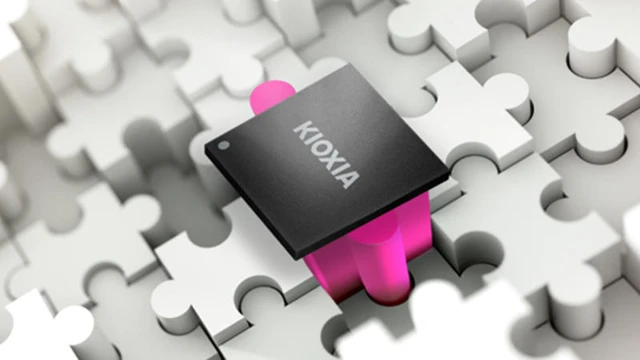
A legal battle in Waco, Texas, has culminated in a substantial financial blow for Japanese chipmaker Kioxia, which has been ordered to pay Viasat $229 million. At the heart of the dispute is the infringement of patents related to memory management technology—a critical component that directly impacts device energy efficiency and operational longevity.
The crux of the conflict lies in the fundamental architecture of flash memory, where data is stored as electrical charges within transistors. However, as manufacturing scales and storage density increases, the risk of bit errors rises, necessitating the implementation of sophisticated error-correction algorithms. This is where the interests of the two companies collided. Viasat, a specialist in satellite communications, developed unique error-correction mechanisms originally designed for systems operating in the extreme conditions of space—environments where power consumption and reliability are not just requirements, but critical factors for mission survival.
According to the plaintiff, Kioxia integrated analogous error-correction methodologies into its commercial flash memory devices, effectively leveraging Viasat’s intellectual property to enhance product performance. This integration allowed for reduced power consumption and a significant increase in operational lifespan—attributes that are highly coveted across both consumer electronics and enterprise server solutions.
Kioxia’s defense attempted to challenge the validity of the patent itself, arguing that it lacked the necessary novelty or was otherwise invalid. However, the jury sided with the California-based operator, upholding Viasat's claims. This case underscores a pivotal trend in the modern tech landscape: innovations born within specialized sectors, such as aerospace engineering, are becoming invaluable assets when adapted for the mass semiconductor market.
 Nvidia N1X and the New Era of Arm PCs