The road to technological hegemony is rarely linear or predictable. Nvidia’s current dominance in artificial intelligence finds its roots in the era of arcade cabinets and the daring experimentation of 1990s Japanese game development. The interplay between these two companies serves as a prime example of how a technical failure can pivot into a strategic lifeline—an alliance that charted the course for graphics computing for decades to come.
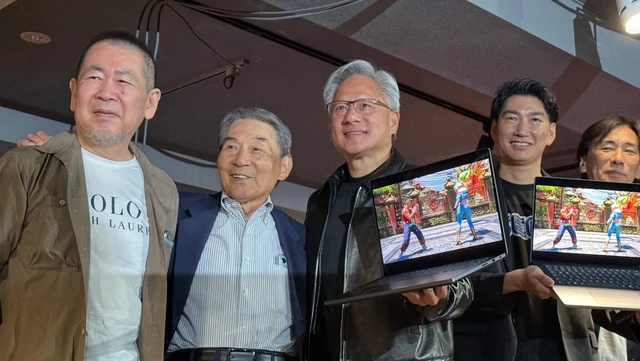
Nvidia’s current ascendancy, epitomized by a market capitalization exceeding $5 trillion, is often viewed as the byproduct of the rapid surge in neural networks. Yet, the true origins of this dominance lie in a profound reverence for visual effects culture and an early, pivotal partnership with Sega. At a recent event at GiGO Akihabara, CEO Jensen Huang candidly acknowledged that without the Japanese giant's support, the company might not have survived its nascent years.
In the early nineties, the industry stood on the precipice of a transition toward full-scale 3D rendering. For the fledgling Nvidia team, founded in 1993, the catalyst was Daytona USA, which hit North American arcades in 1994. At the time, its seamless texturing and rock-solid 60 frames per second felt like nothing short of magic. It was this experience that forged Huang’s ambition: to engineer a GPU capable of replicating such fidelity and fluidity outside the confines of specialized arcade hardware.
However, the path to success was fraught with crisis. In the late nineties, Sega enlisted Nvidia to develop a GPU for its Dreamcast console—a collaboration that became a true trial by fire. Nvidia’s technological stack at the time focused on direct texturing and curved surfaces, whereas the Dreamcast architecture demanded a fundamentally different approach: reverse texturing and polygon-based rendering.
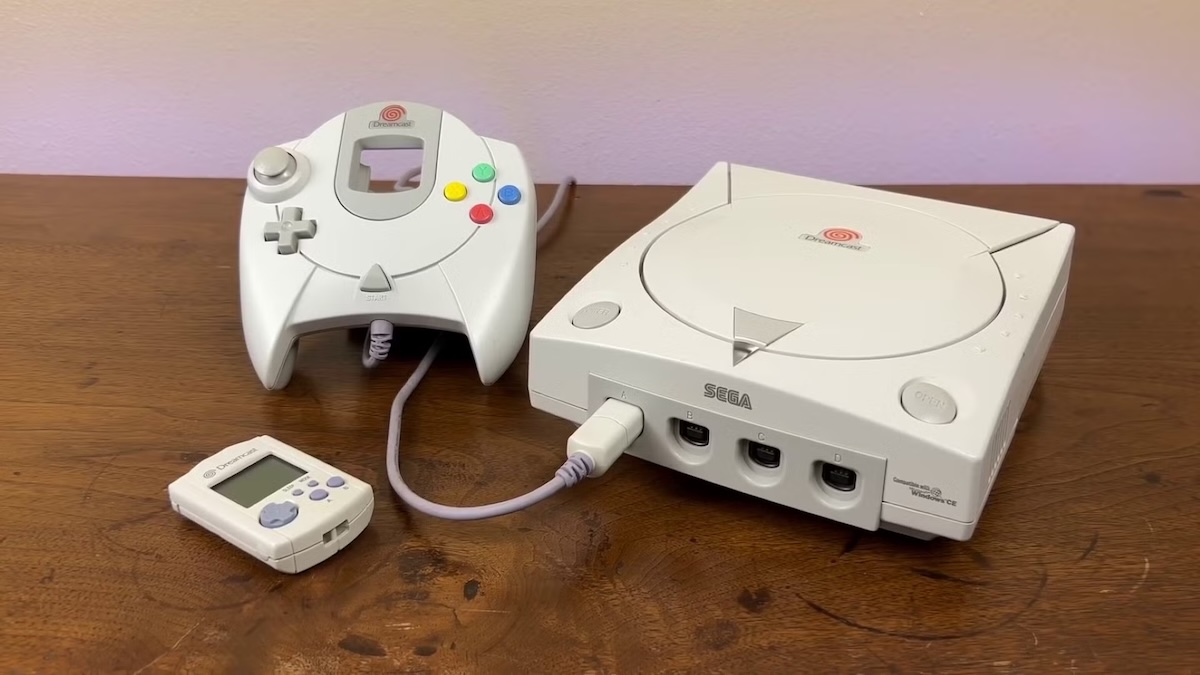
This conceptual divide proved fatal; after nine months of development, it became clear that Nvidia’s solutions were incompatible with the console's hardware. In any other scenario, such a failure might have triggered bankruptcy or a total collapse of the relationship. Instead, there was a rare act of strategic trust: despite the technical failure of the Dreamcast project, Sega agreed to invest in Nvidia. These funds provided the financial bedrock that allowed the company to pivot toward universal graphics solutions and survive an era of cutthroat competition.
There is a poignant historical irony here: while Sega eventually pivoted away from hardware in favor of software, Nvidia transformed its gaming tools into computational powerhouses for the entire world. Today’s breakthroughs in AI and robotics are the direct lineage of a GPU evolution that began with the attempt to render the perfect racing track.
A new chapter of this partnership is now unfolding at the state level, as the Japanese government and Nvidia join forces to advance national AI initiatives. This continuity was symbolized by a demonstration of the upcoming fighter Virtua Fighter Crossroads, running on a laptop powered by an Nvidia RTX Spark hybrid processor. It represents a complete evolutionary cycle: from the arcade cabinets of the nineties to the sophisticated neuromorphic computing of today.
 The Triumph of 3nm Chip Manufacturing