The handheld gaming PC market is undergoing a genuine renaissance, evolving from a niche curiosity into a mainstream standard for content consumption. Yet, the industry continues to grapple with the elusive balance between the intuitive ergonomics of a console and the raw utility of a full-fledged workstation. Acer’s new Project DualPlay Mini concept proposes a bold resolution to this dilemma through the physical transformation of the hardware itself. It presents a vision of a future where the boundaries between a handheld controller and a laptop are irrevocably blurred.
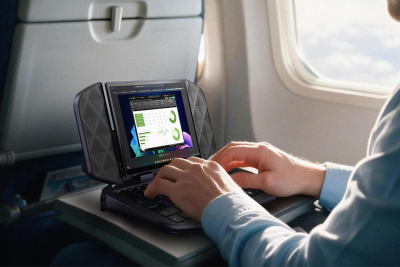
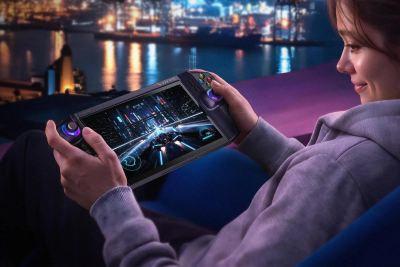
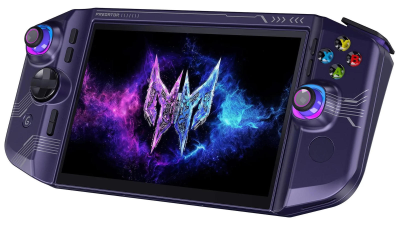
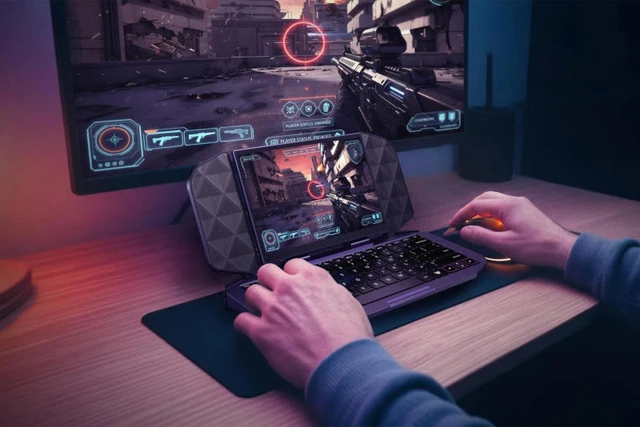
Modern gaming demands versatility, and Project DualPlay Mini embodies the ideal of true convergence. In its primary state, the device is a traditional handheld console featuring an 8-inch display and all the essential controls: analog sticks, a D-pad, and a standard ABXY layout. However, the concept's real brilliance lies in its transformation mechanism. A flip-and-rotate screen allows the console to instantly morph into an ultra-compact laptop, revealing a full-fledged backlit keyboard.
This approach addresses a fundamental bottleneck of handheld PCs: limited control schemes. While action titles and RPGs are ideally suited for controllers, competitive first-person shooters and strategy games demand the precision of a keyboard and mouse. Project DualPlay Mini enables users to switch between these modes seamlessly, eliminating the need for external peripherals.
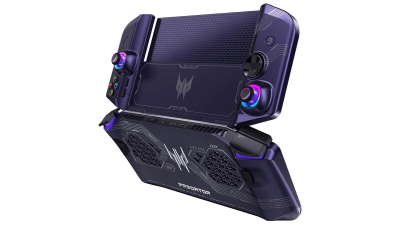
The technical architecture relies on the Intel ecosystem, though the specific processor model remains undisclosed. Given the ultra-compact chassis, thermal management becomes critical. Acer's engineers have integrated a dual-fan cooling system borrowed from the more powerful Predator Atlas 8. Of particular interest is the hybrid configuration: a combination of a standard plastic fan and a Predator AeroBlade metal module. The latter significantly increases airflow throughput while maintaining high RPMs—a vital factor in preventing thermal throttling in compact systems.
Expandability has been carefully considered for both mobile and stationary use cases. The chassis features two USB Type-C ports, one of which supports the Thunderbolt standard. This elevates Project DualPlay Mini from a mere gaming device to a fully capable workstation; via a single cable, the device can output video to an external monitor and receive power, effectively operating in desktop mode.
Despite the detailed nature of the concept, Project DualPlay Mini currently remains a technological manifesto. The manufacturer has not announced a production timeline or pricing, emphasizing the project's experimental status. Nevertheless, this concept sets the trajectory for the entire industry, proving that the future of portable hardware lies in adaptability and multifunctionality.
 The Horizon of China's Technological Sovereignty in Lithography