Modern digital content demands absolute flexibility and high-performance, real-time execution. Open-source tooling has evolved into the bedrock of the streaming industry, transforming standard workstations into sophisticated production switchers. OBS Studio continues to drive this ecosystem forward, striking a critical balance between core stability and the integration of cutting-edge capture technologies. The latest release, version 32.2, prioritizes workflow optimization and the expansion of hardware compatibility.
July 2026 marked the release of OBS Studio 32.2, a significant update to one of the most influential ecosystems for live streaming, compositing, and recording. Developed in C and C++ and distributed under the GPLv2 license, the project has long transcended its status as mere software, evolving into the industry standard for content creators across Windows, macOS, and Linux.
A pivotal milestone in the product's evolution was the adoption of semantic versioning (MAJOR.MINOR.PATCH), introduced back in version 31.0. This framework allows for a clear distinction between breaking changes, functional updates, and targeted bug fixes—a critical requirement for an ecosystem heavily reliant on third-party plugins.
The philosophy behind OBS Studio is centered on creating a universal, portable tool that remains OS-agnostic and highly extensible. At its core lies a modular architecture where the user interface is entirely decoupled from the program's kernel. This separation enables developers to implement new features without compromising the fundamental logic of stream processing. To ensure peak performance, the system is deeply integrated with hardware acceleration engines such as NVIDIA's NVENC, Intel QSV, and VAAPI, effectively minimizing CPU overhead during high-bitrate video encoding.
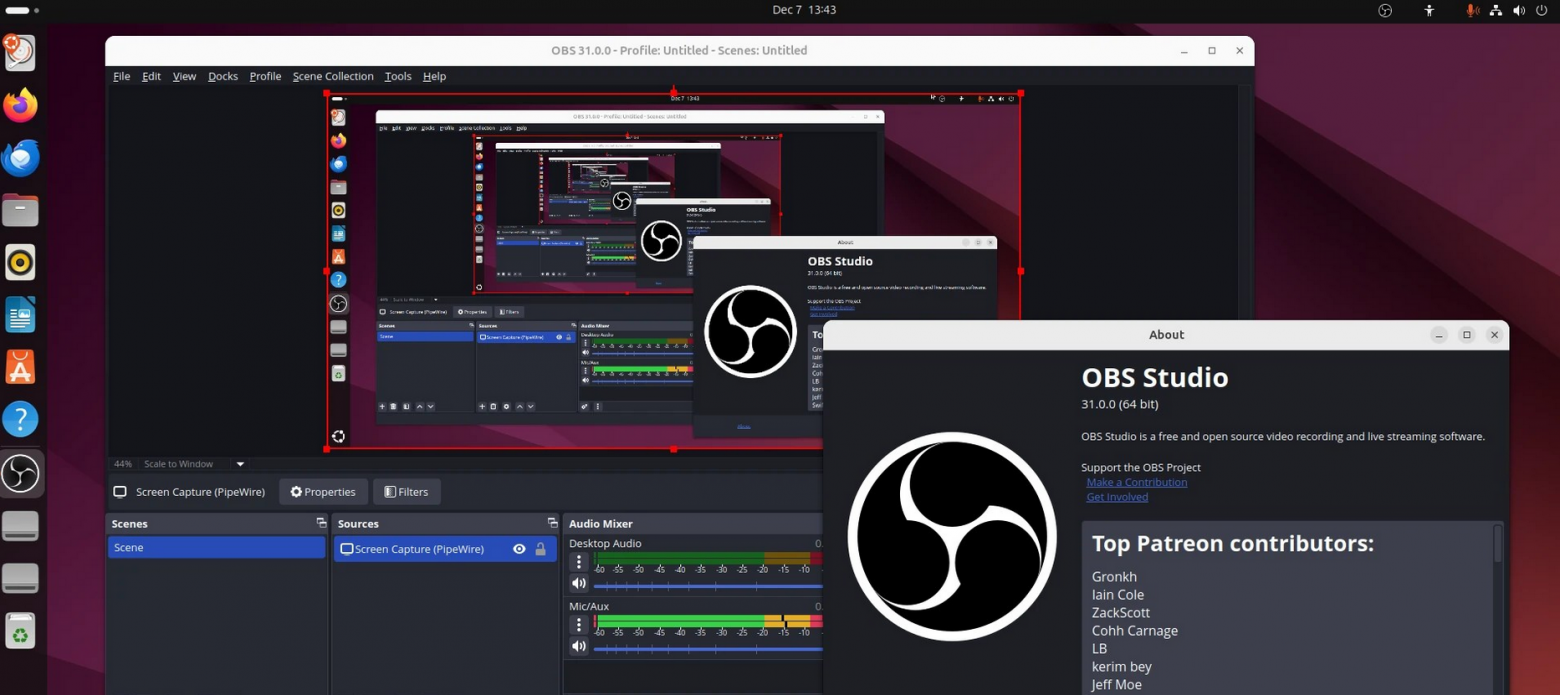
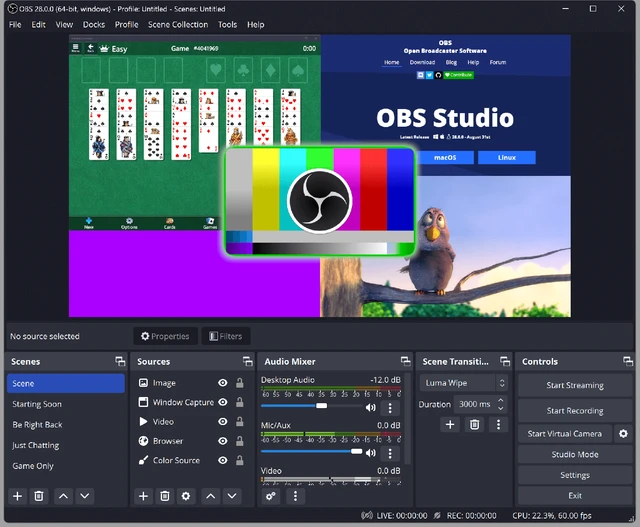
The system's technical prowess is most evident in its compositing capabilities. OBS Studio allows users to construct complex scenes from a diverse array of sources: from screen and window captures to webcams, capture cards, and static imagery. The ability to switch instantaneously between preset scenes transforms the streaming process into a full-scale television production. Complementing the visual pipeline is an advanced audio system supporting VST plugins for sophisticated filtering, noise suppression, and precision gain control.
Version 32.2 introduces several qualitative improvements focused on ergonomics and expanded visual capabilities. A key highlight is the redesigned source addition dialog, which replaces the standard dropdown menu, significantly streamlining navigation in complex projects. The introduction of an SDR-to-HDR conversion filter opens new possibilities for modern high-dynamic-range displays, while .webp support in slideshows expands graphical flexibility.
Particular attention has been paid to optimization for the Apple ecosystem. Mac users on Intel-based hardware will now be automatically transitioned to Apple Silicon builds whenever compatible hardware is detected. This shift radically enhances application efficiency, although it necessitates updating third-party plugins to native ARM versions.
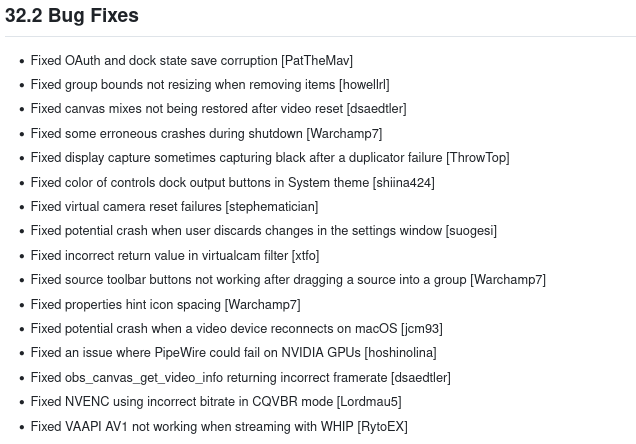
Beyond functional additions, release 32.2 includes deep technical refinements. Developers have optimized OpenGL performance for low-end PCs, improved dynamic link library (DLL) loading mechanisms on Windows, and implemented process mitigation policies to bolster system stability. Additionally, a critical synchronization issue affecting the audio mixer during remote control via WebSockets has been resolved, making the system more reliable when utilizing external control surfaces.
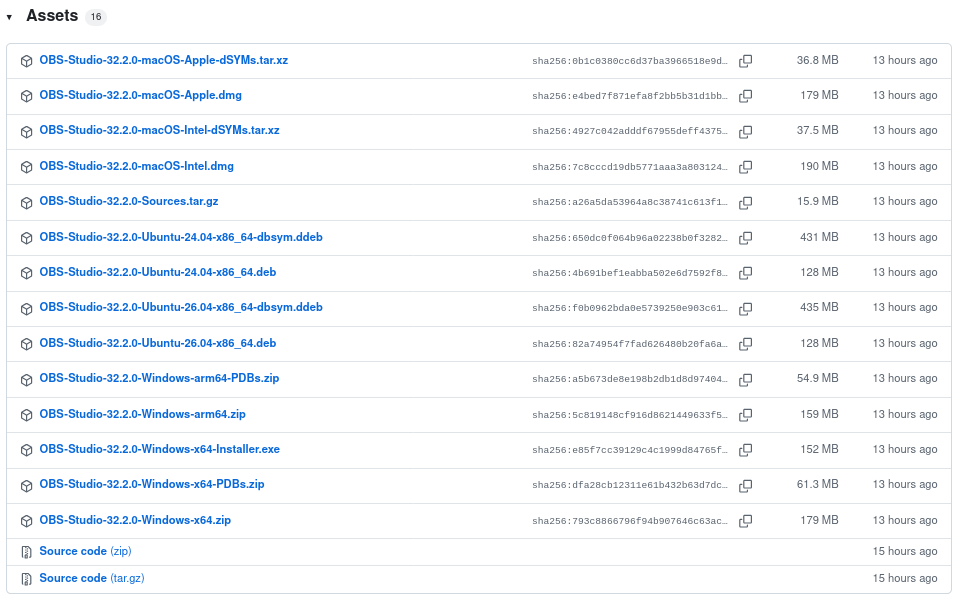
Combined with the resolution of sixteen identified bugs and meticulous UI polishing—ranging from spinbox minimum widths to updated button styling—OBS Studio 32.2 reaffirms its status as the most flexible tool for digital broadcasting, continuing its evolution into a professional-grade software suite.
 The Triumph of 3nm Chip Manufacturing