Compact gaming systems are emerging as the new frontier of home entertainment, effectively erasing the boundary between the traditional console and the personal computer. Valve continues to refine its Steam Machine vision, evolving the device from a proprietary product into an open-ended platform tailored for enthusiasts. Recent software updates and the publication of technical schematics underscore the company's commitment to transparency and granular customization. The paradigm is shifting: the emphasis has moved beyond simple content consumption toward the optimization of graphical output and the physical modification of hardware.
The rollout of the Steam Machine has transitioned into an active shipping phase. Valve began distributing these compact SteamOS-powered systems back in June and is currently processing incoming orders on a daily basis. However, the logistical pipeline remains stringent: customers who pre-ordered are receiving purchase notifications in waves, with the final stages of this distribution phase potentially extending through the end of 2026.
A sophisticated access hierarchy has been implemented to manage distribution. The system is bifurcated into a pre-reservation queue and a general waitlist, both segmented by region and specific hardware configurations—a move that allows Valve to dynamically balance supply and demand. Those on the general waitlist cannot bypass pre-order holders; instead, they must undergo an intermediate confirmation process before gaining purchase eligibility. Once notified, users are granted a strict 72-hour window to complete their transaction, underscoring the high demand and scarcity of the hardware.
On the technical front, the Steam Machine's software stack has received a significant upgrade with the integration of AMD FSR 4.1. This upscaling technology is implemented via the Proton Experimental compatibility layer, enabling games to leverage modern image-scaling algorithms without requiring native Linux ports. Given that the hardware is built on RDNA 3 GPUs, FSR 4.1 operates at peak efficiency, delivering high frame rates and maintaining visual clarity even in the most demanding titles. This underscores Valve's broader strategy: creating a seamless gaming experience where the software abstraction layer effectively erases the divide between operating systems.
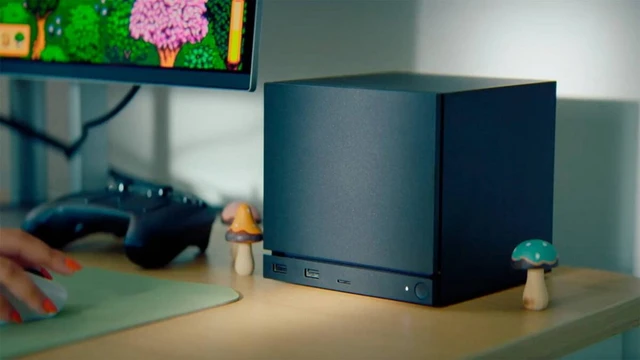
Parallel to these software advancements, the company is extending an olive branch to the modding and engineering communities. By publishing CAD files detailing the Steam Machine's precise external dimensions, Valve has paved the way for custom chassis and interchangeable front panels. This open approach is consistent with the company's philosophy—similar data was previously released for the Steam Controller and the Puck charger, empowering enthusiasts to craft bespoke accessories. By providing this technical documentation, Valve is essentially treating the Steam Machine as an open platform for industrial design, fostering a robust hardware ecosystem around its proprietary device.
 Virtual Gamepads within the Google TV Ecosystem