In recent years, the automotive industry has been captivated by a wave of radical minimalism, driven by an ambition to migrate every control function into the digital realm. The vanguard of this movement reimagined car interiors as oversized smartphones, sacrificing tactile feedback on the altar of sleek aesthetics and software agility. Yet, this pursuit of sterile design eventually collided head-on with the fundamental tenets of road safety. Now, China—the world's largest automotive market—is officially bringing this experiment to a close, mandating the return of physical controls to the driver's cockpit.
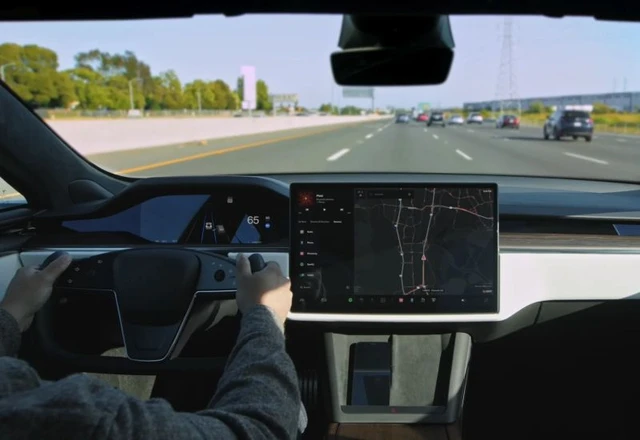
The drive toward total digitalization, which has become Tesla's hallmark in recent years, has led to a form of technological reductionism. In the pursuit of a futuristic aesthetic, manufacturers began methodically purging cabins of anything resembling a button or a lever. Not only did the familiar climate control keys vanish, but critical steering column switches were excised, and some concepts even attempted to replace the traditional steering wheel with a yoke. This strategy created an illusion of progress, but in reality, it shifted the cognitive load from the driver's muscle memory to their visual attention.
The fundamental flaw of touch-based interfaces in a vehicle is the absence of haptic feedback. To activate a function on a screen, the driver is forced to divert their gaze from the road, significantly increasing the risk of an accident at high speeds. After analyzing this trend, Chinese regulators concluded that interface convenience must not take precedence over safety. Consequently, starting July 1, 2027, all new vehicles sold in the Chinese market must be equipped with physical controls for 19 essential functions.
This list encompasses every critical touchpoint of driver-vehicle interaction. It includes turn signals, hazard lights, the horn, and transmission mode switching. The mandate for a return to tangible controls also extends to windshield wipers, window defrosting, power windows, and the activation of Advanced Driver Assistance Systems (ADAS). Particular emphasis has been placed on emergency functions: SOS calls and the total power cutoff for electric vehicles. Essentially, the regulator has defined a "safety zone" where a software glitch or a frozen tablet cannot result in a fatal outcome.
For automakers, this pivot signals the end of the era of "easy savings." The abandonment of physical buttons allowed companies to substantially reduce costs related to wiring, mechanical components, and interior assembly. Furthermore, software-driven control enabled the infinite expansion of vehicle functionality via over-the-air (OTA) updates without altering the physical cabin configuration. Now, the industry must return to the complexities of ergonomics and reinvest in the development of reliable mechanical interfaces.
China's crackdown on excessive digitalism is not limited to buttons. Authorities have also turned their attention to exterior controls, which have become overly complex in the pursuit of aerodynamics. Starting next January, new requirements for door handles will take effect: they must ensure the fastest possible access to the cabin under all weather conditions. Fully flush handles, which frequently jam or require a complex opening sequence, will be outlawed. Any electronic actuator in such a system must now feature a redundant mechanical mechanism, guaranteeing that the door can be opened even during a total power failure.
The transition to these new standards will be gradual. Regulators have provided a grace period for models that have already undergone certification, allowing them to be sold until the end of their market cycle. However, for all new projects undergoing certification from now until July of next year, compliance with these norms will be a mandatory condition for market entry. This decision effectively forces global players to rethink their interior design philosophy, restoring the priority of the human factor and physical reliability over digital veneer.
 The Global Triumph of Chinese Electric Mobility