The global semiconductor memory crisis is steadily reshaping the landscape of the consumer graphics card market. An analysis of ten major global markets reveals an illusory stability: current price levels are being sustained solely by residual stockpiles of legacy inventory. While flagship GPUs are increasingly pivoting toward high-cost AI instrumentation, the mid-range segment has become the epicenter of fierce pricing competition. The industry now stands on the precipice of a significant market correction that could radically alter the accessibility of graphics hardware in the coming months.
The contemporary GPU market exists in a state of precarious equilibrium. An analysis of current pricing across the US, Europe, and Asia reveals that from October 2025 to July 2026, graphics adapter costs rose moderately, averaging 16%. However, this figure masks a profound structural divergence: the primary impact has been felt by high-VRAM models, which have become critically sought after not only by gamers but also by machine learning specialists.
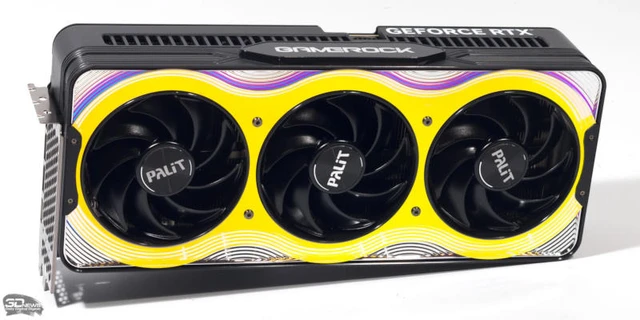
The most striking example of this trend is the Nvidia GeForce RTX 5090. The flagship has effectively ceased to be a consumer gaming product, evolving instead into workstation-grade hardware. Its price has surged nearly 100% relative to the recommended retail price (MSRP), hitting the $4,000 mark. Paradoxically, at this price point, the RTX 5090 is no longer the optimal choice even for those requiring 32 GB of memory; the professional RTX Pro 4500 series has become more accessible, despite its more modest GPU core specifications.
The mid-range segment exhibits a different set of dynamics. Nvidia cards with 16 GB of VRAM—such as the RTX 5060 Ti, 5070 Ti, and 5080—have seen price increases of approximately 20%. Against this backdrop, AMD's strategy appears more resilient. The Radeon RX 9070 and 9070 XT lineups have maintained a stable price profile, showing growth of only 4–8%. This has allowed AMD to significantly strengthen its position in the upper mid-range segment, creating a notable price gap with its competitor: for instance, the GeForce RTX 5070 Ti is currently, on average, 42% more expensive than the Radeon RX 9070 XT.
The budget sector is demonstrating its own set of anomalies. There is a strange convergence in pricing between the base RTX 5060 and the higher-performing RTX 5060 Ti with 8 GB of memory. In some regions, the price difference between them is less than 12%, while the performance gain reaches 17%. Theoretically, this makes the Ti version a more attractive purchase; however, here lies a technological trap: by 2026, 8 GB of VRAM has become objectively insufficient for a comfortable gaming experience in modern titles.
The market's third player, Intel, is facing a different set of challenges. For the Battlemage generation of Arc cards, the memory crisis has manifested primarily as a shortage of physical availability. The B570 and B580 models are gradually disappearing from shelves, while their prices are slowly creeping upward. Consequently, the high-end B580 has closely approached the price of the GeForce RTX 5060, despite being positioned to compete with entry-level solutions.
The current market situation is the calm before the storm. The absence of a catastrophic price spike is explained by the fact that retailers are still clearing inventory purchased before the sharp increase in GDDR6 and GDDR7 module costs. However, new shipments already promise a 10–15% cost increase for 16 GB models, with potential spikes of up to 40% in the long term. Under these circumstances, purchasing strategy depends entirely on urgency: if a system upgrade is necessary now, there is no reason to delay. Otherwise, the only rational move is to wait for the next technological cycle and the release of new generations of accelerators.
 The Commercial Debut of the Googlebook Ecosystem