In the contemporary tech landscape, personal branding often wields more influence than corporate identity. Jensen Huang’s leather jacket has long since evolved beyond a mere wardrobe staple; it has become an iconic totem of the era of exponential AI growth. A recent Sotheby’s auction vividly illustrated that the market value of such an artifact is dictated not by the quality of its leather, but by the scale of its owner's impact. It is a quintessential example of apparel transforming into a tangible embodiment of success and technological dominance.
The recent Sotheby’s auction unfolded like a high-stakes thriller for collectors and tech industry observers alike. A lot featuring Jensen Huang's signed leather jacket sparked a frenzy that completely defied expert projections. Initially valued between $40,000 and $60,000, the final hammer price soared to a staggering $960,000. With 65 bids from 45 different contenders, the auction underscored the immense symbolic capital now surrounding the Nvidia CEO.
This phenomenon cannot be attributed simply to a penchant for fashion or the Tom Ford brand—whose pieces typically retail around $10,000. Rather, it is about the creation of a visual code. For nearly two decades, the black leather jacket has served as Huang’s personal uniform, worn invariably during key product launches and global forums. In an era where Silicon Valley executives competed in minimalism—from Steve Jobs' turtlenecks to Mark Zuckerberg's grey t-shirts—Huang’s style stands out for its uncompromising confidence and classicism.
Interestingly, Huang himself approaches his image with a healthy dose of self-deprecation. Online, he has candidly referred to himself as merely "the guy in the leather jacket," admitting in interviews that his polished appearance is largely the work of his wife and daughter. This touch of humanity, blended with the aura of a "technological prophet," makes him an even more compelling figure to the public.
The prestige of this wardrobe staple was further cemented by Mark Zuckerberg himself. In 2024, during a joint appearance at a computer graphics conference, Huang gifted one of his jackets to the Meta CEO. Zuckerberg’s joke—that an item becomes more valuable once it is "pre-owned"—effectively acknowledged the garment's transition into a historical artifact. The specific lot sold at auction was the same jacket Huang wore at the 2023 Foxconn event in Taipei, a pivotal moment coinciding with Nvidia’s meteoric ascent toward becoming the world's most valuable company.
Beyond the market hype and stylistic debates, the transaction carries significant pragmatic weight. All proceeds are being directed to the Edge Institute, a non-profit dedicated to fostering innovation. In this way, a symbol of personal success is transformed into educational capital, funding scholarships and grants for the next generation of researchers who may well spark the next technological revolution.

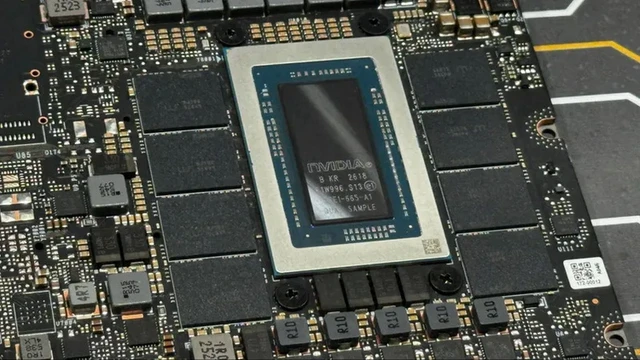 Nvidia N1X and the New Era of Arm PCs