The global gaming landscape is undergoing one of its most profound transformations in decades. Recent data from Circana reveal a precipitous decline in home console sales across the United States, with market leaders plummeting to historic lows. This downturn exposes a systemic crisis within the current hardware cycle and signals a radical shift in consumer behavior. While industry titans scramble to protect margins through aggressive price hikes, new formats and more agile platforms are ascending to the forefront.
The US gaming hardware market has entered a phase of volatility that calls into question the long-standing dominance of traditional stationary systems. May 2026 proved to be a critical inflection point: Microsoft recorded the worst May performance in the entire history of the Xbox brand. The situation for Sony PlayStation is even more alarming, with sales volumes for the same period retreating to levels not seen in over a quarter-century, hitting a low not witnessed since May 2000.
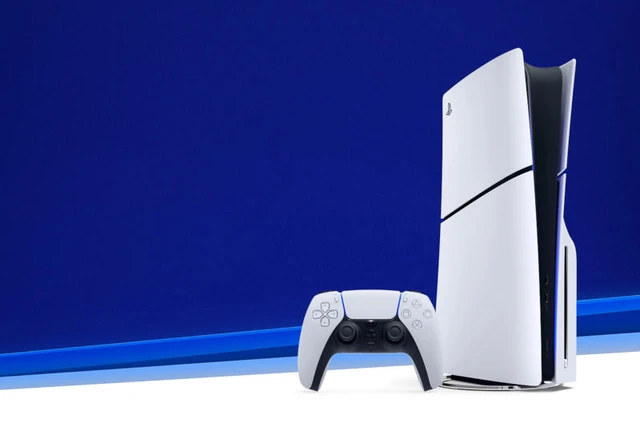
An analysis of Sony PlayStation 5 metrics reveals a rapid erosion of demand. Unit sales plummeted by 58% compared to the same period last year, while overall consumer spending on the PS5 family of devices contracted by 43%. This suggests more than a mere temporary dip; it points toward systemic market saturation or a fundamental loss of appeal for the current console generation among mass-market users.
Microsoft, conversely, is exhibiting a more paradoxical trajectory. Despite a 12% decline in sales volume, hardware revenue unexpectedly rose by 7%. This indicates that while the company is shipping fewer units, it is doing so at a significantly higher price point. Essentially, Xbox is pivoting from a strategy of market penetration to one of margin optimization per unit—a move that could accelerate audience attrition in the long run.
The economic catalyst for this crisis lies in the soaring cost of components. In May, the average selling price (ASP) of a new gaming device in the US reached $502, a 14% increase over last year. The price of the PS5 surged by 33% to $672, while Xbox devices rose by 22%, averaging $524.
The primary driver of this inflation has been a sharp spike in the cost of RAM and NAND flash memory, which have increased more than 2.5-fold. Industry forecasts remain bleak: the cost of memory chips could potentially double again by autumn 2027. Microsoft is citing these pressures as the rationale for upcoming price hikes effective August 1, with 512GB models increasing by $100 and 2TB versions by $150. Sony has already implemented a similar strategy, having set the price of the standard PS5 at $649.99 and the Pro version at $899.99 back in April.
Amidst the stagnation of these two giants, Nintendo has emerged as the undisputed victor. In its first year on the US market, the Switch 2 set a benchmark of 5.9 million units sold, leading the industry in both volume and total revenue. Nintendo's success confirms a strong consumer appetite for hybrid solutions and a more accessible barrier to entry.
Parallel to this, the very paradigm of the "home console" is shifting. The launch of Valve's compact Steam Machine gaming PC, with a base price of $1,049, signals a migration of interest toward open ecosystems and portable, high-performance hardware. The market is ceasing to be a battlefield between two closed platforms, transforming instead into a space where flexibility, mobility, and the total cost of ownership (TCO) outweigh legacy brand loyalty.
 The Phenomenon of the Foldable iPhone Ultra