The modern aerospace industry is pivoting from an era of aspirational vision toward a phase of rigorous financial pragmatism. For SpaceX, the technical viability of a single launch system now directly dictates billions of dollars in market capitalization. A recent setback during Starship's pre-launch preparations triggered a marked correction in share value, pushing it below its initial offering price for the first time. This incident underscores the precarious nexus between engineering milestones and global investor confidence in the emerging space economy.
SpaceX's market dynamics have recently exhibited an acute vulnerability to technical risks. Following a period of relative stability, the company's valuation entered a sharp decline; while shares dipped briefly to $132.75 on Wednesday, by Thursday, the downturn became systemic. The stock closed at $131.11, officially sliding below its initial public offering (IPO) price of $135. By the end of the week, the negative trend intensified, with shares shedding another 5% to hit a psychological floor of $124.
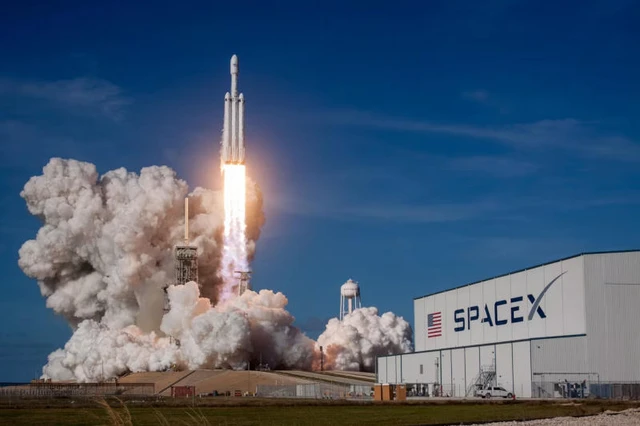
On a corporate scale, these figures translate into staggering losses. Since going public, the operator's market capitalization has shrunk by approximately $320 billion; when measured from its peak on June 16, the losses are estimated at nearly $1 trillion. This volatile market reaction was triggered by the cancellation of the first post-IPO Starship test flight. The scrub was caused by ignition failures in several engines, which led to an automatic mission abort. Despite management's assurances that tests would be rescheduled for the following week, investors interpreted this technical glitch as a signal of potential instability within the project.
It is critical to understand that for SpaceX, Starship is not merely another rocket—it is the cornerstone of the company's entire future business strategy. The focus is now on the transition to Version 3 (V3), which is intended to be the primary engine for expansion. Without a fully operational system, key strategic objectives remain out of reach: the deployment of next-generation, higher-capacity Starlink satellites, the establishment of orbital data centers, and the fulfillment of lunar program commitments. Consequently, any setback in Starship testing is perceived by the market not as an isolated engineering error, but as a systemic threat to the company's entire revenue ecosystem.
The financial context further complicates the situation. SpaceX executed one of the largest IPOs in history, raising over $85 billion. The initial market optimism has given way to a gradual decline, leaving those who invested at the offering price deep in the red. The situation is exacerbated by the upcoming month of August: the company is set to publish its first quarterly report, coinciding with the expiration of certain share sale restrictions (the lock-up period). It is expected that employees and select investors may liquidate up to 911.5 million shares. Amidst current volatility and technical failures, this massive influx of sellable equity could exert additional downward pressure on the stock, transforming an engineering challenge into a critical financial ordeal.
 Memory Shortages Drive Up Smartphone Prices