Cloud infrastructure has evolved into the bedrock of the modern digital economy, where billing precision is as mission-critical as service availability. Yet, even tech behemoths like Amazon remain susceptible to catastrophic logic failures within their financial subsystems. A recent incident at AWS underscores how a single update can trigger a cascade of phantom debts—a stark reminder of the fragility inherent in automated cost management systems operating at global cloud scale.
The events of July 16 and 17, 2026, served as a brutal stress test for Amazon Web Services users. During this brief window, thousands of customers discovered invoices in their accounts for cloud services they had never provisioned. The scale of the anomaly was staggering: outstanding balances ranged from several million to astronomical billions of dollars, transforming a routine expense review into a surreal experience.
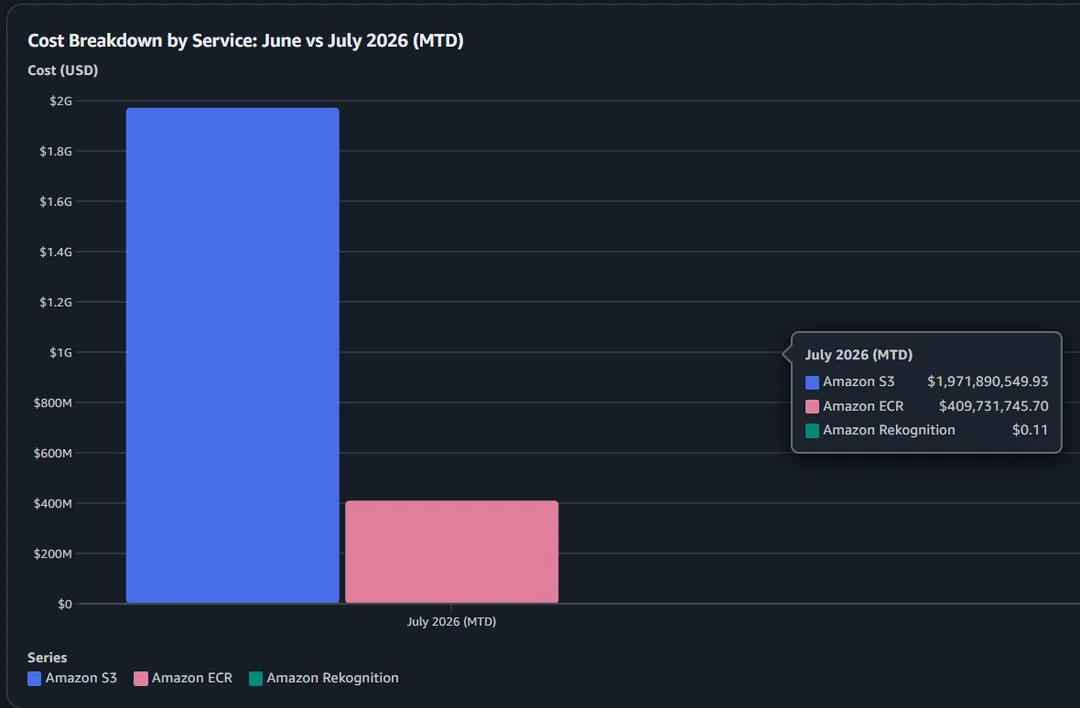
The technical root cause lay in an update to one of the internal cost-calculation subsystems. In distributed systems of this magnitude, even a minor shift in data aggregation logic can trigger a cascading effect, where a single error is multiplied across millions of transactions. Of particular interest to engineers is the fact that the standard rollback mechanism failed to resolve the issue. This suggests that the glitch either corrupted the database state or triggered incorrect caching of calculation results, which continued to persist even after the system reverted to a previous code version.
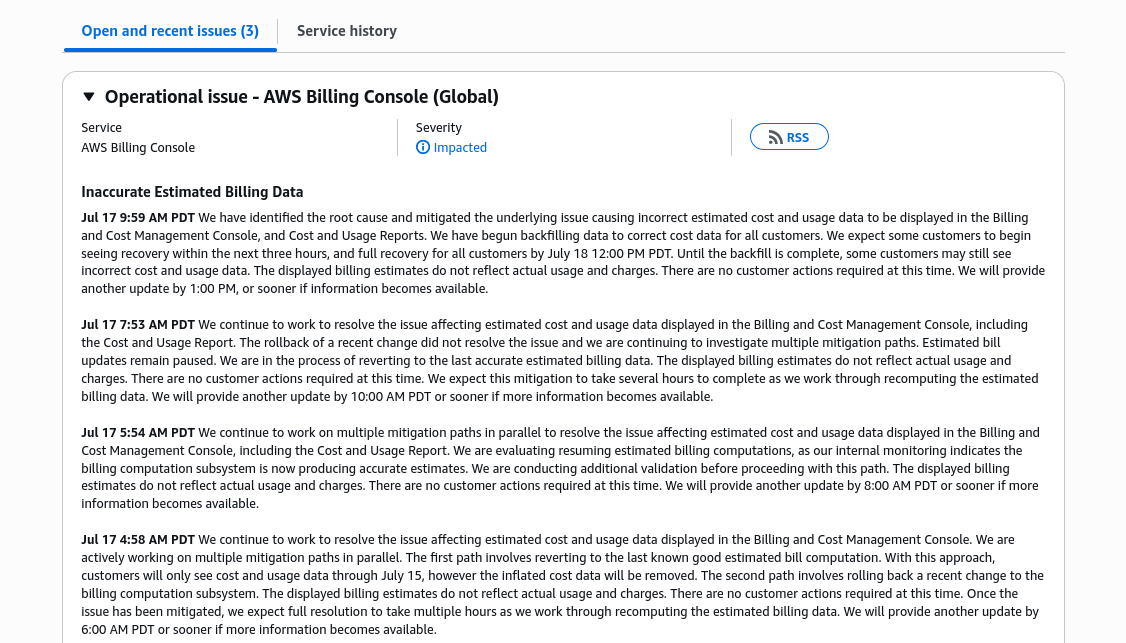
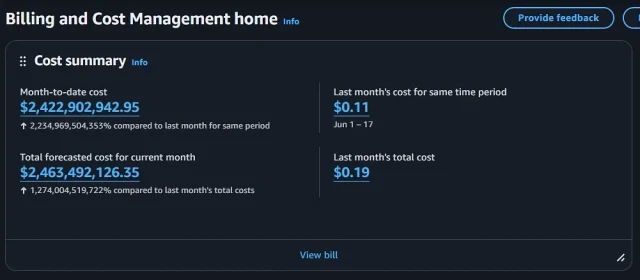
The community's reaction was swift and visceral. On Reddit, users began sharing screenshots of their dashboards where the figures looked like typographical errors of global proportions. One client discovered a debt of $2.4 billion for less than a month of operation; the most extreme recorded case reached an absurd $140 billion—a sum comparable to the national budgets of some developed nations.
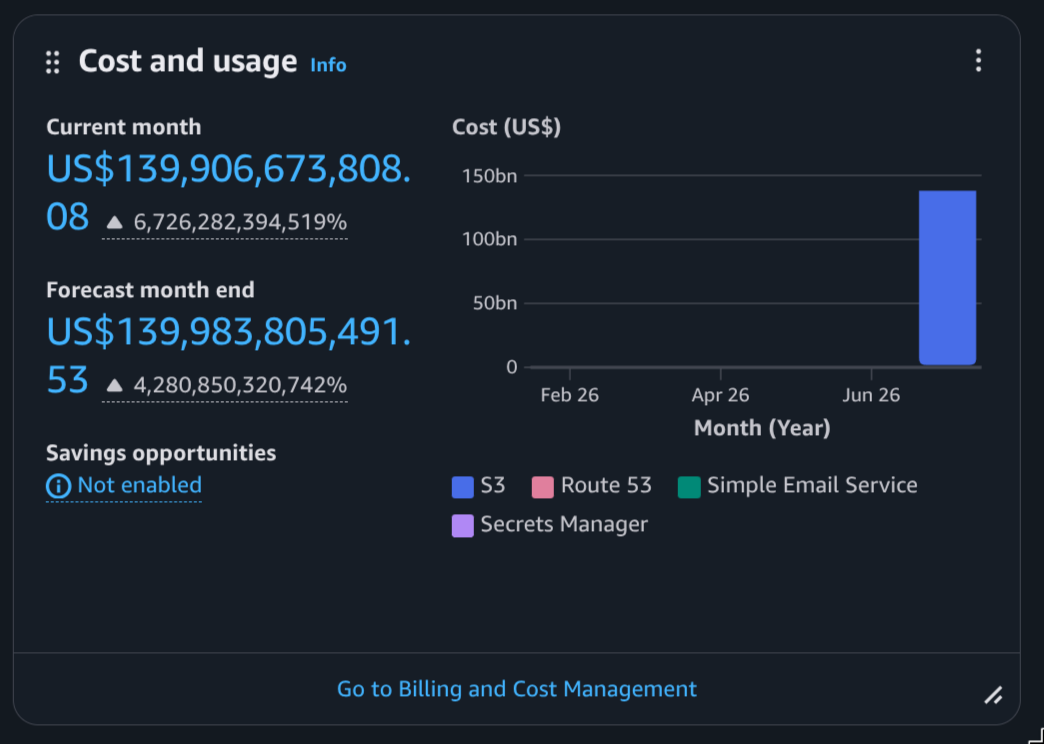
Amazon moved quickly to acknowledge the critical billing bug, assuring customers that these figures bore no relation to actual resource consumption. In today's cloud economy, where service costs are calculated dynamically every second, such incidents underscore the urgent need for more rigorous circuit breakers within financial modules. The AWS failure serves as a stark illustration of the dangers of excessive automation when stripped of proper data verification mechanisms before information reaches the end user.
 The Horizon of China's Technological Sovereignty in Lithography