The gaming industry is currently navigating an era of convergence, as the traditional boundaries between consoles and PCs continue to dissolve. Valve’s foray into the Steam Machine represented a strategic pivot toward a closed, optimized ecosystem—an effort aimed at streamlining the user experience. Yet, the market frequently responds to such constraints with a spirit of creative defiance. French retailer LDLC has stepped in with a provocative alternative, proving that high-end performance and modularity can coexist seamlessly with the underlying ideology of SteamOS.
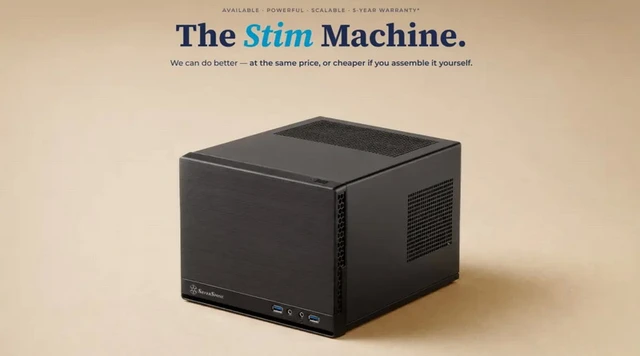
The long-standing tension between proprietary systems and open standards has found a new, ironic manifestation in the Stim Machine. In a bold marketing experiment, the French retailer LDLC has released a mini-PC that serves as a direct parody of Valve's upcoming Steam Machine. This is more than a mere play on words; it is a conscious demonstration of what a gaming computer can be when the "black box" philosophy is abandoned in favor of flexibility and transparency.
LDLC’s pricing strategy reads like a piece of calculated provocation: the fully assembled system is priced at €1,039.99, mirroring the European price tag of the base Steam Machine with a 512GB SSD. For those who prefer a hands-on approach, a DIY option is available for €999.99. In doing so, the retailer poses a direct question to the consumer: what carries more value—a branded controller and pre-installed software, or raw computing power and the capacity for upgrades?
The technical foundation of the Stim Machine is built upon current, open standards. At its heart lies a six-core, 12-thread AMD Ryzen 5 8400F processor based on the modern AM5 platform. The use of Zen 4 ensures not only high energy efficiency but also significant future-proofing; unlike Valve's integrated solutions, the user can replace the CPU in the future without needing to swap the entire motherboard.
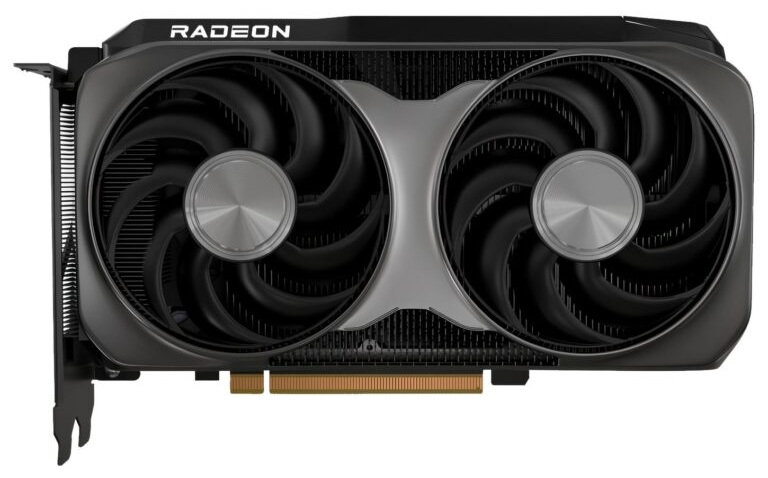
The graphics subsystem warrants a deeper dive. LDLC has equipped its PC with a Radeon RX 9060 XT featuring 8GB of GDDR6 memory. Here lies the primary technological advantage: the implementation of the latest RDNA 4 iteration. This architecture introduces support for AMD's cutting-edge AI technologies, including FSR 4.1, which delivers substantially higher quality upscaling and visual fluidity. Meanwhile, the original Steam Machine relies on a custom GPU based on the older RDNA 3, which is inherently devoid of support for the newest FSR features.
LDLC's design philosophy is diametrically opposed to that of Valve. While the Steam Machine offers a proprietary board with a soldered CPU and GPU—limiting the user to merely replacing RAM and storage—the Stim Machine is based on a standard AMD B650 chipset. The compact SilverStone Sugo SG13B-Q chassis houses a full-fledged ecosystem: 16GB of RAM expandable up to 128GB, a 500GB NVMe drive, and additional SATA slots. This transforms the device from a disposable gadget into a professional-grade tool capable of evolving alongside the demands of modern software.
Naturally, this technical superiority comes at the cost of some convenience. Valve's primary ace is seamless integration: pre-installed SteamOS, HDMI-CEC support for television control, and a bundled controller. The Stim Machine ships "bare-bones," without an operating system. LDLC makes no attempt to hide this, offering instead a detailed guide on how to install SteamOS. While this shifts some of the heavy lifting to the user, it provides absolute freedom in return: the machine can run Windows or any other Linux distribution of the user's choosing.
Ultimately, the Stim Machine is more than just a product; it is an analytical commentary on the state of the modern market. It exposes the fundamental conflict between the corporate drive toward closed, "appliance-like" ecosystems and the traditional spirit of PC gaming, where the right to modify and upgrade is a fundamental tenet.
 The Phenomenon of the Foldable iPhone Ultra