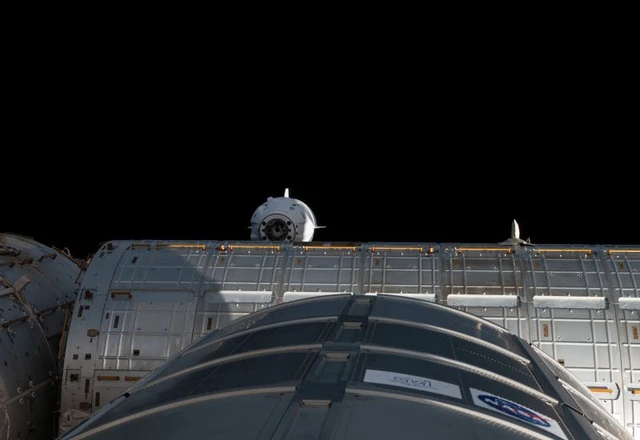
The dawn of the space age was defined by sporadic, singular launches, yet the current velocity of orbital expansion is historically unprecedented. For decades, the conquest of the cosmos remained the exclusive domain of superpowers and state-run agencies. Today, however, a single private entity has managed to outpace every other nation and organization combined in terms of total orbital deployments. This shift signals a fundamental transformation in space access, evolving the orbit into a fully realized commercial infrastructure.
The scale of SpaceX's expansion into near-Earth space has evolved from a set of ambitious plans into a state of absolute dominance. Recent statistics are almost surreal: as of mid-June, the company has deployed 15,262 satellites into orbit. For context, from 1957—the dawn of the space age—every other nation, government agency, and private corporation combined has launched 15,138 units. In a matter of years, a single organization has placed more objects in orbit than the rest of humanity did over the previous six decades.
The path to this triumph was far from linear. Founded in 2002, SpaceX initially collided with the brutal constraints of physics and economics. The first three attempts to launch the Falcon 1 ended in failure, pushing the company to the brink of bankruptcy. It wasn't until 2008 that this streak of failures was broken; had the fourth launch also ended in catastrophe, the story of the world's most valuable startup might have ended before it truly began.
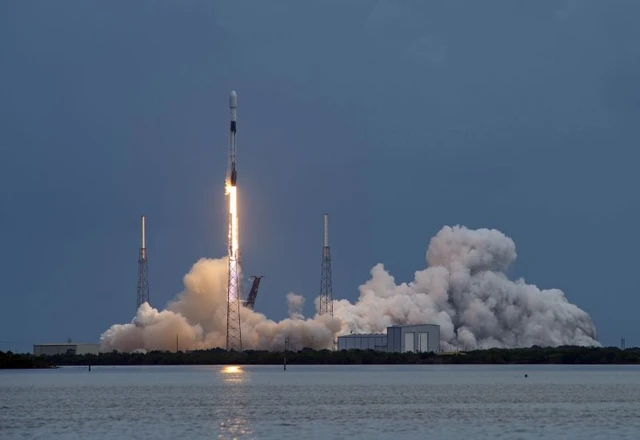
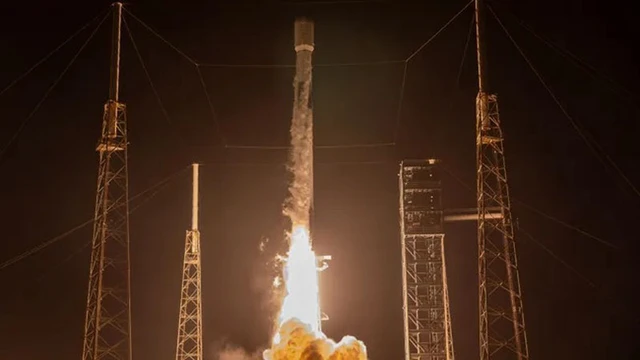
The turning point arrived in 2010 with the introduction of the Falcon 9. This launch system became the industry's definitive "workhorse," granting SpaceX an unprecedented launch cadence—recording 165 flights in the past year alone. The catalyst for this success was the concept of reusability, which radically slashed the cost of delivering payloads and allowed the company to scale its operations to an industrial magnitude.
The primary beneficiary of this logistical powerhouse has been Project Starlink. Currently, nearly three-quarters of all SpaceX launches are dedicated to this satellite internet operator. While a constellation of 12,318 satellites is already deployed in low Earth orbit (LEO), this is merely an intermediate milestone. The strategic objective is to expand the network to 40,000 units or more, effectively creating a global information canopy around the planet. The economic logic is clear: Starlink now generates approximately 69.4% of the parent company's total revenue.
However, SpaceX's ambitions extend far beyond providing internet access to remote regions. The immediate horizon includes the deployment of full-scale orbital data centers to support AI infrastructure. Shifting computation to orbit would optimize latency and leverage the unique conditions of space to enhance the performance of neural networks.
The foundation for these moonshot goals will be Starship—a next-generation super-heavy lift transport system. In its reusable configuration, Starship is capable of delivering up to 150 tons of cargo to orbit, a figure that climbs to 250–300 tons in expendable scenarios. Equally critical is the reverse logistics: the ability to return up to 50 tons of material to Earth.
While Starship remains in its flight-testing phase, its potential has already defined the company's trajectory for decades to come. Moving beyond the aggressive colonization of orbit with satellites, SpaceX is now pivoting toward establishing a permanent human presence in space, including the construction of colonies on the Moon and Mars. Given the current pace of technological acceleration, the probability of any competitor matching SpaceX's intensity in space exploration is rapidly approaching zero.
 The End of the Falcon 9 Era