The global AI arms race has evolved beyond a mere clash of software; it has transformed into a high-stakes struggle for physical infrastructure and raw hardware resources. At the epicenter of this shift is South Korea, where the economy is experiencing phenomenal growth fueled by a critical global shortage of specialized compute capacity. The nation's record-breaking export figures underscore the profound reliance of global tech titans on East Asian memory manufacturers. This current surge reinforces the premise that the bedrock of our digital future lies in advanced materials and semiconductor technology.
South Korea has achieved an economic milestone unprecedented in nearly half a century. According to preliminary data, the country's exports in June surged by 70.9% year-on-year, reaching $102.25 billion. This represents the most significant leap since October 1978, not only shattering market expectations but far outpacing the forecasts of most leading economists.
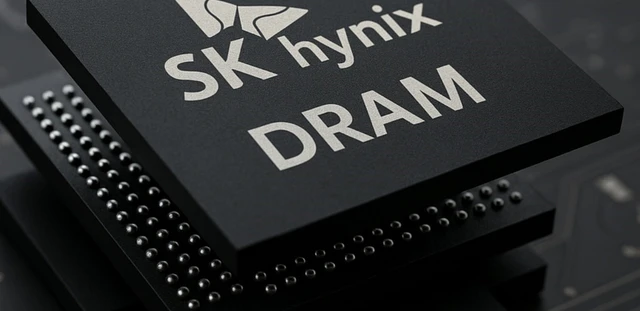
The primary engine behind this growth has been the semiconductor sector. Chip exports skyrocketed by 199.5%, totaling $44.8 billion. As a result, South Korea has become the fourth nation in history to breach the psychological threshold of $100 billion in monthly exports, joining an elite group alongside Germany, China, and the United States. The primary beneficiaries of this surge are Samsung Electronics and SK Hynix. Amidst the global investment boom in AI, demand for specialized memory—specifically High Bandwidth Memory (HBM), which is critical for modern GPU performance—has driven prices upward, allowing Korean giants to aggressively monetize their technological edge.
However, the impact of the AI revolution extends far beyond the sale of microchips. A powerful synergistic effect is emerging: computer exports have surged by 308.8% as global tech titans continue to aggressively scale the hardware infrastructure required to train neural networks. Even the steel industry, which had suffered a protracted thirteen-month decline, has returned to positive territory with a 9.6% growth rate. This trend is directly linked to the construction of colossal data centers worldwide, which require vast quantities of structural materials.
The mechanics of this process are clear: as Microsoft, Google, and Amazon ramp up investments in compute clusters, demand for accelerator memory and the infrastructure to house them rises proportionally. Because South Korea controls a significant share of global memory production, it has effectively become the primary beneficiary of every new Large Language Model (LLM) that hits the market.
From a historical perspective, this moment marks the culmination of a specific cycle of national transformation. If the drivers of Korean exports in the late 1970s were textiles and wigs—fueling the transition from an agrarian society to an industrial one—today, the foundation of national prosperity is memory for neural networks. The country's economy has evolved from producing simple commodities to providing the most sophisticated components of modern digital civilization.
 Anthropic’s Strategic Push for Hardware Independence