Modern gaming demands a seamless synergy between the console and its peripherals. Sony continues to fortify its ecosystem, delivering solutions that blur the line between pure entertainment and practical functionality. The new 27-inch monitor serves as a critical link in this chain, bridging the rigorous technical demands of the PS5 with the everyday needs of the user. More than just a display, it represents an ambition to create a unified hub for digital leisure.
Sony's latest monitor debut signals the company's commitment to crafting a truly seamless user experience. While the market is saturated with one-size-fits-all solutions, the Japanese giant is betting on deep ecosystem integration. The result is a device meticulously optimized for the PlayStation 5 and PlayStation 5 Pro, yet versatile enough to serve as a high-performance tool for PC and Mac users.
At the heart of the device is a 27-inch IPS panel with a resolution of 2560 × 1440 pixels. The choice of QHD resolution is a calculated strategic trade-off: it delivers sharp image clarity without imposing the systemic overhead of 4K, ensuring consistently fluid gameplay. For the PlayStation family of consoles, the refresh rate is capped at 120 Hz, aligning with current-generation industry standards; however, when paired with a PC, the monitor unlocks its full potential, reaching 240 Hz.
The display's technical architecture is engineered to eliminate visual anomalies. Support for Variable Refresh Rate (VRR) and AMD FreeSync Premium ensures a tear-free experience, which is critical in fast-paced action titles and competitive shooters. The visual experience is further enhanced by HDR with automatic tone mapping, achieving deep contrast and natural color reproduction without requiring the user to manually calibrate every shade.
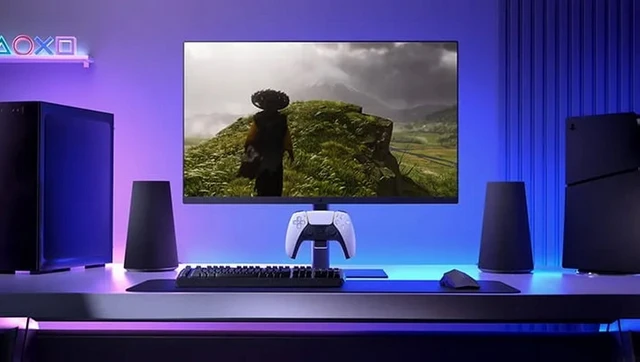
However, the feature that truly distinguishes this monitor from its competitors is its thoughtful accessory ergonomics. The chassis features an integrated charging station for DualSense and DualSense Edge controllers. This design choice eliminates cable clutter from the workspace and transforms the monitor into a comprehensive docking hub.
The connectivity suite has been developed in strict accordance with modern data transmission standards. The inclusion of HDMI 2.1 ports ensures comprehensive support for all console capabilities, while DisplayPort 1.4 keeps the device relevant for professional gamers. A versatile array of USB ports (two Type-A and one Type-C) allows for the connection of PlayStation Link adapters and other peripherals, creating a unified connectivity point.
The design is rounded out by an ergonomic pedestal. The ability to pivot the screen into portrait mode expands its utility—from reviewing extended logs and chats to managing vertical content. Integrated speakers and a standard 3.5mm audio output make the system self-sufficient, removing the need for external speakers for basic tasks.
Priced at $349.99, Sony offers a well-rounded product. Rather than entering the spec-sheet arms race for maximum raw performance, Sony has prioritized convenience, compatibility, and aesthetic synergy with its gaming ecosystem.
 Nvidia’s Technological Pragmatism in the Open-Model Race