Modern computational workloads, particularly those driven by artificial intelligence, are forcing a fundamental rethink of power delivery strategies. For years, extreme energy efficiency remained the exclusive domain of enterprise-grade server solutions, largely out of reach for the average consumer. Seasonic is now disrupting this status quo with the introduction of the first consumer-grade power supply unit (PSU) to achieve 80 Plus Ruby certification. This move signals a shift toward an era where efficiency becomes a critical metric, even under minimal load conditions.
For years, the power supply industry has been governed by the 80 Plus hierarchy, where peak efficiency was the exclusive domain of specialized data center equipment. While Delta Electronics was the first to breach the 80 Plus Ruby certification threshold, their solutions were tailored strictly for the enterprise segment. Seasonic is now bridging this gap by bringing these technological advancements to the consumer market with the announcement of the Prime Enterprise RX-1600—the first consumer-grade ATX power supply to achieve this prestigious status.
The technical rigor of the Ruby certification lies in its stringent efficiency requirements under 115V operation. The standard demands more than just peak performance; it requires stable efficiency across the entire load spectrum. Specifically, the unit must maintain 85% efficiency at a mere 5% load and reach a peak of 95% at half-load. Even under full load, efficiency must not dip below 91%. Another critical metric is the power factor, which must remain at or above 0.95 when operating at a 20% load.
The new standard places a particular emphasis on standby performance and minimal-load scenarios. For most modern computers, this state is the primary mode of operation, accounting for the vast majority of uptime. Traditional power supplies often suffer significant energy losses at low loads, leading to unnecessary heat generation and power waste. Ruby certification guarantees that the device remains highly efficient even when the system is drawing negligible resources.
Achieving these benchmarks necessitates a fundamental overhaul of the hardware platform. This is not merely a matter of swapping capacitors; it requires a comprehensive update to the switching logic and thermal architecture. Rigorous component selection and multi-stage verification are employed to minimize conversion losses, which directly enhances overall system reliability.
In the context of current industry trends, such optimization has become critical. Workstations and configurations optimized for AI workloads are characterized by sharp, high-amplitude load fluctuations. These "spikes" place immense stress on power delivery circuits. High conversion efficiency significantly reduces heat dissipation, which in turn relaxes cooling requirements and enables the creation of denser, more compact hardware assemblies.
Despite the significance of this technological leap, the specifics regarding the commercial rollout of the Prime Enterprise RX-1600 remain under wraps. Seasonic has focused on demonstrating its technical superiority, leaving detailed specifications and availability dates for future announcements.

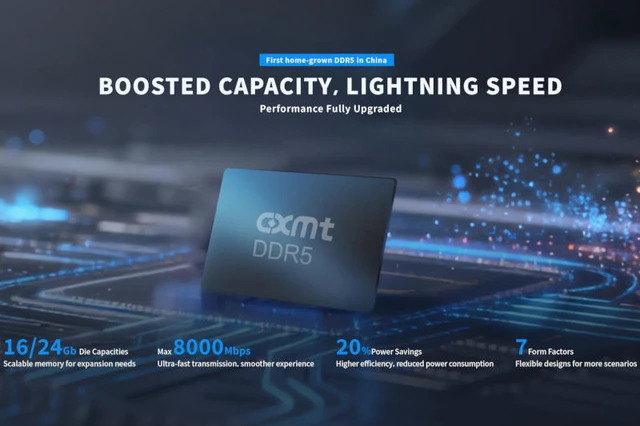 The Price of Acceleration: CXMT’s Rapid Push into Memory