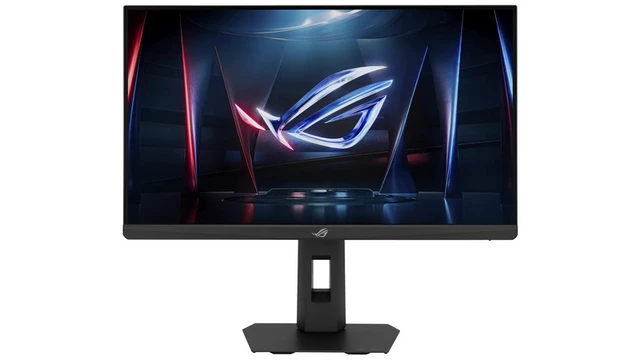
Modern esports has evolved into a war of milliseconds, where the slightest hint of input latency can dictate the outcome of a match. In this relentless pursuit of absolute fluidity, the display has become a professional gamer’s primary instrument, blurring the line between human reflex and system response. The latest offerings from the ROG Strix lineup redefine the very concept of "fast response," delivering refresh rates that may seem excessive to the casual user but are mission-critical for the pro. This is a tool engineered for those who demand absolute mastery over every frame.
The new XG259QNSR Ace—and its stark white sibling, the XG259QNSR-W Ace—are engineered with a singular focus: absolute motion clarity. By utilizing a 24.5-inch Fast IPS panel, these models successfully bridge two traditionally conflicting attributes: deep color reproduction and ultra-fast pixel response times. The choice of Full HD (1920 × 1080) resolution is a deliberate design decision, minimizing GPU overhead to unlock a record-breaking refresh rate of 420 Hz.
The panel's technical specifications are impressive even by modern standards. A GtG response time of 1 ms and an MPRT as low as 0.3 ms virtually eliminate motion blur and ghosting behind fast-moving objects. Visual performance is bolstered by VESA DisplayHDR 400 certification with a typical brightness of 400 cd/m², ensuring sufficient contrast even in brightly lit environments. Furthermore, a color gamut covering 90% of DCI-P3 and 115% of sRGB guarantees that extreme speed does not come at the cost of image vibrancy; the picture remains saturated and precise.
To maintain a stable data stream, the monitor utilizes a DisplayPort 1.4 interface, which serves as the sole gateway to activating the 420 Hz mode. Simultaneously, two HDMI 2.1 TMDS ports support refresh rates up to 240 Hz—more than sufficient for the vast majority of competitive titles. Frame synchronization is handled via a comprehensive suite: support for VESA AdaptiveSync, AMD FreeSync Premium, and Nvidia G-Sync compatibility ensures a tear-free experience regardless of the GPU in use.
The integrated image management system deserves particular attention. ELMB Sync addresses one of gaming's primary hurdles—the conflict between variable refresh rates and backlight strobing—allowing both features to operate simultaneously for maximum sharpness. This is complemented by Variable Overdrive 2.0, which dynamically adjusts the panel's overdrive parameters based on the current refresh rate to prevent artifacts or "overshoot."
The intelligent control layer is housed within the DisplayWidget Center. Here, users find Dynamic Crosshair for precision aiming and Dynamic Shadow Boost, which lifts dark areas of a scene without blowing out the highlights, providing a critical tactical advantage in competitive shooters. Meanwhile, the AI Visual system performs real-time content analysis to automatically apply the optimal image profiles based on the game genre.
The device's ergonomics are meticulously tailored for streamers and professional gamers. The stand offers full flexibility across height, tilt, and swivel adjustments, while the 100 × 100 mm VESA standard allows for seamless integration into multi-monitor setups via third-party mounts. A standout engineering touch is the inclusion of a 1/4-inch tripod socket, enabling users to mount a webcam directly onto the monitor chassis, clearing desk space and optimizing the viewing angle for broadcasts.
 The Price of Acceleration: CXMT’s Rapid Push into Memory