For decades, vision loss resulting from age-related macular degeneration (AMD) was viewed as an inevitable decline—an irreversible process that stripped millions of their fundamental independence. Today, however, the paradigm of biomedicine is shifting; the focus has moved beyond merely slowing the progression of the disease toward the active restoration of visual function via sophisticated neural interfaces. The introduction of the PRIMA system marks a pivotal milestone in the convergence of microelectronics and human biology. For thousands of patients worldwide, regaining the ability to read is no longer a distant hope, but a technologically attainable reality.
Among the most formidable challenges in modern ophthalmology is geographic atrophy—the terminal stage of age-related macular degeneration (AMD). In this condition, cells in the central part of the retina perish, resulting in a "blind spot" and the total loss of the ability to focus on objects, read, or recognize faces. While conventional medicine has long been powerless against this degenerative process, a technological stack borrowed from the field of brain-computer interfaces (BCI) offers a fundamentally different paradigm.
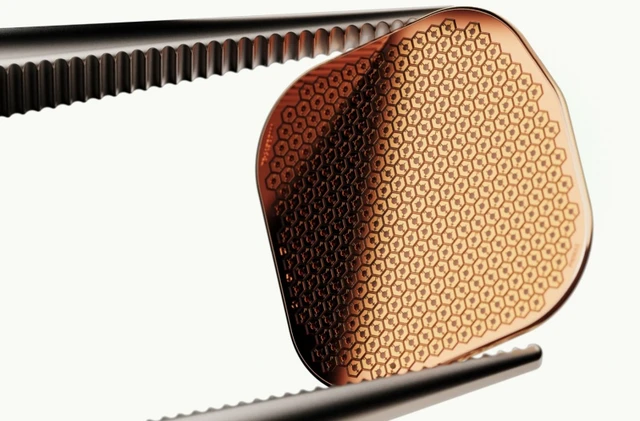
Science, a venture spearheaded by Max Hodak—a key ideologue and co-founder of Neuralink—has pivoted the expertise of high-precision implant development toward vision restoration. By acquiring the innovations of the French startup Pixium, the company introduced the PRIMA system. This is not merely a medical device, but a sophisticated hybrid ecosystem consisting of a subretinal photoelectric chip and specialized smart glasses.
The device's technical architecture is predicated on bypassing compromised photoreceptors. The glasses project targeted signals in the near-infrared spectrum directly onto the implant situated beneath the retina. The chip then converts these light pulses into electrical stimulation, which is transmitted via the optic nerve straight to the brain. In essence, the system creates an artificial layer of receptors, enabling patients to perceive object contours and letters even in cases of severe tissue damage. Of particular note is the integrated "digital magnification" capability, which allows for image scaling, significantly easing the reading process for individuals with limited cognitive visual capacity.
The efficacy of this approach was validated through extensive multi-national clinical trials spanning five countries. The results, published in the prestigious New England Journal of Medicine, are compelling: 84% of participants regained the ability to read, and 80% reported a significant increase in visual acuity. A critical success factor was that the implant's operation does not suppress residual natural vision in the peripheral zones of the retina; rather, it complements it.
PRIMA has now achieved certification under the European Union's Medical Device Regulation (MDR), paving the way for commercial deployment across 30 European nations. The first implantation surgeries are slated to take place in Germany. Simultaneously, negotiations are underway with national healthcare funds to establish insurance reimbursement frameworks, as such high-tech solutions require substantial capital investment.
The technology's global trajectory continues with a pending application for FDA approval in the United States. This could mark the beginning of a mass transition from palliative care for blindness toward the full technological restoration of visual function.
 New Frontiers in Kirin Transistor Density