The pursuit of seamless motion in gaming is entering a new technological epoch, one where organic LEDs are evolving beyond their reputation for mere visual fidelity. Modern esports demands the absolute minimum in latency and refresh rates that were previously the sole province of specialized TN panels. Asus is currently preparing a comprehensive overhaul of its monitor portfolio, seeking to marry OLED’s flawless contrast with extreme response speeds. This strategic pivot could permanently redefine the benchmarks for professional gaming hardware.
The display industry is approaching a pivotal inflection point, and the upcoming release of seven new models from Asus serves as a clear indicator of this trajectory. At the heart of this shift is the synergy between two distinct technologies: QD-OLED (Quantum Dot OLED) and WOLED. While the former delivers more vibrant color reproduction and higher peak brightness via quantum dots, the latter remains the gold standard for stability and true, deep blacks.
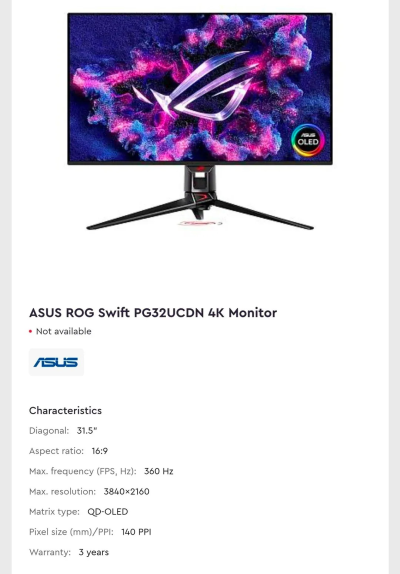
The flagship of this refreshed lineup is the ROG Swift PG32UCDN. This 32-inch 4K monitor redefines the very notion of fluidity, boasting a 360Hz refresh rate. Under the hood, it utilizes the latest panel from Samsung Display, capable of operating at an astonishing 680Hz when dropped to 1080p resolution. Such specifications effectively erase the boundary between cinematic image quality and the rigorous demands of professional esports, where every millisecond of motion clarity is critical.
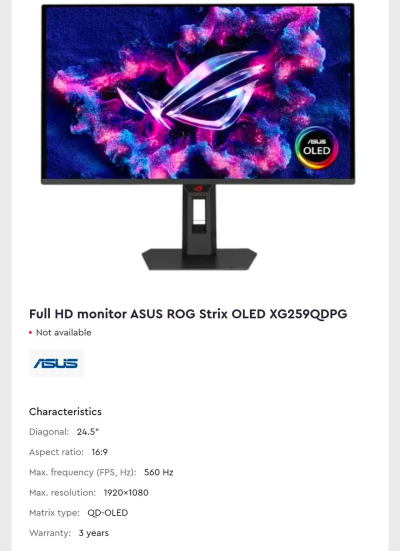
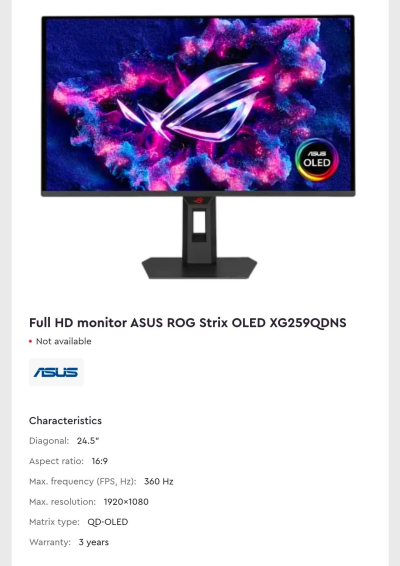
For those who prioritize raw velocity over pixel density, Asus is developing a series of devices with lower resolutions but aggressive refresh rates. The XG259QDPG, featuring a 24.5-inch Full HD panel, can reach 560Hz, positioning it as one of the fastest OLED monitors in existence. Running alongside it is the XG259QDNS, which offers a more moderate yet still impressive 360Hz within the same form factor.

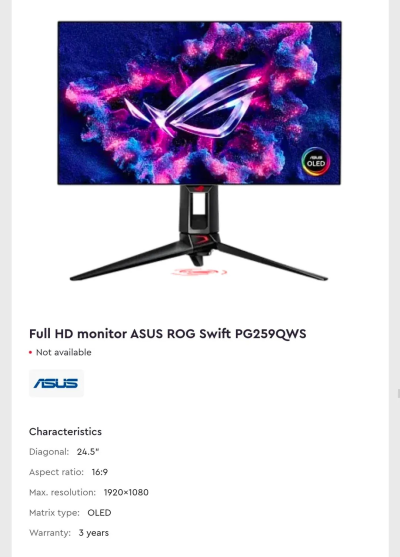
Of particular interest is the ROG Strix PG259QWS. Unlike most of the new arrivals in this series, it is based on a WOLED matrix. While precise specifications remain under wraps, industry experts suggest this monitor may shatter the 600Hz ceiling, offering an alternative architectural approach to achieving ultra-high refresh rates in Full HD.
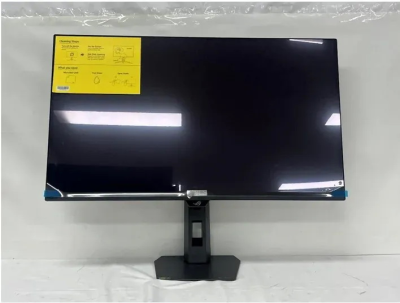
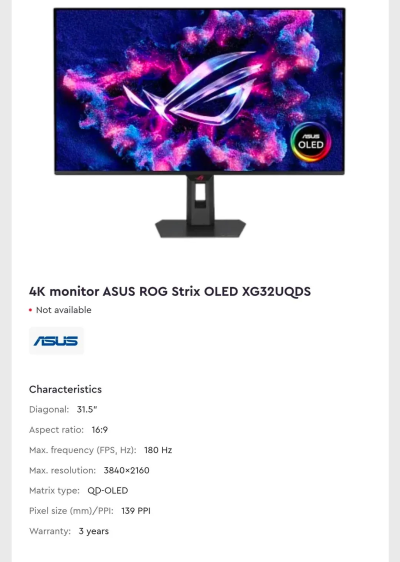
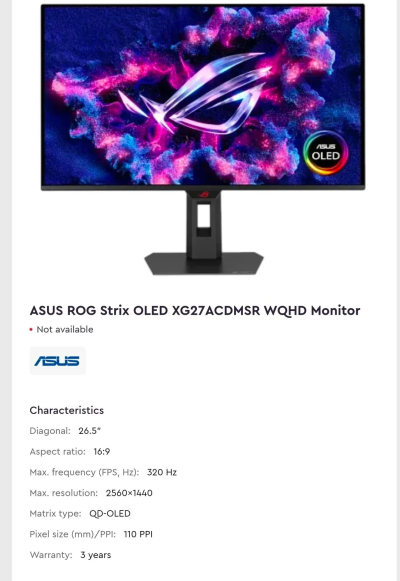
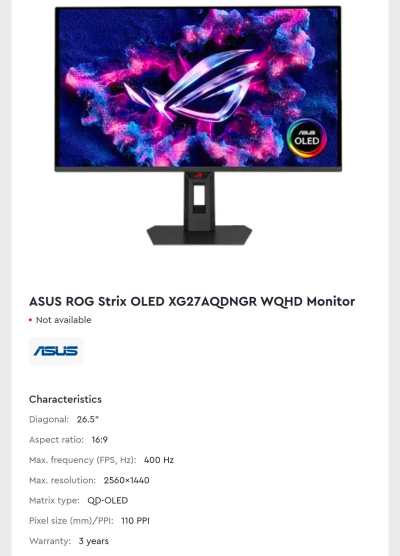
The mid-tier of the lineup caters to users seeking a balance between raw performance and visual fidelity. This includes the 27-inch XG27AQDNGR, featuring QHD resolution (2560 × 1440) at 400Hz, and its more understated sibling, the XG27ACDMSR, clocked at 320Hz. Rounding out the list is the XG32UQDS—a 32-inch QD-OLED display with 4K resolution and a 180Hz refresh rate, tailored for content creators and gamers who value sheer detail over extreme frame rates.
The emergence of such diverse panel options signals that OLED technology has finally migrated from a "premium niche" into the mainstream of high-performance gaming. The leap to 360–560Hz, while maintaining the inherent advantages of organic LEDs, marks the end of the era of compromise—the days when users had to choose between vivid color accuracy and instantaneous response times.
Despite the absence of official launch dates or pricing strategies, the scale of these leaks points to a strategic intent by Asus to secure a dominant position in the high-refresh OLED segment. The industry should expect a period of turbulence; competitors must now either find new ways to accelerate their panels or concede technological leadership to these new Quantum Dot and WOLED solutions.
 The Price of Acceleration: CXMT’s Rapid Push into Memory