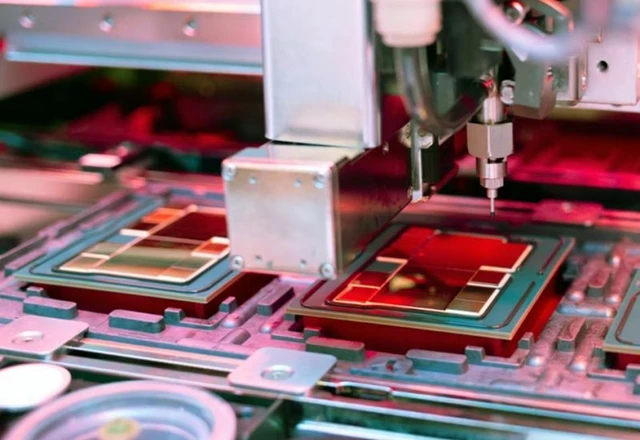
The global semiconductor market is undergoing tectonic shifts, as the pursuit of technological sovereignty clashes with harsh market realities. China’s CXMT is aggressively moving to bridge the gap in DDR5 memory supply, directly challenging the hegemony of the industry's established titans. However, scaling production volume has not yet yielded a corresponding leap in performance quality. Analysis of recent benchmarks reveals that the newcomer's ambitions are still colliding with the fundamental technical constraints of silicon.
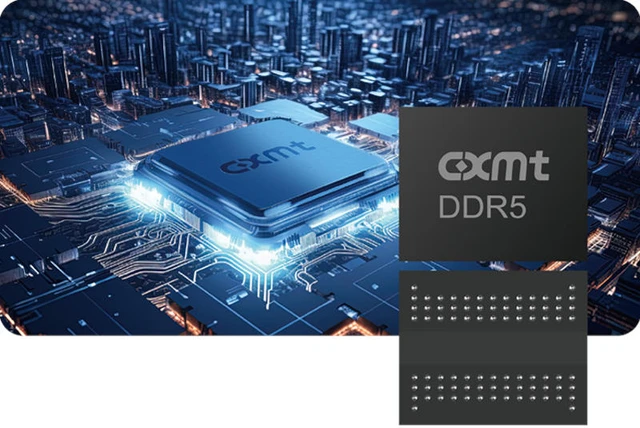
The contemporary memory landscape is defined by intense rivalry, where a "big three" oligopoly has long maintained hegemony over cutting-edge technology. Against this backdrop, the emergence of ChangXin Memory Technologies (CXMT) represents China's strategic push toward technological sovereignty—an attempt to build an independent ecosystem capable of functioning despite stringent sanctions and limited access to EUV lithography, the critical equipment required for producing ultra-dense chip architectures. Despite these headwinds, CXMT has successfully launched DDR5 production; projections suggest the company may soon rival the American giant Micron in output volume, effectively positioning itself as the second-largest player on the global stage.
Commercial expansion is already well underway. Major system integrators, including Dell and HP, have begun integrating CXMT-based solutions into their regional product lines. Simultaneously, brands such as Lexar, Kingbank, Netac, and Asgard are aggressively saturating the consumer segment with modules powered by Chinese silicon. Initial results appeared promising—BIOS optimizations allowed some samples to push past 8000 MT/s, creating an illusion of parity with the industry's established leaders.
However, a granular technical autopsy reveals a different story. Stress testing of DDR5-6000 kits (such as Kingbank’s 48GB modules) demonstrates that Chinese silicon remains highly unstable during aggressive overclocking. While frequencies of 8600 MT/s are achievable, they require significant compromises in timings (CL44), which effectively nullifies the performance gains provided by the higher clock speed.
The fundamental issue lies in the memory's poor responsiveness to voltage scaling and sub-timing adjustments. Whereas modules from SK hynix allow for precision tuning of latencies—ensuring high efficiency even under aggressive overclocking—CXMT chips force users to rely on basic CAS latency levels. This points to a less refined fabrication process and inherent deficiencies in semiconductor quality.
Furthermore, CXMT products exhibit a pronounced "silicon lottery." The variance in performance between different batches is significantly higher than that of the industry's gold standards. Consequently, securing one high-performing module does not guarantee consistent results across a product line, making this memory a risky choice for enthusiasts and professionals who demand rock-solid stability during overclocking.
Ultimately, the narrative of China as the savior of the consumer market holds true only in terms of supply volume. CXMT can ensure the mass availability and affordability of DDR5, reducing dependence on the whims of major corporate clients. However, the technological chasm separating it from SK hynix remains palpable. To truly compete on the international stage, the company must do more than scale its capacity; it must prove the reliability of its solutions and overcome the skepticism of the professional community. As the company prepares for its public offering, product quality will become the primary driver of its market valuation.
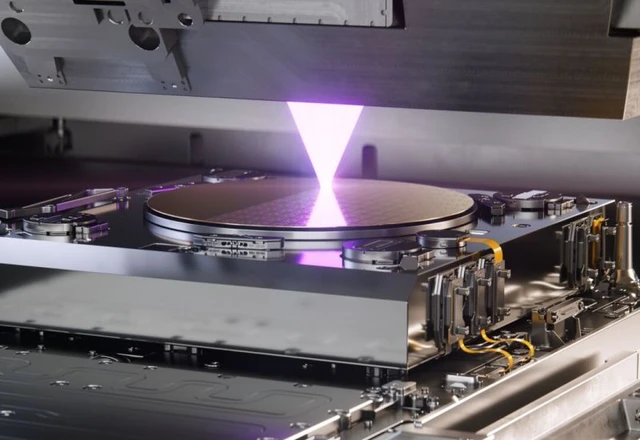 The Horizon of China's Technological Sovereignty in Lithography