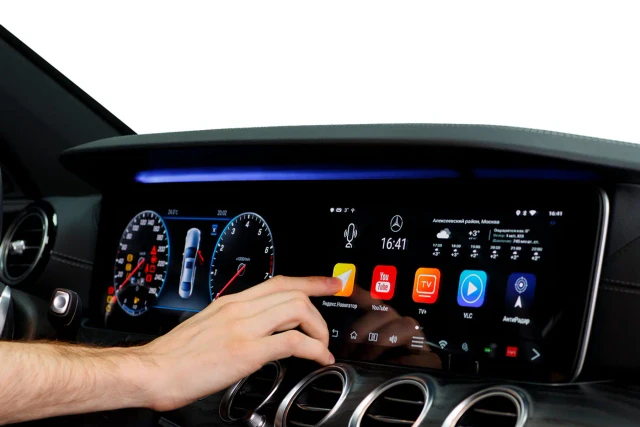
In recent years, the automotive industry has been driven by a wave of radical minimalism, systematically replacing tactile switches with expansive touchscreens. However, this pursuit of a futuristic aesthetic has inadvertently increased the driver's cognitive load, introducing new risks during critical maneuvers. Now, Chinese regulators are moving to curb this trend by mandating the return of physical controls to the cabin. This shift signals a global reappraisal of interface philosophy, marking a decisive pivot back toward ergonomics and safety.
For years, the automotive industry has been gripped by the "Tesla effect." The pursuit of a sterile interior, where all controls are consolidated into a single digital hub, became the gold standard for modern luxury. Steering column stalks, physical climate controls, and even traditional steering wheels began to vanish from the cabin. In practice, however, this minimalism created a critical flaw: drivers were forced to divert their attention from the road to navigate nested menus on a touchscreen.
Recognizing the dangers of this trend, Chinese authorities have mandated strict equipment requirements. Starting July 1, 2027, all vehicles undergoing certification in the country must feature physical controls for 19 core functions. This list includes mission-critical elements: turn signals, hazard lights, the horn, transmission selectors, and gear selection. The return to physical buttons is also mandatory for driver assistance systems, windshield wipers, windshield defrosting, power windows, and the emergency call button.
The regulator's logic is rooted in cognitive psychology. Unlike a touch interface, a physical button provides haptic feedback, allowing the driver to activate a function via muscle memory without taking their eyes off the road. Relocating vital functions to digital menus has been deemed unacceptable; in an emergency, the few seconds spent searching for a specific menu item can be fatal.
Alongside the fight against "screen dependency," the regulator has addressed physical accessibility. From January 1, 2027, fully flush-mounted exterior door handles will be banned in China. New standards require handles that allow for the fastest possible door opening under any weather conditions.
Particular emphasis has been placed on locking systems. Any electronically actuated mechanism must now include a mechanical override in the event of a total power failure. This measure is a direct response to high-profile EV accidents—specifically involving the Xiaomi SU7 Ultra—where electric locks jammed after a collision, severely hindering passenger evacuation.
Consequently, the Chinese market, long a proving ground for the boldest technological experiments, is returning to pragmatism. Innovation can no longer come at the expense of fundamental safety principles, and this regulatory pivot is likely to set the trajectory for the global automotive industry.
 The Global Triumph of Chinese Electric Mobility