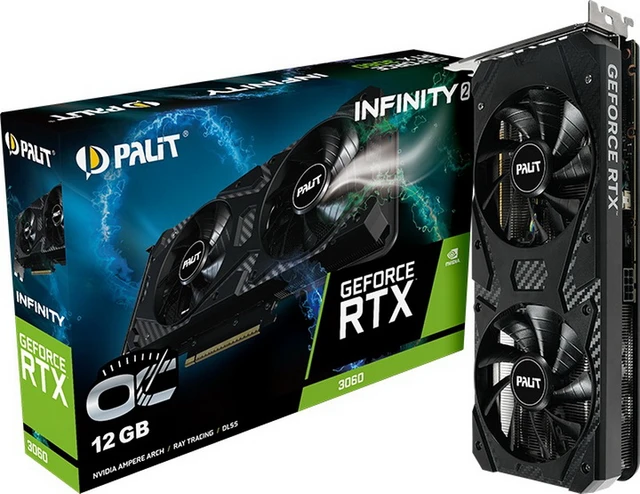
The contemporary GPU landscape is currently dominated by an obsession with AI-powered upscaling and peak performance metrics; yet, traditional hardware solutions remain stubbornly relevant. The surprising resurgence of Ampere production at Samsung Foundry signals a persistent demand for proven, stable architectures. Palit has moved swiftly to capitalize on this shift, debuting the updated RTX 3060 Infinity 2 OC. This launch reinforces a critical industry insight: VRAM capacity often proves more vital to the end-user than the inclusion of the latest software-driven features.
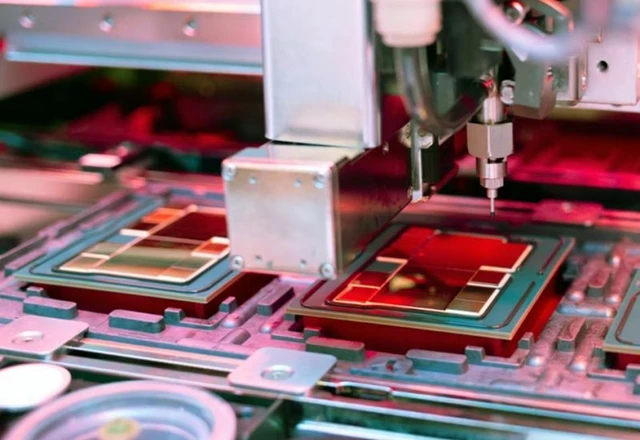
The semiconductor industry rarely looks backward, but the GA106 GPU has become a notable exception. After a period of dormancy, production of chips based on the 8nm process has resumed, allowing Nvidia's partners to replenish retail shelves with RTX 3060 series cards. While the market previously relied on dwindling old stock, the launch of Palit’s Infinity 2 OC line signals a full-scale new production cycle.
The primary selling point for this model is its memory capacity. In an era where many mid-range solutions are capped at 8 GB, the inclusion of 12 GB of GDDR6 transforms the RTX 3060 from a mere gaming adapter into a versatile workstation tool. This memory overhead is critical for running local large language models (LLMs), complex 3D rendering, and professional video editing—tasks where VRAM deficits become a bottleneck regardless of the chip's raw computational power.
From an engineering perspective, Palit has opted for a restrained yet effective design. The card features an all-black dual-fan cooling system with a particular emphasis on airflow optimization; a pass-through section behind the heatsink allows heat to dissipate efficiently without creating excessive backpressure within the chassis. For users prioritizing acoustic comfort, a zero-RPM mode is implemented, silencing the fans during low-load scenarios such as office work or media consumption.
Technically, the device remains faithful to the tenets of the Ampere architecture, introduced at the turn of 2020 and 2021. Consequently, it lacks some modern advantages—most notably DLSS Frame Generation, a hallmark of the newer Ada Lovelace architecture. However, for its target audience—1080p gamers and content creators—stability and memory capacity outweigh the absence of experimental frame generation features.
The device maintains a modest power profile: with an estimated power draw of 170W, it is compatible with power supplies starting at 550W. Power is delivered via a single 8-pin PCIe connector, simplifying integration into existing builds without requiring a PSU upgrade.
The lineup consists of two modifications, with the factory-overclocked (OC) version offering a modest boost in core clock speeds—up to 1792 MHz. While this gain represents less than one percent over reference specifications, it underscores the manufacturer's intent to extract maximum performance from the available silicon. Although pricing and regional availability remain undisclosed, the return of a full-fledged 12GB RTX 3060 provides a compelling alternative for those seeking a reliable workhorse without paying the premium for the marketing novelties of recent generations.
 The Horizon of China's Technological Sovereignty in Lithography