The global semiconductor market continues to grapple with systemic disruptions that extend far beyond mere logistical bottlenecks. Shortages of memory components have emerged as a critical pivot point, dictating the production cadence for modern gaming hardware. In this climate, even tech giants are being forced to overhaul their product rollout strategies and recalibrate their metrics for success. All signs point toward a protracted crisis—one that is poised to intensify in the foreseeable future.
The modern electronics industry has found itself held hostage by supply chain volatility, where the disconnect between wholesale markets and retail availability has reached critical levels. Analysis reveals that consumers perceive actual component availability with a three-to-six-month lag relative to the realities facing major suppliers. This latency creates an illusion of stability in an environment where supply conditions are actually steadily deteriorating.
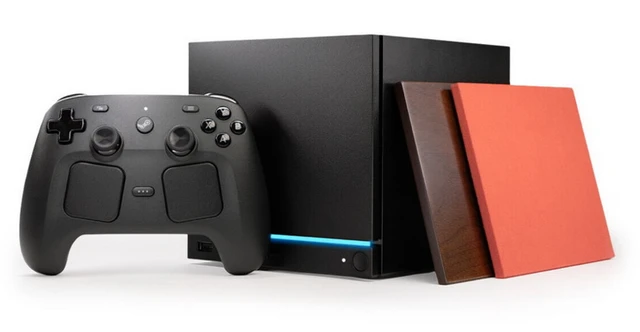
For Valve, this crisis became one of the primary bottlenecks during the launch of the Steam Machine. Production capacity was directly tied to the availability of memory modules, effectively turning the assembly process into a scramble for dwindling resources. Rather than scaling systematically, the company was forced to operate within the rigid constraints of existing inventories, which inevitably impacted initial shipment volumes.
However, Valve’s approach to evaluating hardware efficiency diverges sharply from traditional corporate metrics. Rather than focusing on sales figures or market share, the company prioritizes conceptual viability. The primary benchmark for success is the device's ability to solve a tangible user problem: providing seamless access to an open gaming platform within the home environment. Consequently, the value of the Steam Machine is measured not by units sold, but by the quality of the user experience and the system's overall functional utility.
Despite the pressures exerted by the component market, strategic hardware roadmaps remain unchanged. The company’s engineering trajectory is focused on the long term; the work on gameplay and the optimization of user-system interaction is only beginning and will span years. Short-term memory shortages are viewed as transient obstacles that cannot alter the fundamental evolution of the ecosystem.
Parallel to these hardware challenges, Valve has recalibrated its content strategy. The decision to pivot away from developing exclusives for the Steam Machine was driven by a desire to maximize the advantages of an open platform. Instead of restricting users to a narrow set of unique titles, the company leveraged the vast library of PC gaming—which itself became the primary competitive advantage and "launch exclusive" for the new devices. This underscores Valve's core philosophy: prioritizing ecosystem accessibility and breadth over artificial restrictions designed for marketing purposes.
 Nvidia N1X and the New Era of Arm PCs