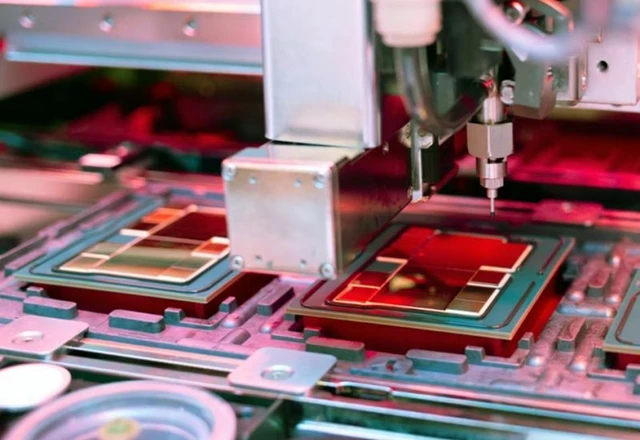
The modern RAM market is currently navigating a period of profound transformation, as the traditional hegemony of a handful of industry giants is being disrupted by the arrival of ambitious new contenders. The transition to the DDR5 standard has demanded a fundamental shift in how motherboard manufacturers approach BIOS optimization, particularly in ensuring stability at extreme frequencies. MSI has positioned itself as one of the first system integrators to confirm full compatibility with chips from ChangXin Memory Technologies (CXMT)—a move that unlocks significant potential for enthusiasts chasing peak performance on the latest Intel and AMD platforms.
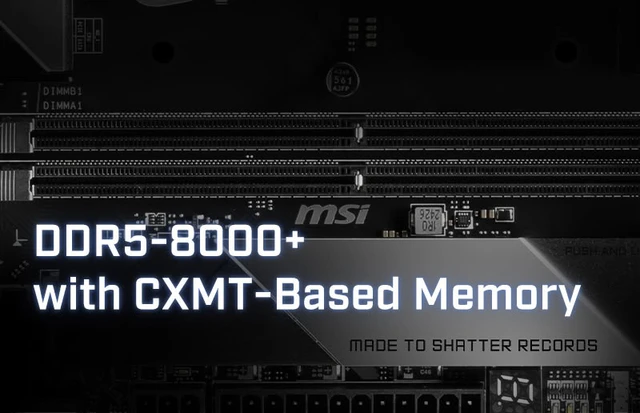
The global semiconductor landscape is undergoing a strategic shift toward diversification, and the emergence of modules from Chinese manufacturer CXMT has become a significant milestone for the industry. Achieving stable operation at frequencies exceeding 8000 MHz requires more than just high-quality silicon; it demands precise calibration of the interplay between the processor's memory controller and the motherboard's topology. MSI has focused on developing specialized BIOS profiles designed to unlock the full potential of CXMT modules while minimizing the risk of errors under intensive workloads.
Particular attention was paid to the Intel 800-series platform, where testing was conducted across two boards with fundamentally different design goals. In the first scenario, the MEG Z890 Unify-X was utilized. By featuring only two DIMM slots, this board ensures cleaner electrical signaling—a critical factor for reaching ultra-high frequencies. Paired with an Intel Core Ultra 5 245K processor, a 48GB kit (2 × 24GB) delivered remarkable results: stable operation at DDR5-8600 with timings of CL46-56-56-134. MemTest verification, exceeding 100% coverage, confirmed the absolute reliability of this configuration.
Parallel tests were conducted on the Pro Z890-S WIFI, which features four DIMM slots. Such a topology is traditionally considered more challenging for overclocking due to the inherent electrical noise associated with additional slots. Nevertheless, utilizing an Intel Core Ultra 5 250K Plus allowed for stable operation of a 32GB kit (2 × 16GB) at DDR5-8200 with timings of CL44-56-56-132. Here too, MemTest results confirmed total system stability, testifying to the high quality of the BIOS microcode optimization.
MSI's strategy is not limited to the Intel ecosystem. Compatibility for CXMT modules has also been confirmed for the AMD AM5 platform, underscoring the manufacturer's ambition to create a vendor-agnostic environment for high-speed memory. For the end user, these complex engineering processes are distilled into a streamlined experience: all necessary optimizations are integrated into the proprietary "Memory Try It!" tool. This feature allows users to quickly toggle between preset overclocking profiles, transforming the arduous process of manual timing and voltage adjustment into an intuitive experience.
Ultimately, the support for CXMT memory is part of a broader trend toward the democratization of high-performance components. Integrating new market players into the ecosystems of leading motherboard manufacturers fosters competition, which inevitably drives down the cost of high-speed solutions without compromising uncompromising stability.
 The Horizon of China's Technological Sovereignty in Lithography