The quest for flawless visual fluidity at high resolutions has traditionally been synonymous with a constant cycle of hardware upgrades. However, contemporary software innovations are beginning to shift this paradigm, unveiling novel avenues for performance optimization. A recent experiment demonstrates that cross-generational GPU synergy can effectively circumvent hardware bottlenecks, even within the demanding 4K segment. The core concept involves a strategic distribution of computational workloads, where a secondary chip handles frame generation, liberating the primary resource to focus exclusively on rendering.
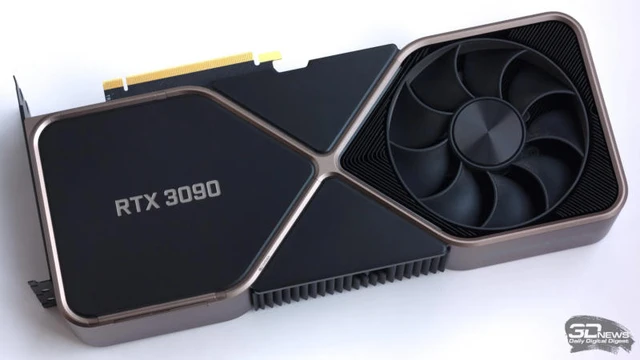
In the contemporary gaming landscape, yesterday's flagships are rapidly losing ground to the relentless march of new architectural innovations. The Nvidia GeForce RTX 3090, which stood as the gold standard for raw power in 2020, can no longer claim absolute dominance. However, it is still capable of returning to the top tier if one adopts an unconventional approach to computational resource allocation—specifically, by pairing it with a budget-tier solution like the GeForce RTX 3050.
The catalyst for this performance boost is a utility called Lossless Scaling. Unlike proprietary upscaling and frame generation suites such as Nvidia DLSS, AMD FSR, or Intel XeSS—which are deeply integrated into specific game engines—this tool operates as a universal overlay across any software. This makes it effectively content-agnostic, allowing AI algorithms to increase frame rates even in titles where official support for such features is non-existent.
The technical core of this experiment lies in creating a multi-GPU configuration with a strict separation of roles. The primary rendering load—geometry processing and lighting calculations—was handled by a powerful Gainward GeForce RTX 3090 Phoenix. Simultaneously, the resource-intensive task of generating additional frames was fully delegated to a secondary card: an Asus Dual GeForce RTX 3050 OC Edition.
This strategy bypasses a critical flaw inherent in most upscaling methods: "resource contention" with the primary render. When a single GPU attempts to render a demanding 4K scene while simultaneously generating intermediate frames, it creates computational overhead that often leads to unstable frametimes. Offloading the generation process to a dedicated GPU completely eliminates this conflict.
The results are striking: where the GeForce RTX 3090 alone delivered 71 FPS at a resolution of 3840 × 2160 pixels, the combination with the entry-level card and Lossless Scaling pushed the performance to 144 FPS. In effect, the screen's refresh rate was doubled without the need to replace the primary, high-cost component.
It is worth noting that Lossless Scaling has the potential to increase frame rates by up to four times, and the technology is compatible even with integrated graphics cores. However, for high-resolution workloads, a discrete GPU remains the only viable option. Amidst market volatility and the skyrocketing costs of new flagships, such hybrid software-hardware configurations offer an effective way to extend the lifecycle of legacy hardware, transforming aging components into powerful optimization tools.
 The Triumph of 3nm Chip Manufacturing