For years, the global DDR5 memory market has been tightly controlled by a handful of industry titans, resulting in chronic shortages and significant price volatility. The emergence of new contenders, such as China's CXMT, is beginning to reshape this landscape by providing a viable alternative to established suppliers. Gigabyte is now taking a strategic step toward diversification by ensuring its platforms are fully compatible with these emerging modules—a move that not only expands consumer choice but also contributes to the overall stabilization of market supply.
The high-speed DDR5 memory market is currently grappling with significant headwinds; limited supply and escalating module costs have placed palpable pressure on the high-performance PC build segment. In this climate, the expansion of ChangXin Memory Technologies (CXMT) emerges as a strategic pivot. Aligning with these market trends, Gigabyte has officially confirmed support for CXMT-based RAM modules across its current motherboard lineups.
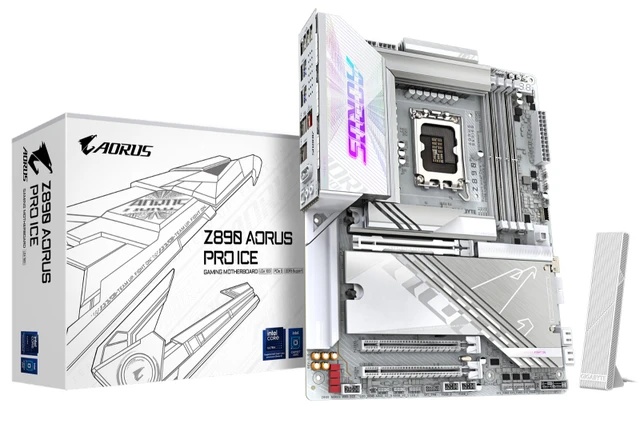
This technical integration spans a broad hardware spectrum, encompassing the latest AMD 800 and 600 series, as well as Intel's 800 and 700 series solutions. The support extends to chips with densities of 16Gb and 24Gb, which have demonstrated impressive stability at speeds reaching 8200 MT/s. Such performance metrics elevate CXMT memory from a mere "budget alternative" to a high-performance tier capable of meeting the demands of power users and overclocking enthusiasts alike.
The deployment process varies by platform. For users on AMD AM5 systems (800 and 600 series), a BIOS update to the latest version—already available in the manufacturer's repositories—is required. This is standard for AMD platforms, where memory optimization is frequently tied to AGESA microcode updates. Conversely, Intel solutions (800 and 700 series) offer more seamless "out-of-the-box" compatibility, supporting CXMT modules without the need for firmware updates.
From a market analysis perspective, Gigabyte's move is a calculated response to the necessity of breaking the oligopoly held by the industry's dominant memory manufacturers. The emergence of a viable and stable supply source reduces the industry's reliance on a handful of vendors and fosters healthy competition. For the end consumer, this translates not only to a potential reduction in the cost-per-gigabyte but also to a wider array of module configurations—a critical factor when architecting complex workstations or high-end gaming rigs.
 The Triumph of 3nm Chip Manufacturing