The quest for hardware transparency has reached a pivotal turning point within the personal computing landscape. For years, proprietary UEFI implementations have functioned as "black boxes," stripping users of meaningful control over the critical system initialization phase. The emergence of open-source firmware for contemporary platforms—most notably AMD’s AM5—signals a paradigm shift toward digital sovereignty and a more robust security posture. The Dasharo project represents the first significant stride toward completely replacing vendor-locked BIOS with a transparent alternative, all while maintaining full feature parity.
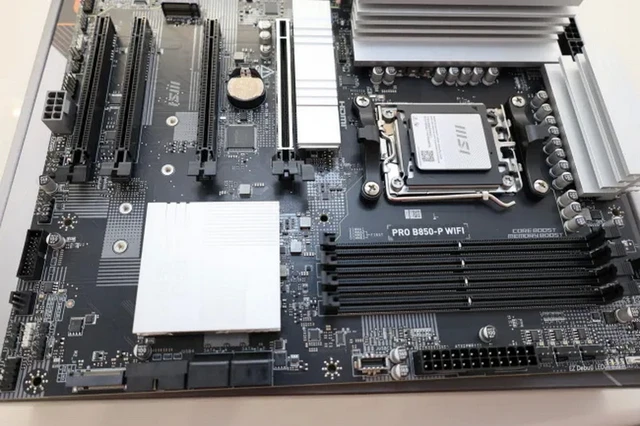
In the realm of systems programming, a long-standing tension exists between the opacity of proprietary vendor solutions and the community's drive for total hardware sovereignty. 3mdeb, a firm specializing in security and open-source solutions for cloud providers, has stepped into this fray with the release of Dasharo v0.9.0—the first publicly available open firmware for the AMD AM5 platform. Utilizing the MSI PRO B850-P motherboard as its primary testbed, Dasharo effectively replaces the standard UEFI.
The project’s technical architecture is built upon the synergy of coreboot 25.12 and AMD openSIL. This combination enables a full UEFI boot experience with Secure Boot support, which is critical for compatibility with Windows 11 and modern Linux distributions. Beyond basic booting, the firmware manages TPM modules, power consumption, and stable memory initialization. Virtually all key interfaces—from PCIe and USB to SATA and network adapters—function as intended, demonstrating that open-source code can deliver a level of stability and security on par with commercial products.
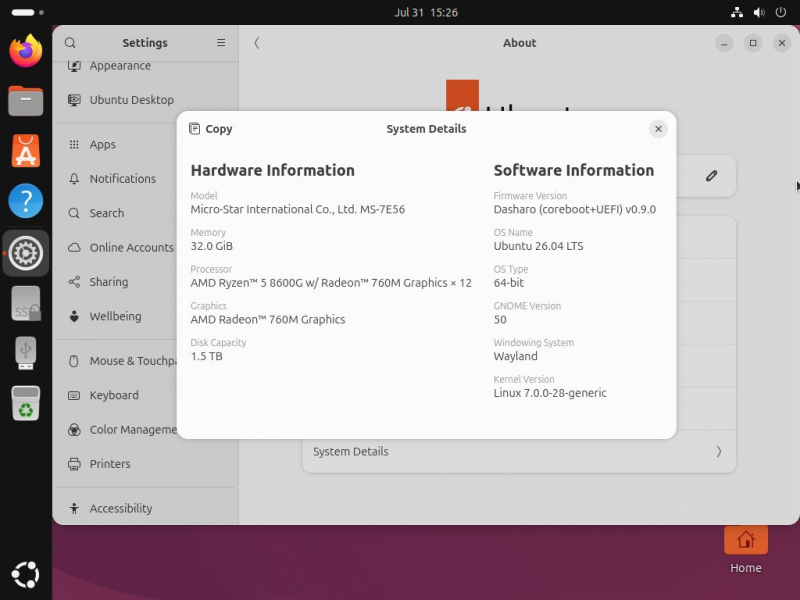
However, the path toward universal compatibility is hampered by the hardware heterogeneity of modern AMD processors. At this stage, Dasharo exclusively supports the Phoenix series (specifically the Ryzen 7 8700G, Ryzen 5 8600G, 8500G, 8400F, and Ryzen 3 8300G). For users of other AM5 processors, the system remains non-functional.
Intriguingly, these technical hurdles stem less from the Zen 4 architecture or the presence of 3D V-Cache technology itself, and more from the specifics of the System on Chip (SoC) implementation. The developers note that while the multi-die layout of X3D models theoretically does not preclude initialization via openSIL, support for 3D V-Cache is simply absent in the current version of Dasharo because Phoenix chips do not feature it.
A more formidable obstacle is presented by the new Ryzen 9000 series (Granite Ridge). Their SoC architecture differs significantly from the Phoenix series, rendering them incompatible with the current openSIL branch. Expanding support for these CPUs requires a dedicated code branch from AMD—one that the vendor has yet to provide.
The project traces its origins back to the openSIL phoenix_poc initiative, which was originally conceived for mobile platforms. However, the 3mdeb team successfully adapted the solution for the AM5 desktop segment, creating a significant precedent for the industry. The future of the project now hinges on the interaction between the community and the manufacturer; developers are urging users to signal their interest in Raphael or Granite Ridge support via GitHub. Should demand prove substantial, AMD may provide the necessary tools to expand the open firmware ecosystem.
 Forecasting Exponential Growth in Nvidia Shipments