The global semiconductor market is undergoing a profound transformation, one where the long-standing hegemony of a few industry titans is being fundamentally challenged. In this shifting landscape, Chinese manufacturers are transcending their role as mere providers of budget-tier solutions, asserting themselves instead as legitimate technological leaders. Recent benchmarks reveal that CXMT chips are shattering frequency barriers previously thought attainable only by elite overclocking modules—a breakthrough that signals a new era of competition within the DDR5 segment.
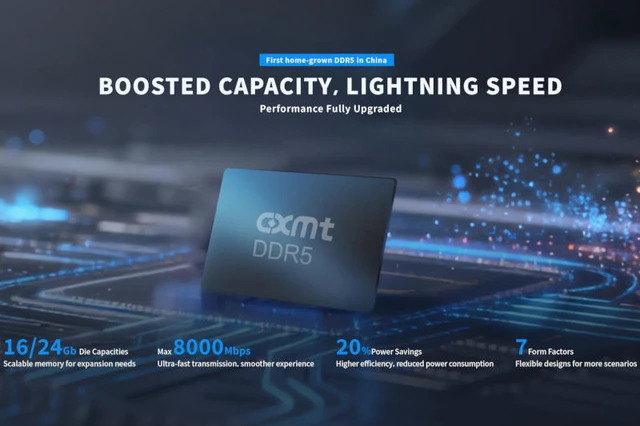
For years, CXMT—the world's fourth-largest DRAM producer—was viewed by the market as a second-tier player. While expectations for their technical specifications remained modest, reality has proven far more ambitious. Today, CXMT chips are demonstrating impressive competitiveness, effectively blurring the line between mass-market utility and high-performance overclocking.
A striking testament to this evolution is the breach of the DDR5-8800 threshold on the AMD X870E platform. During testing, Colorful memory modules based on CXMT dies delivered results that, until recently, seemed unattainable for the manufacturer.
Of particular note is the synergy between hardware and software optimization. Taiwanese motherboard manufacturers have begun aggressively adapting microcode to support CXMT memory—a strategic response to growing DRAM shortages within global supply chains. Although full-scale DDR5 production at CXMT only ramped up toward the end of 2025, the impact of these chips is being felt everywhere, from local Chinese brands to global titans like Corsair.
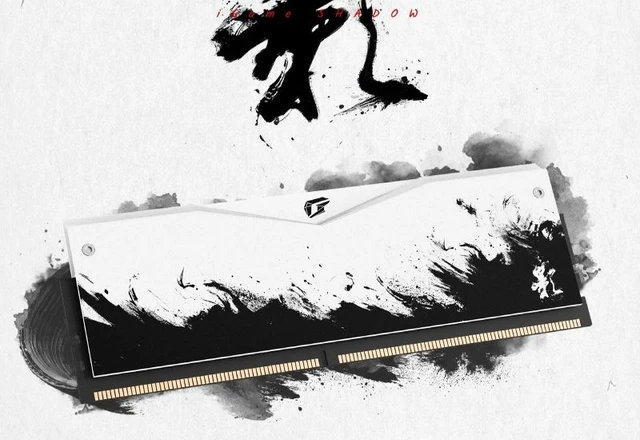
Practical benchmarks on the Colorful iGame X870E Vulcan W OC, utilizing iGame Shadow II DDR5-6000 modules, revealed exceptional overclocking headroom. The units achieved stable operation at frequencies of DDR5-8812 and even DDR5-8817 MHz. While analyzing timings from available data remains complex, the technical profile for 8800 MHz suggests a voltage of approximately 1.45V with timings of 42-55-55-140. Such metrics point to high silicon quality and efficient power management.
It is worth noting that these results were achieved using 16GB modules, confirming the stability of the chips at standard memory densities.
A steady trend is emerging across the industry: interest in CXMT DRAM is no longer limited to local players but extends to major system integrators like HP Inc., Asus, and Acer. Even Apple, despite stringent trade restrictions and import bans in the US, is reportedly exploring ways to integrate these chips outside the American market. This underscores a pivotal shift where technological superiority and economic efficiency are beginning to outweigh geopolitical barriers.
 The Price of Acceleration: CXMT’s Rapid Push into Memory