The global semiconductor race has long since evolved beyond a mere contest of pure innovation, transforming into a cutthroat struggle for intellectual dominance. The case of CXMT illustrates how the aggressive acquisition of external expertise can serve as the bedrock for a rapid ascent within the DRAM industry. The "Hefei Project" functioned as a blueprint for closing a multi-year technological divide in a matter of months. Today, this conflict exposes the profound tensions between the safeguarding of trade secrets and the raw ambitions of emerging technological powerhouses.
The narrative of the meteoric rise of the Chinese memory manufacturer CXMT, according to South Korean investigative findings, began not with fundamental research, but with a meticulously crafted blueprint for the appropriation of proprietary achievements. "Project Hefei," initiated almost immediately after the company's founding in 2016, was a phased strategy designed to seize the DRAM market. At its core lay a starkly pragmatic objective: to gain access to Samsung's key technical breakthroughs and poach the lead engineers capable of translating that knowledge into tangible production.
The linchpin of this strategy was the Process Recipe Plan (PRP)—effectively the "genetic blueprint" of semiconductor manufacturing. A PRP is a comprehensive technical roadmap of the fabrication process, consisting of approximately 620 distinct stages. Far from being a mere set of instructions, it is a detailed registry of operational sequences, process parameters, equipment specifications, and a precise inventory of required consumables. For Samsung, the development of the 18nm DRAM process node was the culmination of years of intensive labor: since 2012, over 1,100 specialists had worked on its refinement, with investments totaling trillions of won. Consequently, access to this data was strictly controlled and classified as a top-tier commercial secret.
CXMT's initial attempts at organic growth proved futile. In August 2016, the company attempted to reverse-engineer the PRP relying solely on the recollections of recruited former Samsung employees. However, human memory proved inadequate against the sheer complexity of a 620-step process; reproducing precise parameters and material specifications from memory was impossible. The situation shifted by September of that same year: according to prosecutors, CXMT gained direct access to Samsung's documentation, including specific equipment models and supplier lists. This intelligence allowed the company to draft its own operational plan within days, which was subsequently verified and refined by the poached specialists.
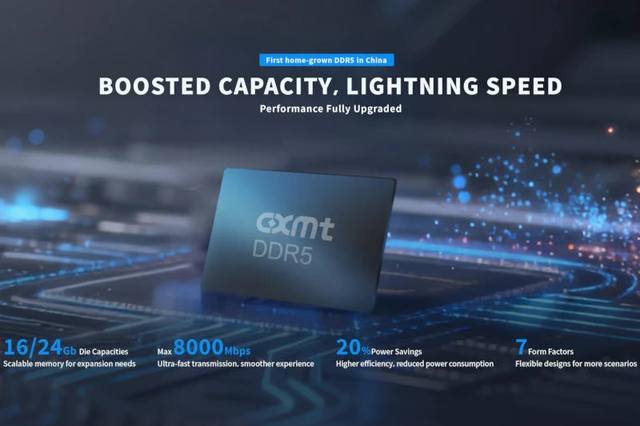
The dividends of this strategy materialized rapidly. By 2019, CXMT entered the market with its own 8Gb DDR4 chips. The company's subsequent exponential growth was fueled by a global memory shortage and the rapid proliferation of artificial intelligence systems. As a result, CXMT's market share in the DRAM segment saw a dramatic surge, climbing from 4% in the second quarter of 2025 to 10% by mid-2026.
The scale of this expansion is further evidenced by the company's financial metrics. Revenue in the second quarter of 2026 surged by 716%, and its IPO debut on Shanghai's STAR Market raised $8.6 billion, with share prices skyrocketing nearly fivefold. Today, CXMT is striving to build production capacities comparable to global leaders like Micron. Expansion plans include ramping up output to 350,000 wafers per month across three existing plants and constructing a new facility in Beijing, which could potentially push total capacity to 600,000 wafers.
Interestingly, the bulk of the raised capital is being directed toward the development of conventional DRAM rather than the more costly and technologically demanding HBM (High Bandwidth Memory) segment. Nevertheless, the company's ambitions extend into this arena as well: CXMT has already begun shipping HBM3E samples to leading Chinese AI accelerator developers, such as T-Head and Cambricon.
Such rapid success, however, comes with significant legal liabilities. South Korean prosecutors estimate the damages inflicted upon Samsung due to the technology leak in the tens of trillions of won. The case, currently pending before the Seoul Central District Court, is poised to become a landmark precedent for the protection of intellectual property in an era of global technological confrontation.
 Nvidia N1X and the New Era of Arm PCs