For decades, San Francisco has been the undisputed epicenter of technological talent. Yet today, the city finds itself mired in a paradoxical crisis of affordability. The explosive ascent of generative AI has catalyzed a new form of economic stratification within the tech industry itself. Massive capital injections and hyper-inflated salaries within the narrow corridor of neural networks have triggered an inflationary spiral that is pricing out even affluent specialists. The city is rapidly transforming into a gated community for the "AI elite," where conventional success in software engineering no longer guarantees a basic standard of living.
Modern San Francisco serves as a textbook case of "Dutch disease" applied to an urban real estate market. When a single industry experiences anomalous growth, it cannibalizes available resources and drives prices to levels that become unsustainable for everyone else. Today, the catalyst is the artificial intelligence sector. Companies like OpenAI and Anthropic, fueled by colossal investment, are forging a new stratum of ultra-wealthy employees whose financial capabilities diverge radically from standard industry benchmarks.
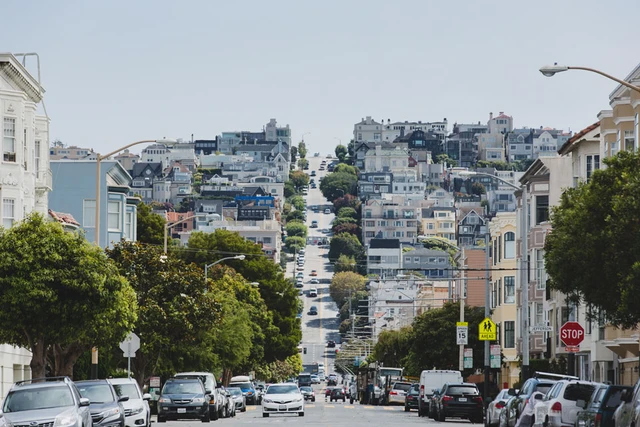
The housing market has become the primary indicator of this divide. The average home price in the city has reached a staggering $1.7 million—nearly four times the national average. The rental situation is even more precarious: lease rates have surpassed those of New York City, with the average monthly rent climbing to $3,827. Meanwhile, inventory in prestigious enclaves like the Marina District or Pacific Heights has virtually evaporated; vacancy rates plummeted from 13% in 2020 to a critical 3%. A stagnation in new construction only exacerbates this deficit, turning the search for housing into an exhausting war of attrition.
This economic reality is fueling societal frictions that were previously unthinkable for IT professionals. Even couples with combined annual incomes exceeding $360,000 find that searching for a one-bedroom apartment under $5,000 has become a protracted ordeal with no guaranteed outcome. In some instances, the only solution is a forced geographic fragmentation: one partner relocates to more affordable regions, such as Lake Tahoe, while the other accepts co-living arrangements with multiple roommates just to offset costs.
Inflation has extended beyond mere square footage. The city's overall cost-of-living index reveals systemic overheating: utilities and transportation are 40–43% more expensive than the US average, while groceries cost nearly 20% more. This creates a "financial trap" where high nominal salaries are entirely consumed by the sheer cost of urban infrastructure.
Driving this process is the emergence of a new "technocratic elite." Analysts note that employees at leading AI labs and SpaceX possess the potential to become the next generation of billionaires through stock options and equity stakes. This creates a paradox where a highly skilled engineer—who would rank among the top 20% of earners nationwide according to census data—begins to feel professionally and economically inadequate simply because they are not building Large Language Models.
Ultimately, San Francisco risks losing its status as an inclusive epicenter of innovation. When the cost of living becomes a barrier even for mid-level IT talent, a brain drain toward more balanced cities, such as Seattle, begins. The city that once served as the cradle of the digital revolution is now becoming a cautionary tale of how the hyper-concentration of capital within a single narrow niche can dismantle the traditional ecosystem of urban living.
 Anthropic’s Strategic Push for Hardware Independence