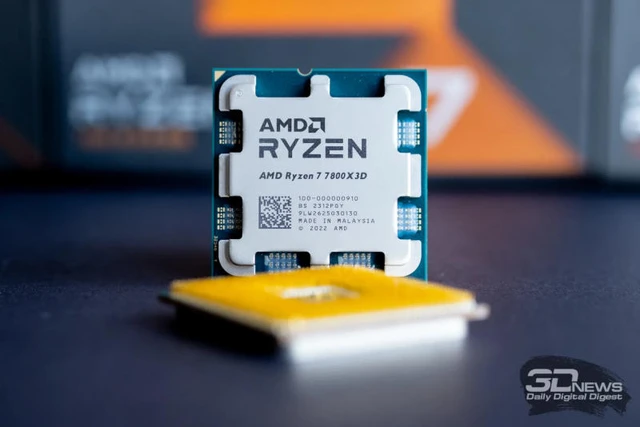
The relentless pursuit of peak gaming performance frequently steers enthusiasts toward the Ryzen X3D series, where 3D V-Cache technology pushes the boundaries of what is possible. Yet, the stability of these chips is critically dependent on the precision of power delivery and the seamless operation of the motherboard. Recent data aggregated by the enthusiast community reveals a troubling correlation between specific vendors and hardware failure rates. A deep dive into user experiences has uncovered a stark disparity in reliability across the Socket AM5 ecosystem.
The phenomenon of degradation and sudden failure in high-performance processors has long been a point of contention among overclockers and system integrators. The Socket AM5 platform has drawn particular scrutiny, where processors featuring expanded L3 cache (X3D) deliver stellar performance but remain acutely sensitive to overvoltage. To gauge the actual scale of the problem, a Reddit user initiated an independent study utilizing automated data collection tools.
The study's methodology relied on a specialized bot that scanned a vast array of Reddit posts over the course of a year. The algorithm was tuned to identify strict matches within publication headlines. To qualify for the sample, a post had to simultaneously meet three criteria: a specific Ryzen X3D model for the AM5 socket, a mention of a motherboard brand or chipset, and terminology explicitly indicating hardware failure.
To minimize "noise" and eliminate false positives, references to the legacy AM4 socket, as well as discussions regarding GPUs, monitors, or software-related gaming glitches, were entirely excluded. The author intentionally restricted the search to headlines, consciously sacrificing comprehensive coverage in favor of data integrity. Following the initial bot-driven filter—which yielded over three hundred matches—each case underwent manual verification. This process filtered out erroneous complaints, leaving only confirmed instances of physical CPU failure in the final dataset.
The findings from this sample are sobering. Of the 207 confirmed incidents, the overwhelming majority were linked to a single manufacturer. The distribution of failures is as follows:
- ASRock — 145 cases;
- ASUS — 44 cases;
- MSI — 11 cases;
- Gigabyte — 7 cases.
The statistics reveal that approximately 70% of all recorded failures occurred on ASRock motherboards. Such a stark disparity compared to competitors raises critical questions regarding the technical drivers of this anomaly. In the context of X3D processors, the pivotal factor is often the SoC (System on Chip) voltage management. Flaws in BIOS implementation or incorrect factory-set voltage limits can lead to irreversible silicon degradation.
Admittedly, data harvested from forums does not constitute a rigorous laboratory study and may be subject to a certain margin of error due to the specific demographics of the Reddit community. However, when the gap between brands becomes this pronounced, randomness fades into the background, giving way to a systemic pattern. Such a signal in the data serves as a serious catalyst for analyzing VRM quality and power management algorithms within a specific vendor's product line—especially since, for the end user, the cost of such a failure is the total loss of an expensive CPU.
 The Dawn of the 2nm Era in the New iMac