Modern urban landscapes and resort infrastructures are necessitating a fundamental reimagining of traditional mobility. The boundary between the conventional automobile and the utilitarian golf cart is becoming increasingly porous, carving out a niche for specialized micro-mobility solutions. Enter Amble, a Portuguese startup whose electric buggy, the Amble One, represents a sophisticated synthesis of engineering precision and functional minimalism. This project signals a broader shift toward mindful resource consumption within the realm of localized transit.
At its core, the Amble One is driven by an ambitious vision: to carve out a new category of transport that bridges the divide between the cumbersome urban automobile and the rudimentary golf cart. Engineered by a team with pedigrees from Audi and Apple, the project reflects a distinct philosophy—a synthesis of flawless ergonomics, technical purity, and uncompromising functionality.
The vehicle's design language draws clear inspiration from NASA’s lunar rovers. By consciously eschewing the traditional enclosed body in favor of an open platform, the designers have not only reduced weight but emphasized the machine's utilitarian essence. With no doors, a soft-top roof, and an exposed frame, the Amble One presents itself as a precision tool tailored for coastal townships or expansive private estates.

From a technical standpoint, the Amble One is a masterclass in weight optimization and energy efficiency. Weighing just 450 kg, it is powered by a 12 kWh battery delivering a range of up to 100 km. Within the context of micro-mobility, these specifications are optimal, allowing for several days of operation between charges. A critical factor in its accessibility is the ability to charge via a standard 220V domestic outlet; a full charge cycle takes approximately 5.5 hours, eliminating the need for costly high-speed charging infrastructure.

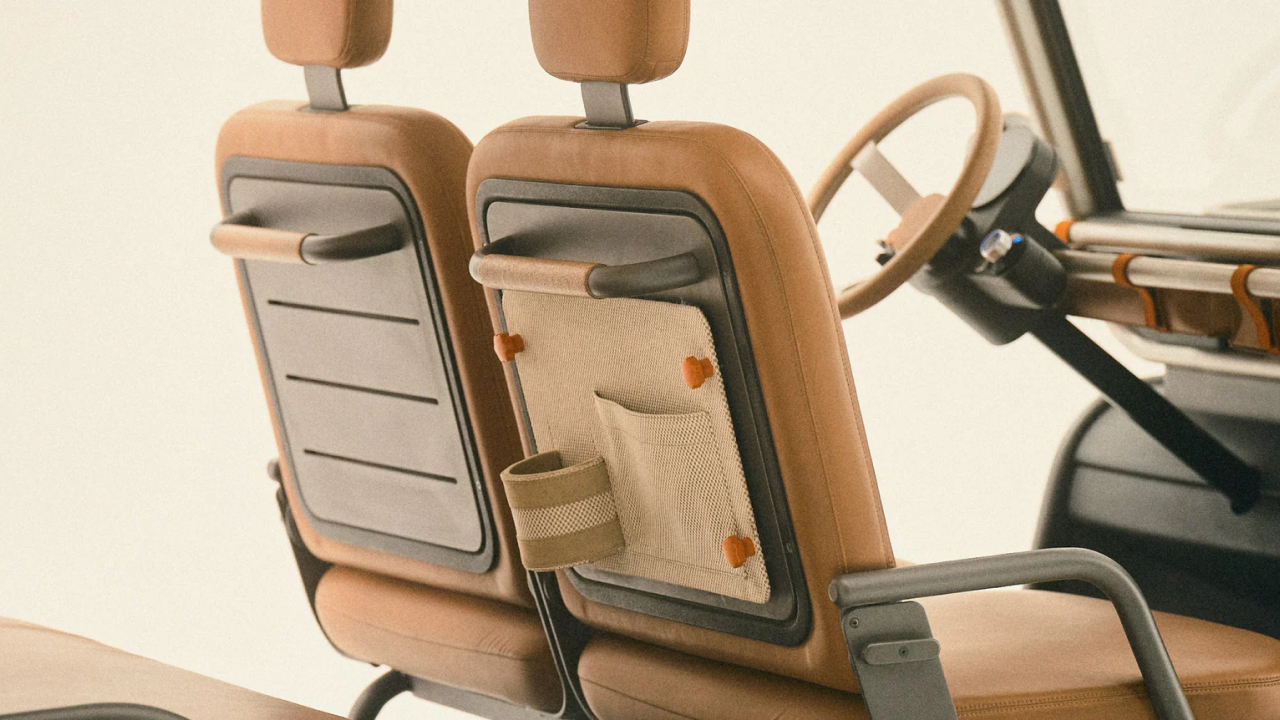
Performance is capped at a top speed of 65 km/h, aligning with its intended use and legal classification. Yet, beneath this apparent simplicity lies a robust engineering foundation: independent suspension and 28-inch wheels ensure confident traversal across rugged terrain. Modularity is central to the design—the rear seats fold into a flat cargo deck, and the chassis serves as a mounting point for additional storage boxes and accessories, transforming the vehicle into a versatile utility tool.


Regarding the regulatory landscape, the Amble One is positioned for certification under the L7e category in Europe and as an LSV (Low Speed Vehicle) in the United States. These frameworks allow compact, low-speed vehicles to access public roads under specific constraints. This is a strategic maneuver, exempting the manufacturer from the costly and complex safety systems required for full-scale passenger cars while maintaining legal viability in urban environments.

The commercial strategy sets an entry price starting at €20,000. Market appetite is already evident: corporate orders for 2027 are fully allocated, with new slots opening only for 2028. This underscores a growing demand for sustainable, efficient transport within campuses, resorts, and gated communities—environments where a traditional car is redundant and an electric scooter is insufficient.

 The Price of Acceleration: CXMT’s Rapid Push into Memory