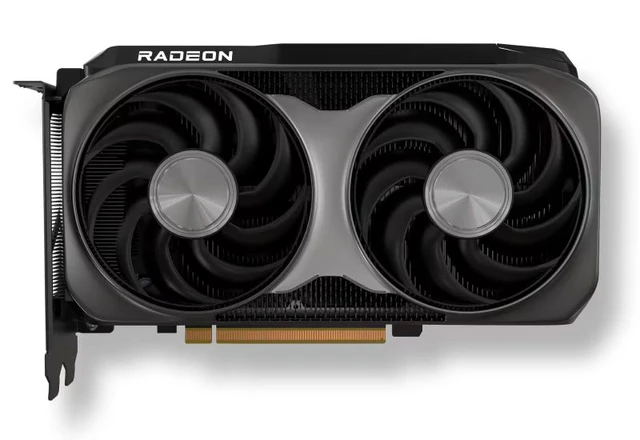
The contemporary GPU market is increasingly plagued by a paradox: while raw computational power continues to climb, VRAM capacity in the entry-level segment has become a critical bottleneck. The latest iteration of the Radeon RX 9050 exemplifies a radical approach to cost optimization—one that may prove to be a significant deterrent for the end user. AMD has unveiled a version with severely stripped-down specifications, where cost-cutting measures have impacted not only the memory capacity but also the fundamental data transfer parameters. This strategic move raises serious questions regarding the actual viability of such hardware within the demands of modern gaming scenarios.
The VRAM deficit in the entry-level segment is reaching a critical tipping point. Recent data regarding the 4GB GDDR6 variant of the Radeon RX 9050 suggests that the manufacturer has made severe architectural concessions that extend far beyond a simple reduction in storage capacity.
At a glance, the GPU architecture appears consistent: clock speeds hold steady at 2.6 GHz, and the core specifications—16 compute units alongside 64 texture and rasterization units—remain identical to the full-fledged version. However, the real story unfolds within the memory subsystem.
By slashing the number of GDDR6 modules, the memory bus width has been halved from 128-bit to 64-bit. This results in a proportional collapse in bandwidth, which now plummets to a mere 144 GB/s. In an era of increasingly heavy textures and rising screen resolutions, such a narrow data pipeline inevitably becomes the primary performance bottleneck.
Compounding the issue is AMD's decision to trim the Infinity Cache—the specialized high-speed buffer designed to mitigate the shortcomings of slower external memory. In this iteration, the cache has been halved from 32MB to 16MB. Consequently, the hardware is caught in a vice, constrained by three critical vectors: VRAM capacity, bus width, and internal cache volume.
From a market positioning standpoint, this configuration of the Radeon RX 9050 is not intended for general retail. Current data suggests the card will be shipped exclusively within OEM pre-built systems. However, industry precedent suggests that such boundaries are rarely airtight. Sooner or later, OEM components inevitably leak into the retail market via third-party vendors, creating the risk that this severely crippled solution could end up on store shelves masquerading as a standard budget option.
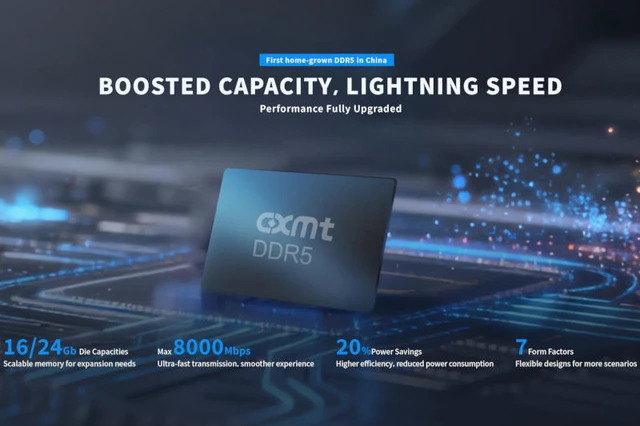 The Price of Acceleration: CXMT’s Rapid Push into Memory