The current market for compact gaming systems reveals a stark disconnect between the premium pricing of turnkey solutions and their actual hardware capabilities. Prohibitive costs for official Steam Machines have driven enthusiasts to seek unconventional workarounds, repurposing specialized equipment into versatile workstations. An unlikely contender has emerged as the focal point of this trend: the AMD BC-250 mining board. By leveraging console-grade silicon, it is now possible to assemble a fully functional Linux-powered gaming rig on a shoestring budget.
The evolution of modern hardware often follows an ironic trajectory: equipment engineered for hyper-specialized tasks, such as cryptocurrency mining, suddenly finds a second life as gaming stations. A prime example of this phenomenon is the AMD BC-250 board. While high-end Steam Machines can easily exceed a thousand dollars, an alternative build based on the BC-250 allows for a functional system to be assembled for approximately $250—making it an alluring prospect for those willing to trade "out-of-the-box" convenience for a technical challenge.
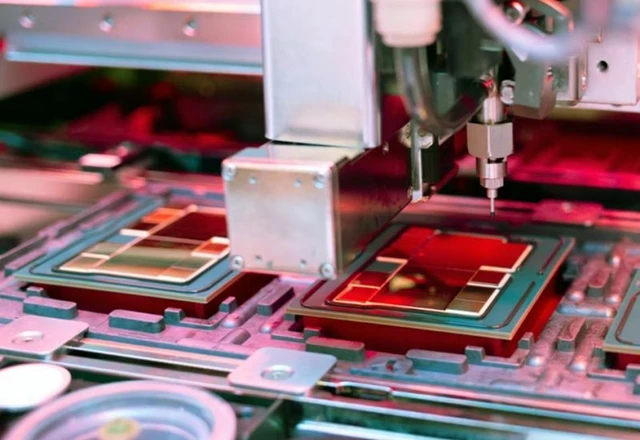
At its core, the AMD BC-250 utilizes an APU (Accelerated Processing Unit) originally developed for the PlayStation 5. In essence, we are looking at a full-fledged single-board computer. The system integrates six Zen 2 cores supporting 12 threads and 16 GB of unified GDDR6 memory. The graphics side is powered by Compute Units (CUs), which are limited to 24 in the standard configuration. However, the chip's true potential is significantly higher.
One of the most intriguing aspects is the ability to expand GPU capabilities via software. Although the silicon physically contains 40 Compute Units, most are locked at the firmware or driver level. By utilizing a specialized Linux kernel patch, it becomes possible to engage all 40 CUs, substantially boosting system performance. It is important to note that this unlock is not permanent; settings reset upon every reboot, meaning the activation of additional GPU resources must be handled by an automated script during the boot sequence.
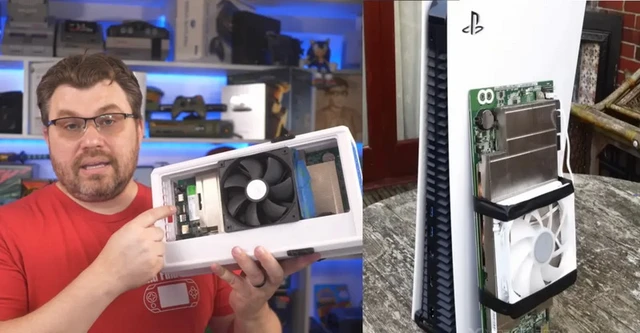
Practical benchmarks of the modified board demonstrate impressive results for such a budget. With a GPU clock speed of 2.2 GHz and a CPU clock of 4.1 GHz, memory bandwidth reaches 410 GB/s. However, this high performance comes with significant thermal challenges. Because the BC-250 was designed for server racks utilizing passive cooling, repurposing it as a home PC necessitates active airflow. Even with undervolting and the installation of massive 120mm fans, operating temperatures under load can hit 90°C, highlighting the compromise inherent in this build.
In gaming scenarios, the system proves to be a capable solution for 1080p resolution with a target of 60 frames per second. Modern titles, such as Cyberpunk 2077 or God of War Ragnarök, remain entirely playable provided the graphics settings are tuned correctly. At this point, it becomes evident that the primary bottleneck is the six-core Zen 2 processor: even when the graphics chip is capable of more, the CPU's computational power limits the ability to achieve higher refresh rates.
From a software perspective, such a machine transforms into an open-source analogue to the PS5, stripped of the rigid constraints of Sony's closed ecosystem. Installing Linux or SteamOS allows the device to function as a full-fledged workstation with support for emulators and standard desktop applications.
Despite its technical elegance, the solution is not without its flaws. The limitation of a single DisplayPort creates hurdles when connecting to televisions, often requiring adapters that can disable features like VRR (Variable Refresh Rate). Furthermore, the need for a custom chassis and manual software configuration makes this path accessible only to power users. Ultimately, the AMD BC-250 is not a direct replacement for Valve's commercial products, but it serves as powerful evidence that with the right software and an engineering mindset, specialized hardware can be pivoted into an efficient gaming tool.
 The Horizon of China's Technological Sovereignty in Lithography