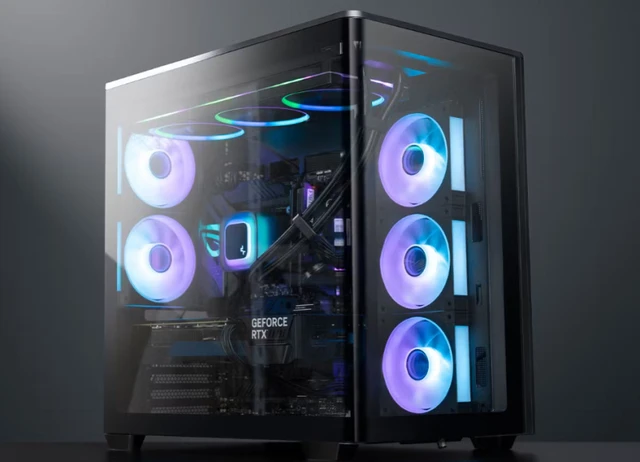
The current trend toward "aquarium-style" chassis has transformed the PC case from a mere utilitarian enclosure into a centerpiece of digital artistry. Yet, beneath the pristine clarity of panoramic glass lies a fundamental engineering hurdle: the loss of traditional front-panel airflow. Engineers are now forced to reimagine conventional cooling architectures to ensure that aesthetic appeal doesn't result in critical thermal throttling. The DeepCool CG590U 5F addresses this dilemma by leveraging reverse-airflow fans and an unapologetically open design.
The era of panoramic chassis has officially arrived, cementing its place in the PC building landscape. By merging the front and side panels into a seamless curve of tempered glass, these cases create an immersive "showcase" effect, transforming internal components into high-tech exhibits. However, such aesthetics impose strict constraints: the traditional front-to-back airflow path is rendered obsolete. With the CG590U 5F, DeepCool attempts to strike a balance between visual elegance and thermal efficiency by implementing an unconventional airflow architecture.
Visually, the chassis is a Mid-Tower with subtly adjusted proportions—slightly shorter than standard towers but wider, allowing for optimized internal spatial management. The centerpiece is the 4mm tempered glass that flows seamlessly from the front to the side. To offset the airtight nature of the glass facade, all other surfaces—the top, bottom, and rear panels—feature deep perforation to facilitate ventilation.
A notable design choice is the relocation of the power supply unit (PSU). Rather than occupying a traditional bottom shroud, it is positioned laterally, tucked behind the motherboard tray. This shift allows the motherboard to be mounted lower in the chassis and frees up critical real estate on the rear panel for two 120mm exhaust fans—a rarity for cases in this category.
The internal ergonomics of the CG590U 5F are tailored for the modern enthusiast market. It supports ATX, micro-ATX, and mini-ITX form factors, including the latest "Back-Connect" design standard, where connectors are routed to the rear of the motherboard for pristine cable management. Despite its Mid-Tower classification, the internal volume is remarkably generous, comfortably accommodating GPUs up to 410mm in length and CPU coolers up to 160mm in height.
Component access is streamlined; the panoramic glass is secured by a single thumbscrew, allowing it to be removed in seconds. However, this design is better suited for users who build their system once and intend to admire it long-term, rather than for "hardware tweakers" who frequently swap components.
The chassis's technical centerpiece is its cooling architecture. Since the front panel is sealed, cold air intake is handled by the side wall and bottom grille. To achieve this, DeepCool has integrated three 120mm FL12XR fans featuring reverse-blade impellers; these draw air inward while maintaining the aesthetic appeal of the fan's face. Heat dissipation is managed by two standard rear exhaust fans and natural convection through the top panel.
All five stock fans are managed by a compact four-channel PWM controller, enabling precise speed adjustments (up to 1,550 RPM) and seamless ARGB synchronization with the rest of the build. While hydrodynamic bearings ensure smooth operation, the manufacturer remains characteristically silent regarding the exact lifespan of these components.
The expansion capabilities are impressive, with support for up to eleven 120mm fans. For those opting for liquid cooling, there are three designated zones for 360mm radiators; notably, the top panel offers significant clearance for radiator thickness, rendering the CG590U 5F a versatile tool for building high-performance workstations or gaming rigs.
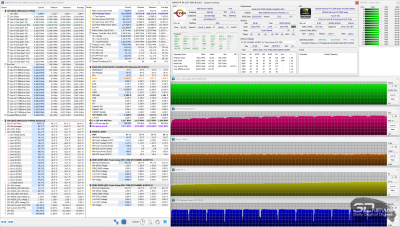
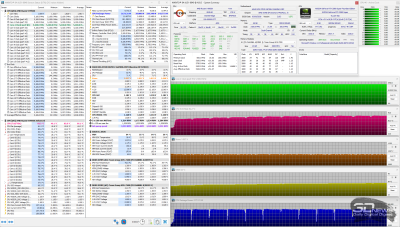
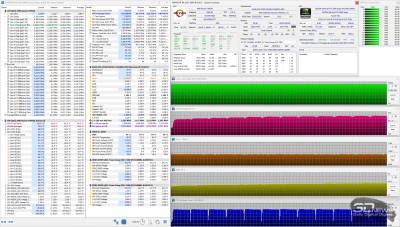
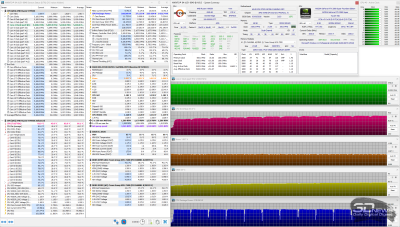
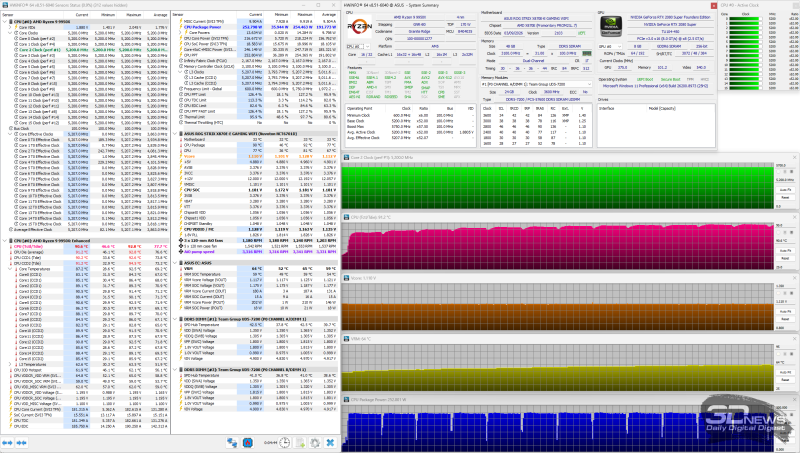
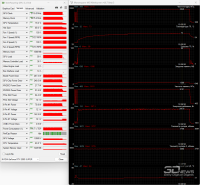
Empirical thermal testing revealed patterns typical of panoramic designs. When paired with a 360mm AIO, CPU temperatures remain stable between 82–83°C regardless of chassis fan speeds, provided the heat output does not exceed 230W. However, upon hitting the 250–255W threshold, the system reaches its limit: temperatures spike sharply, and the performance gap compared to traditional front-intake cases becomes palpable—reaching up to a 10°C difference.
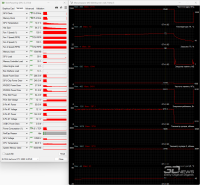
The GPU thermal profile tells a different story. At maximum fan speeds, the graphics processor maintains a steady temperature of around 72–73°C, with chassis fan speeds having negligible impact on this metric. However, in automatic mode, a similar trend emerges: overall ventilation efficiency remains lower than that of traditional "high-airflow" models.
The acoustic profile of the chassis is directly tied to the PWM settings. At 800 RPM, the system operates almost silently; at 1,000 RPM, it remains comfortably quiet. However, as speeds approach the 1,550 RPM ceiling, noise levels exceed the threshold of domestic comfort, while the actual marginal gain in cooling performance is minimal.
In summary, the DeepCool CG590U 5F serves as a benchmark solution for those who prioritize the visual presentation of their system. It is essentially a "curated gallery" for high-end hardware that does not entirely disregard thermal requirements. Nevertheless, users must acknowledge the thermodynamic compromise: this chassis is ideal for systems with moderate heat output (CPUs up to 250W, GPUs up to 300W). For extreme overclocking or ultra-high-performance configurations, the classic front-intake architecture remains the superior choice.
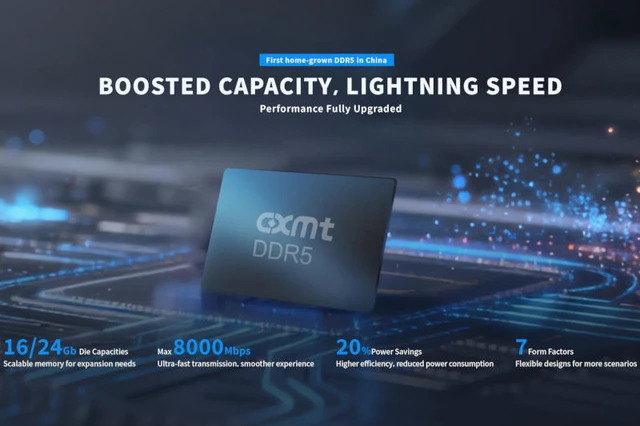 The Price of Acceleration: CXMT’s Rapid Push into Memory