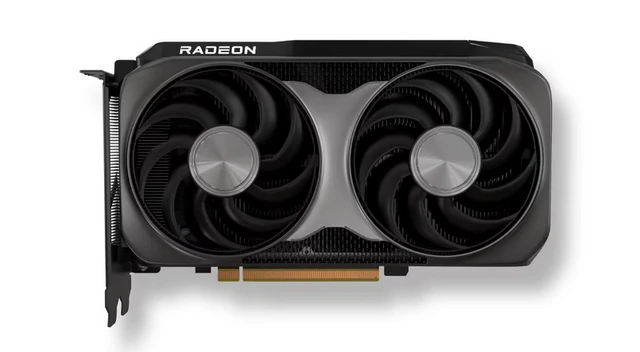
The contemporary GPU landscape is undergoing a stark polarization, fracturing into two extremes: uncompromising flagship powerhouses and rudimentary integrated solutions. This widening chasm has left a void for a balanced instrument catering to the mainstream consumer—the gamer who eschews extravagant spending but refuses to compromise on a fluid experience. Enter the Radeon RX 9050. AMD’s latest offering is engineered to occupy this precise niche, providing an optimized entry point into the world of Full HD gaming. This strategic pivot signals AMD's intent to capture emerging markets through a disciplined, pragmatic approach to performance and energy efficiency.
The arrival of the Radeon RX 9050 represents AMD's strategic pivot in redefining the "entry-level" segment. In an era where mid-range GPU pricing continues to climb, the introduction of a device characterized by modest power consumption and an accessible price point serves as a critical signal to the industry. The card is engineered to minimize infrastructure requirements: a rated power draw of just 92W allows for a PSU as low as 450W, while a single 8-pin power connector ensures seamless integration even within the most compact builds.
The device's technical profile reveals a calculated compromise. The GPU features 16 Compute Units—a significant reduction compared to its larger sibling, the RX 9060. The chip leverages 1,024 stream processors operating at a base clock of 1920 MHz, with a boost clock reaching 2600 MHz. Despite the leaner computational resources, AMD has integrated 16 ray-tracing acceleration units and 32 AI accelerators into the die, ensuring the card remains relevant amidst modern graphical trends. Total FP32 performance reaches 10.6 TFLOPS—a figure sufficient for confident operation at 1080p resolution.
The memory subsystem warrants particular attention. The Radeon RX 9050 is equipped with 8GB of GDDR6 VRAM with an effective speed of 18 Gbps. Utilizing a 128-bit bus, the bandwidth reaches 288 GB/s, remarkably mirroring the specifications of the more expensive RX 9060. This strategic decision effectively mitigates potential data bottlenecks. Further support is provided by 32MB of Infinity Cache—AMD's proprietary technology designed to reduce latency and alleviate pressure on the primary memory bus.
Empirical testing confirms the viability of this approach at 1080p with medium quality settings. In demanding titles such as Cyberpunk 2077, the card maintains a stable 96 FPS, while Forza Horizon 6 and Call of Duty: Black Ops 7 see performance climb to 131 and 116 FPS, respectively. Even in the taxing environments of Pragmata and 007: First Light, the device holds steady above the 60 FPS threshold, guaranteeing a fluid gaming experience.
In the realm of esports, the Radeon RX 9050 reaches its full potential. In Counter-Strike 2 and Rainbow Six Siege, frame rates exceed 200 FPS, while Valorant, tested on high settings, hits an impressive 593 FPS. However, there is a notable lack of transparency from the manufacturer: AMD has not disclosed the full configuration of the test system nor specified whether upscaling or frame generation technologies were employed to achieve these figures.
From a commercial perspective, the Radeon RX 9050 appears to be a vehicle for expansion into specific regional markets. With an expected price point around $279, the device is highly competitive, though availability will be restricted. Initially, the card will launch exclusively in Latin America, Japan, and the Asia-Pacific region. In doing so, AMD is betting on markets where the price-to-performance ratio remains the primary deciding factor for hardware procurement.
 AMD’s Strategic Approach to the Budget Segment