The global architecture of internet resource naming is entering a new phase of evolution, where the conquest of semantic space has become a strategic imperative for Big Tech. The race to secure new top-level domains (TLDs) is no longer a mere technical formality; it is a fundamental reimagining of the user experience surrounding URLs. Google, in particular, seeks to embed digital identifiers seamlessly into the flow of everyday human behavior. In this high-stakes pursuit of "digital real estate," the market's dominant players are pivoting, transforming conventional domains into sophisticated engines for marketing and navigation.
The modern web is gradually pivoting away from the traditional DNS architecture dominated by legacy zones like .com and .net. We are currently witnessing a strategic shift toward highly specialized generic Top Level Domains (gTLDs), which allow brands and services to shorten the user's path to content. In this landscape, Google Registry’s initiative to launch the .eat, .here, and .fly zones appears to be a calculated move to capture new semantic verticals.
The .eat domain targets the culinary sector, aiming to aggregate restaurants, food delivery services, and gastronomic communities. This is a direct play against existing niche zones such as .menu or .restaurant. The objective here is to create an ultra-concise, intuitive address that communicates the essence of the business even before the page has finished loading.
From a UX design perspective, the .here project is particularly intriguing. Google positions this zone as a universal tool for location-binding or action-triggering. Imagine transitioning from standard text links to addresses like click.here or meetup.here. This transforms the domain from a technical pointer into an integrated part of the interface, effectively merging the browser's address bar with a Call to Action (CTA).
The third application—the .fly zone—targets the aviation and tourism industries. Despite initial plans for a September launch, current ICANN filings indicate a postponement to January 2027. This underscores the inherent complexity of coordinating new namespaces on a global scale, where every modification requires rigorous verification by internet governing bodies.
Google's activity is not an isolated incident; rather, it reflects a systemic movement across the Big Tech sector toward owning the underlying naming infrastructure. Amazon has already secured .pay, a logical move for a company striving for dominance in fintech and e-commerce. Simultaneously, DishDBS is vying for .dot, while the non-profit Human-Centered Computing Foundation (HCCF) is attempting to introduce an open-access concept with free registration via the .self zone.
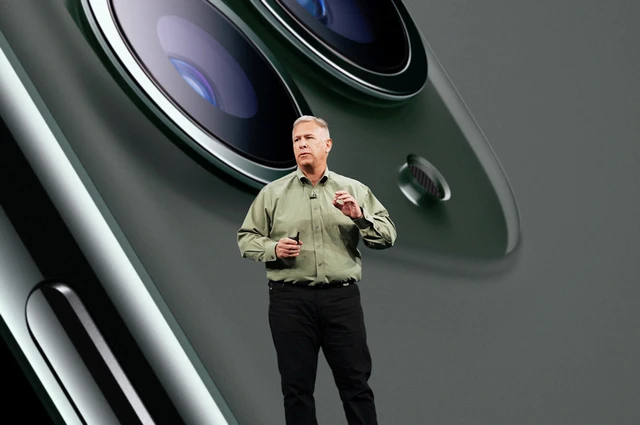
Even Apple, while not applying for full TLDs in this round, is demonstrating a keen interest in nominal semantics by registering the subdomain genai.apple.com. This serves as a clear signal that generative AI is becoming a central pillar of their ecosystem.
Collectively, these developments suggest that the URL is evolving beyond a mere technical route to a server. It is becoming a full-fledged marketing asset and a UI component, where brevity and semantic weight dictate the efficiency of human interaction within the digital environment.

 The Power Shift at Apple