The wearables industry is decisively evolving beyond the realm of mere accessories, transforming into sophisticated instruments for comprehensive medical monitoring. Data from the first quarter of 2026 underscores a resilient market recovery, propelled primarily by a surging demand for high-end, technologically advanced premium models. The industry's focal point has shifted toward the seamless integration of artificial intelligence and the implementation of deep-dive health analytics. Current market dynamics signal a fundamental shift in consumer priorities, with a clear preference for utility and proactive, preventative health management.
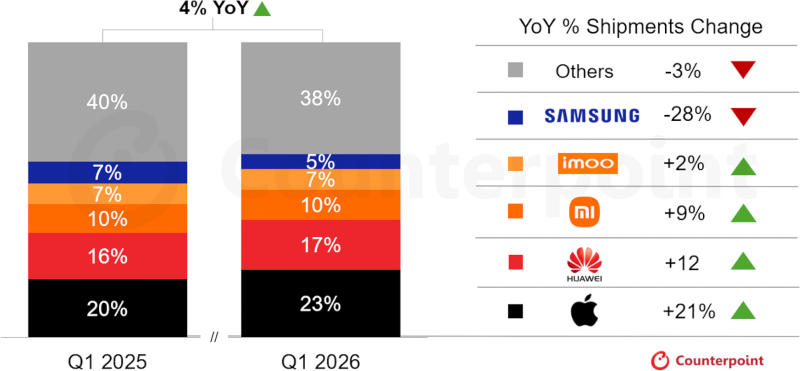
The global smartwatch market demonstrated robust growth in the first quarter of 2026, with shipments increasing by 4% year-over-year. This uptick was far from accidental; it was the result of a synergy between two primary drivers: the expansion of the premium segment—characterized by advanced medical functionality—and the aggressive scaling of the Huawei ecosystem, which triggered widespread device refresh cycles.
Apple continues to maintain its traditional lead, commanding a 23% market share. The company's success was underpinned by an updated product lineup that resonated across a broad spectrum of user demographics. While North America remains the brand's primary stronghold, accounting for more than half of all shipments, the most rapid growth is currently being observed in Europe and China. The Apple Watch SE 3 played a pivotal role here; thanks to its balanced pricing and significant health-monitoring upgrades, it has become the definitive "entry point" into the ecosystem for millions of new users.
The Chinese market is particularly noteworthy, recording an impressive 15% surge in shipments. Huawei dominates this region with a share of approximately 40%, outpacing competitors such as Imoo and Xiaomi. The brand's regional success is driven not only by technological superiority in sleep tracking and emotional well-being monitoring but also by the sophisticated integration of artificial intelligence. Government electronics subsidy programs acted as an additional catalyst, making high-end gadgets more accessible to the general public. Simultaneously, a compelling transformation is unfolding in India, where consumers are migrating en masse from basic models to advanced devices, driving up the Average Selling Price (ASP).
Looking back, the market endured a challenging downturn in 2024, though it managed to recover its growth momentum by 2025. Consumer interest has shifted toward genuinely breakthrough technologies. Satellite connectivity, the 5G RedCap standard, and deep AI integration have evolved from mere marketing buzzwords into concrete consumer demands. Features such as sleep apnea diagnostics and hypertension monitoring have become especially sought-after, effectively transforming the smartwatch into a personal medical terminal.
Despite this positive backdrop, the industry faces certain headwinds. In 2026, macroeconomic instability and localized shortages of memory components could act as limiting factors. However, analysts believe these risks will not critically impact overall performance. The high margins of the premium segment provide a sufficient safety buffer, allowing manufacturers to offset increased costs. In the long term, the market is expected to maintain a moderately positive trajectory, with a projected Compound Annual Growth Rate (CAGR) of approximately 3% through 2030.
 The Engineering Pragmatism of the Wildcat Lake Series