The concept of ownership for modern gadgets is undergoing a rapid metamorphosis, shifting from tangible possession toward a service-oriented access model. As the price points of flagship devices continue to climb, leasing and installment plans have evolved into the primary mechanisms for acquisition, fundamentally reshaping the tripartite relationship between manufacturers, financial institutions, and consumers. Recent discoveries within the iOS codebase suggest a strategic move by Apple to exert absolute control over these devices; access to premium functionality is becoming increasingly conditional, tied directly to the user's payment compliance.
An analysis of the iOS 27 beta has uncovered a deeply integrated mechanism that effectively transforms the smartphone into a collateral asset. The system leverages Mobile Device Management (MDM) capabilities—tools traditionally reserved for the corporate sector to maintain control over company-issued laptops and phones. Now, this framework has been adapted for financial institutions: an authorized lender's application can register a device and monitor contract compliance in real-time.
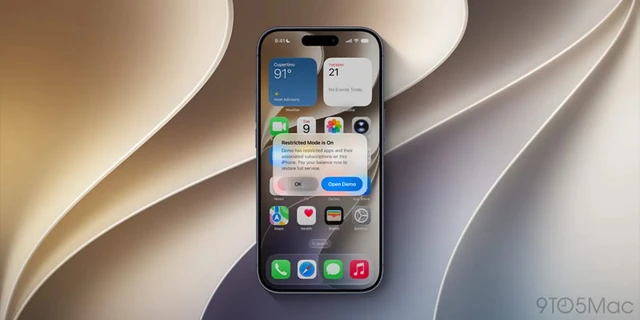
Should a user default on a payment, the system automatically triggers "Restricted Mode." In this state, the iPhone ceases to be a versatile multifunctional computer and is relegated to a basic communication tool with a severely curtailed feature set.
The user loses access to the vast majority of apps and services that define the iPhone's value proposition. Only mission-critical system functions remain: Wallet, Clock, and Settings. To ensure basic safety and connectivity, the App Store remains accessible (presumably to update payment methods), as do emergency notification services—such as healthcare apps, the Home ecosystem, or standard messaging. Crucially, the final whitelist of permitted applications may be determined by the financial partner, granting the lender significant leverage over the debtor.
However, Apple has gone beyond mere software restrictions. The code reveals a "Partner Finance Lock"—a rigorous mechanism designed to thwart any attempts to bypass the lockout. This system is engineered to prevent factory resets, resale on the secondary market, or the dismantling of the device for parts to extract profit.
Technically, this lock is tightly coupled with the "Find My" service. It is important to note that this integration does not imply the transmission of user location data to the bank; rather, it ensures that the "locked" status persists even after attempts at a software wipe or physical relocation of the hardware. Consequently, the device becomes virtually worthless from a resale perspective until the debt is fully settled.
The emergence of these features coincides with reports that Apple is preparing to launch an "Upgrade" leasing program in the US in partnership with fintech giant Klarna. This confirms a global shift toward the "Hardware-as-a-Service" (HaaS) model. Where credit was once merely a financial instrument, it is now becoming embedded directly into the device's source code.
While these capabilities were discovered in early iOS 27 builds and may be adjusted before the final release, the trajectory is clear: the boundary between owning a device and leasing its functionality is evaporating, turning the operating system into an instrument of financial enforcement.
 New Frontiers in Kirin Transistor Density