The digital ecosystem for music consumption is becoming increasingly segmented, driven by evolving safety standards and age-gating requirements. Streaming behemoths are currently navigating the delicate equilibrium between fostering unrestricted content discovery and implementing stringent parental controls. Spotify’s latest update underscores a strategic pivot toward nurturing its user base from the earliest possible stage; notably, child profile management tools have been democratized, becoming available regardless of subscription tier.
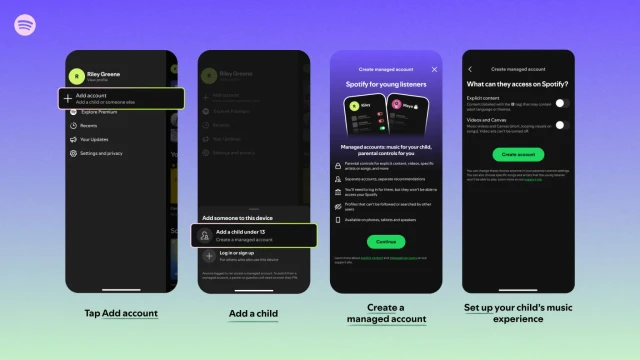
Spotify is recalibrating its engagement strategy for its youngest demographic by extending Managed Accounts to users on the free tier. Previously an exclusive perk of Premium Family plans, this tool created a barrier for families seeking a safe digital environment for children under 13 without committing to a paid subscription. By making child profiles a baseline feature—albeit supported by the standard ad-supported model—Spotify is democratizing access to its safety tools.
The core value of this separation extends beyond mere safety; it is about maintaining algorithmic integrity. A child’s musical preferences—ranging from lullabies to contemporary pop hits—now reside within an isolated ecosystem. This is critical for preserving the adult user experience, ensuring that a child's listening habits no longer skew parental recommendations or, more importantly, distort the annual Wrapped summary. In essence, Spotify is solving the problem of "data pollution," allowing every family member to cultivate their own distinct digital footprint.
The parental control suite offers multi-layered content filtration. Guardians can restrict explicit lyrics and block specific artists or tracks deemed inappropriate. Furthermore, the ability to disable visual noise—such as video content and Canvas looping covers—allows parents to reduce cognitive load, focusing the child's attention exclusively on the auditory experience.
Privacy and social security are paramount. By default, Managed Accounts are private: they are excluded from general search results and lack direct messaging or other social functionalities. This transforms the profile into a musical "sandbox," where children can explore genres and artists independently while remaining under the protective umbrella of parental settings.
From a strategic standpoint, this move appears to be an effort by Spotify to widen its user acquisition funnel at the earliest possible stage. By instilling platform habits during childhood, the company is laying the groundwork for lifelong brand loyalty. While currently deployed across key markets—including the US, UK, Australia, France, Germany, and the Netherlands—a global rollout is likely only a matter of time.
 The Power Shift at Apple