The contemporary electronics accessories market is increasingly embracing a retrofuturist aesthetic, elevating utilitarian gadgets into statements of industrial design. Trozk is riding this wave, reimagining technological icons through the lens of modern energy efficiency standards. Their latest offering—a power bank inspired by the legendary Motorola DynaTAC 8000X—is a masterclass in this approach. The device seamlessly fuses nostalgia for the dawn of mobile telephony with the uncompromising performance of contemporary power systems.
The design of the Trozk Cellular Power Bank transcends mere aesthetics; it is a meticulous reconstruction of the visual language of the first commercial mobile phone. In an era where gadgets strive for maximum invisibility and slimness, this accessory doubles down on brutalism and instant recognizability. Yet, beneath the facade of an 80s "brick" lies high-tech internals capable of satisfying the demands of even the most power-hungry devices.
The device's technical foundation consists of four EV-grade (Electric Vehicle) battery cells. Utilizing automotive-standard cells ensures high energy density and stability under intensive loads. With a total capacity of 20,000 mAh and support for the Power Delivery 3.1 protocol, the unit effectively becomes a comprehensive portable power station.
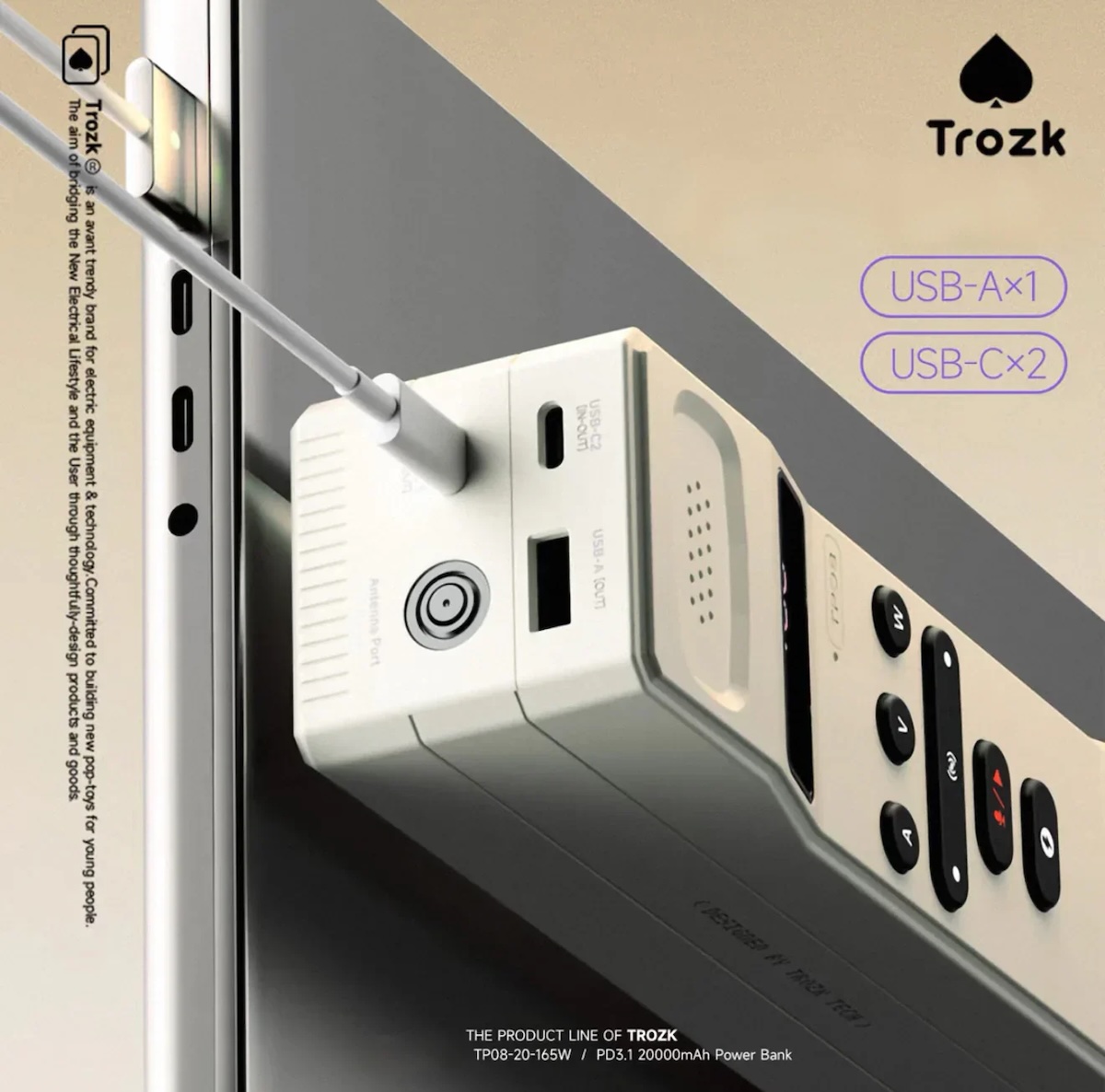
The power distribution system is particularly noteworthy. The maximum aggregate output reaches 165W, allowing it to effortlessly power demanding hardware such as the MacBook Pro or Steam Deck gaming consoles. The port configuration includes two USB-C ports and one USB-A port. When utilizing only the USB-C interfaces, total power peaks at 165W; a single USB-C port delivers up to 100W, while the USB-A port provides up to 30W. When all three interfaces are active simultaneously, the total output is adjusted to 108W—a testament to a sophisticated power management algorithm designed to prevent component overheating.
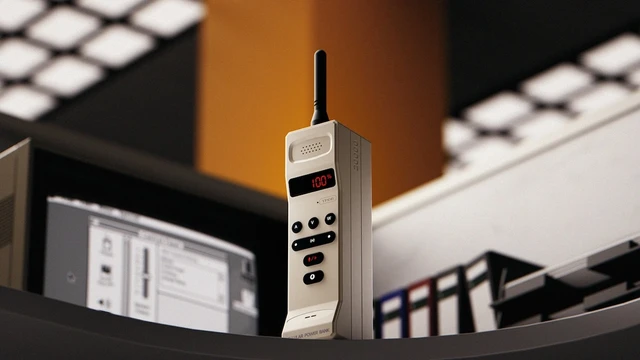
Beyond its charging capabilities, the Trozk Cellular Power Bank is a multifunctional hybrid. Engineers have integrated walkie-talkie and voice recorder functionality, transforming the external battery into a fully realized communication tool. An LED display indicates the charge level, topped by a speaker. Below the screen are backlit buttons for controlling the radio mode, complemented by a microphone at the base of the chassis and a detachable antenna on top. To utilize the walkie-talkie feature, a second identical device is required, turning the use of the gadget into something of a social ritual.

This product is part of Trozk's broader concept of creating "technological artifacts." The company previously introduced the Floppy Magnetic Power Bank—a MagSafe charger shaped like a floppy disk with an integrated microSD slot—and the Beeper Power Bank, which mimics a pager and allows for messaging between similar devices.
The contrast between this modern device and its 1983 predecessor highlights the colossal leap in electronics evolution. The original Motorola DynaTAC 8000X, developed under Martin Cooper, cost nearly $4,000, weighed over a kilogram, and measured 25 cm in length. Its battery provided only 35 minutes of talk time and required ten hours for a full charge. Today's homage to that era not only preserves the aesthetic of the mobile communication pioneer but offers functionality that would have been unimaginable even to the boldest sci-fi visionaries of the mid-20th century.
 The Evolution of Apple's Augmented Reality Ecosystem