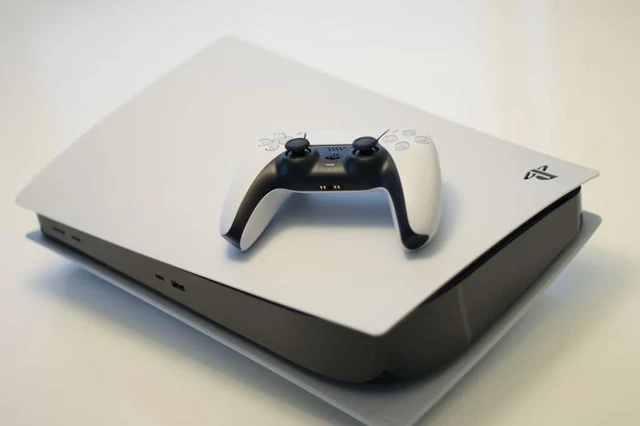
The home gaming console industry is grappling with a systemic crisis that extends far beyond routine seasonal fluctuations in demand. A volatile mix of semiconductor shortages and a dearth of landmark software releases has triggered a precipitous drop in global sales volumes. As the market enters a period of stagnation, hardware pricing is increasingly decoupled from its perceived value to the consumer. In this climate, even the industry's titans are being forced to recalibrate their survival strategies as they await the next generational leap.
The modern gaming console market has found itself in the eye of a perfect storm. According to analytical data from S&P Global Market Intelligence, global shipment volumes are set to contract by nearly 20%, dropping to 33.9 million units. This decline is particularly stark when contrasted with the previous year, where the market demonstrated a robust growth rate of 13.5%. The collapse is the result of a confluence of factors, ranging from technical bottlenecks in component supply chains to strategic missteps in content planning.
A primary variable in this downturn has been the shortage and subsequent price surge of memory modules. Modern console architectures rely on specialized high-bandwidth memory; consequently, any volatility in the semiconductor market directly impacts the final retail price. As component costs climb, manufacturers are forced into a precarious choice: absorb the cost through margin compression or pass the expense onto the consumer—a move that, in the current economic climate, inevitably stifles demand.
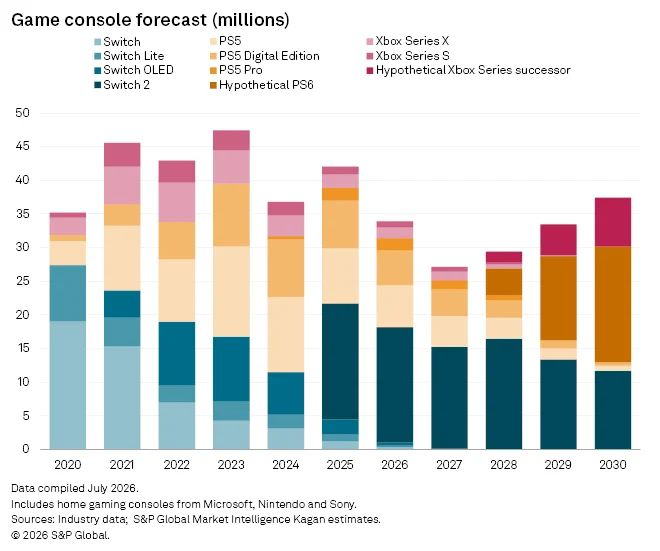
The situation is further exacerbated by a lack of "market drivers." Historically, console sales are propelled by the launch of new platforms or the release of exclusive "system-seller" titles. However, the current cycle is marked by a noticeable dearth of compelling content capable of justifying the investment in expensive hardware. Analysts forecast a further slide in shipment volumes to 27.1 million units next year, with a full market recovery not expected until 2030.
Optimistic recovery scenarios are pegged to 2028, when memory availability is expected to stabilize. This is the window during which Sony and Microsoft plan to debut their next-generation hardware, likely positioned in the $600 to $800 price bracket. Until then, consumers face a difficult dilemma: continue utilizing aging hardware or pay a premium for devices that no longer offer a meaningful technological leap over previous iterations.
Nintendo is not immune to these pressures, despite the rollout of the Switch 2. Forecasts indicate a sales contraction of nearly 17% during the platform's second fiscal year. A $50 increase in official pricing, coupled with a lack of blockbuster releases until 2026, has created a scenario where even the most innovative handheld system is losing its momentum of expansion.
The position of the Sony PlayStation 5 remains ambiguous. Now in the fifth year of its lifecycle, the console is seeing a decline in sales that could bottom out at 13.2 million units. The decision to raise PS5 prices in April (by $100 to $150) has created a significant barrier for the mass-market consumer. The only remaining catalyst capable of stimulating demand is the release of Grand Theft Auto VI—a title of such magnitude that it could temporarily neutralize price sensitivity and reignite interest in the hardware. In the long term, the industry looks toward the PlayStation 6; its anticipated debut in 2028 could provide the necessary impulse to revitalize the sector.
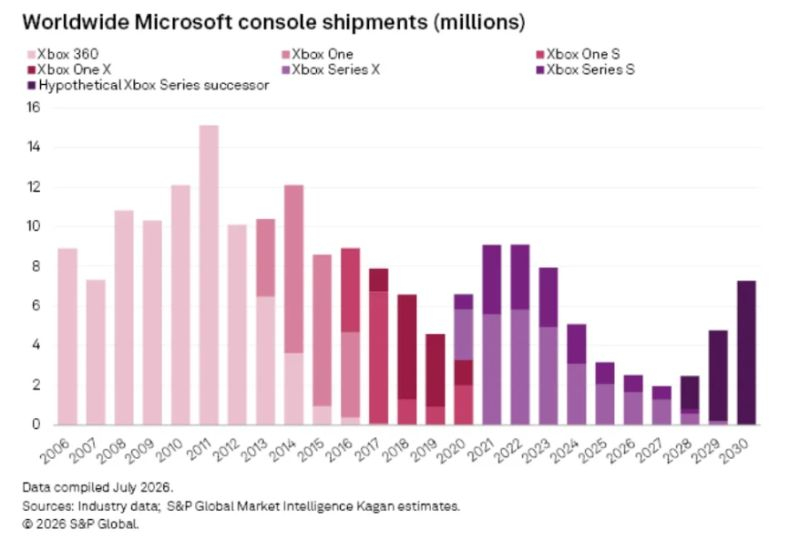
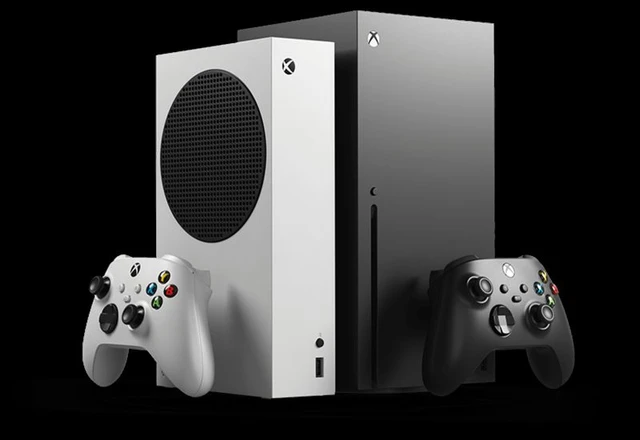
The most alarming dynamics, however, are evident at Microsoft. Sales for the Xbox Series X and S have hit historic lows, with current figures unlikely to exceed 2.5 million units. The price gap—where the Xbox Series X often sits above the standard PS5—has rendered its value proposition less competitive. Consequently, the company's strategy is shifting toward an ecosystem-centric approach: "Project Helix" aims for deep integration with the PC platform, effectively signaling a pivot away from the traditional hardware-sales model in favor of services and subscriptions. Even the next generation of Xbox is projected to have limited reach, with estimated sales reaching only 7.3 million units by 2030.
 The Foldable iPhone: A New Chapter for Apple